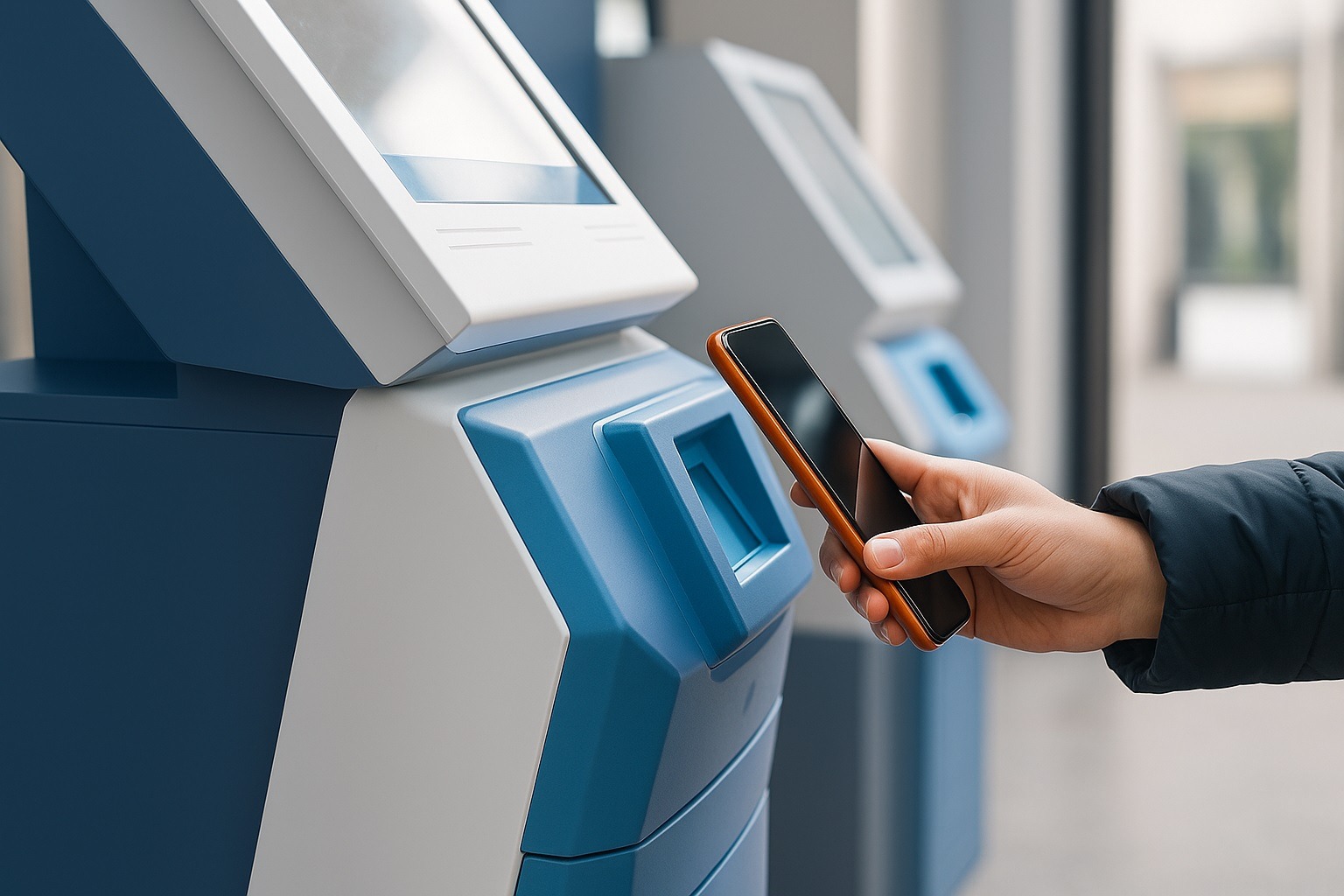

Bangladesh Bank has moved to reshape the country’s fast‑growing digital payments market, publishing draft regulations that would let licensed non‑bank firms issue e‑money while tightening oversight of payment system operators (PSOs). The two draft rulebooks—Regulations for E‑Money Issuers (EMIs) and the Payment System Operator (PSO) Regulation 2025—have been posted for public consultation before final approval.
Why this matters
- More competition & innovation: For the first time, qualified non‑bank local and foreign companies could be authorised to issue e‑money alongside banks, breaking the long‑standing bank‑only model of mobile money.
- Stronger consumer safeguards: New responsibilities for PSOs—from capital buffers to incident reporting—aim to reduce settlement risk and improve reliability for merchants and users.
- Fits the interoperability push: The drafts arrive a week after Bangladesh’s national interoperable transfers began rolling out via the NPSB rails, linking wallets, banks and PSPs.
What’s in the E‑Money Issuer (EMI) draft
Who can issue e‑money:
- Banks and licensed non‑bank digital finance companies (as “Dedicated EMIs”) may issue e‑money if they meet fit‑and‑proper and technical standards. Existing MFS and PSP operators must seek fresh licences after the rules take effect. The Business Standard
Key prudential & governance tests (highlights):
- Paid‑up capital: minimum Tk50 crore for Dedicated EMIs.
- Three‑year business & risk plan submitted at licensing.
- Customer fund protection: use of Trust & Settlement Accounts under central‑bank oversight.
- Operational resilience: continuous fraud monitoring, multi‑factor authentication for higher‑value transactions, robust IT controls.
- Board discipline: integrity standards and mandatory audit/risk committees; breaches can trigger fines, licence cancellation or legal action.
Public input: Bangladesh Bank has requested stakeholder feedback before finalising the regulation.
What the PSO Regulation 2025 would require
Settlement discipline:
- Every PSO must end each business day with enough in its Trust & Settlement Account (TSA) to fully cover outstanding merchant liabilities. A shortfall would draw a penalty defined in the draft as the lesser of Tk30 lakh or the prevailing SLF rate (now 11.50%), with personal liability for directors, the CEO and treasury officials; a shortfall persisting over 14 days attracts an additional Tk10,000 per day. (The final methodology will be clarified at rule issuance.)
Licensing & capital:
- Two‑step licensing (NOC then licence); Tk50,000 application fee and Tk5 lakh licence fee; go‑live within 120 days of licensing.
- Minimum paid‑up capital varies by activity (Tk1 crore for digital merchant acquiring up to Tk20 crore for ATM/CRM), plus an ongoing capital buffer linked to transaction volume (0.3% for acquiring/payment initiation; 0.1% for switching/ATM/card scheme).
Corporate governance & leadership:
- ≥5‑member board with two‑thirds non‑executive; non‑executive chair.
- CEO must meet education/experience criteria and obtain prior BB approval with background and CIB checks. Directors cannot be loan defaulters or serve at another PSO.
Operations, risk & compliance:
- Full KYC of all merchants; written settlement agreements; no cash settlements; merchant proceeds settled within 5 working days.
- ATM/CRM uptime thresholds (max downtime 12 hours urban / 24 hours rural) with central monitoring.
- Enterprise‑wide risk management (liquidity, operational, custody, fraud, AML/CFT); off‑site & on‑site BB supervision.
- Data retention for 12 years; report major incidents within 24 hours and data breaches within 72 hours.
- PSOs cannot issue e‑money; settlements must occur via scheduled commercial banks.
Legal alignment: The PSO Regulation 2025 is drafted to dovetail with the Payment and Settlement Systems Act, 2024.
Interoperability backdrop: where things stand
- Bangladesh Bank targeted November 1 for nationwide interoperable transfers between MFS wallets, bank accounts and PSPs via NPSB. Fees are capped (incl. VAT) at 0.85% for MFS, 0.20% for PSPs and 0.15% for banks, translating to Tk8.50 on a Tk1,000 MFS transfer.
- In the first days of rollout, nine institutions took part; TBS reported a modest Tk940 processed on Day 1 as major MFS players phased in capabilities.
Who’s affected
- Fintechs & super‑apps: Non‑bank firms eyeing wallet and merchant‑acceptance plays gain a clear licensing path—but must meet bank‑like governance, capital and cybersecurity standards.
- Existing MFS/PSP operators: Will need to reapply under the new EMI framework after it takes effect to remain compliant.
- Merchants & consumers: Tighter TSA rules, incident reporting and BB supervision aim to reduce settlement risk and boost trust, especially as interoperability scales.
What’s next
- Public consultation window: Bangladesh Bank has invited comments from industry and civil society before finalising the EMI and PSO rulebooks.
- Implementation & transition: After issuance, existing providers are expected to transition within a set window (six months for current operators is noted in reporting) while BB readies supervisory tooling for the expanded ecosystem.
Key takeaways at a glance
- Non‑banks can apply to issue e‑money (as Dedicated EMIs) alongside banks.
- Capital floor: Tk50 crore for Dedicated EMIs; PSO capital from Tk1–20 crore depending on service.
- Safety rails: TSAs, board‑level risk oversight, MFA for high‑value transactions.
- PSO penalties: TSA shortfall penalty defined as the lower of Tk30 lakh or SLF (11.50%); daily fines after 14 days; executive liability.
- Data, uptime & reporting: 12‑year retention; ATM/CRM downtime limits; incident (24h) and breach (72h) notifications.
Sources (Nov 7–8)
- The Business Standard coverage of the EMI draft and market impact (Nov 8), plus detailed PSO rule highlights (Nov 7).
- Bangladesh Sangbad Sangstha (BSS) brief on BB’s draft PSO Regulation 2025 (Nov 7).
- The New Nation report summarising PSO draft provisions (Nov 8).
- Context on interoperability rollout and fee caps from The Daily Star (Nov 2) and initial transaction figures from TBS (Nov 2–3).