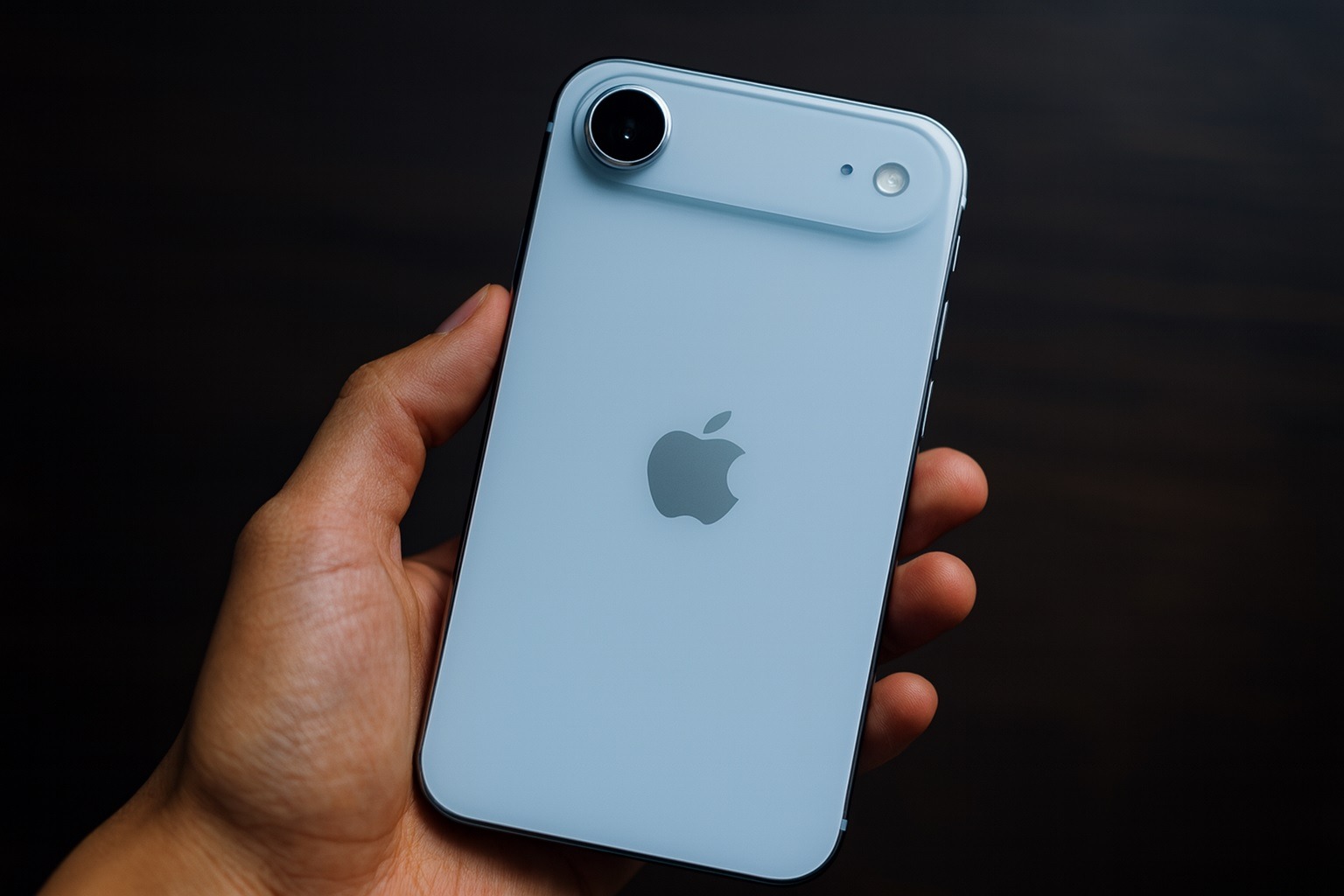

Apple’s carefully curated industrial design team has lost one of its most visible new stars. Abidur Chowdhury – the London‑born designer who helped shape the iPhone Air and appeared prominently in its launch video this September – has left Apple to join an artificial intelligence startup, according to multiple reports published on November 17–18, 2025.
His departure comes just months after the debut of the ultra‑thin iPhone Air and deepens concerns about an ongoing exodus of top talent from Apple’s hardware and interface design teams, already in flux since Jony Ive’s exit in 2019.
Who is Abidur Chowdhury?
Chowdhury is not a household name like Ive or Tim Cook, but inside design and tech circles he has been seen as one of the key figures in Apple’s “post‑Ive” era.
According to profiles compiled by outlets including The Economic Times, Hindustan Times and others, Chowdhury:
- Was born and raised in London
- Studied Product Design & Technology at Loughborough University
- Won several early‑career design awards, including the Red Dot Design Award (2016), the James Dyson Foundation Bursary, the 3D Hubs Student Grant and the Kenwood Appliances Award
- Worked at consultancies such as Cambridge Consultants, Curventa and Layer, and ran his own studio before Apple
He joined Apple’s industrial design team in 2019, the same year Jony Ive formally departed to build his own design firm, and spent more than six years at the company.
The Face of the iPhone Air
Chowdhury’s profile surged in 2025 when Apple chose him to front the iPhone Air reveal during its September keynote. In Apple’s launch video and stage segment, he walked viewers through the device’s design philosophy and hardware refinements – a role historically reserved for senior, deeply trusted designers.
Coverage from Indian and global tech outlets highlights why he was seen internally as a rising star:
- He helped define the overall design direction of the iPhone Air, including its ultra‑thin chassis and titanium frame.
- The iPhone Air positions itself between standard and Pro iPhones, with a premium feel and a focus on thinness and comfort in hand rather than camera count.
- Reviews have broadly praised the design of the iPhone Air, even as early sales appear more muted than Apple might have hoped.
Several reports stress that Chowdhury’s departure is not linked to the iPhone Air’s commercial performance or launch reception.
Leaving for an AI Startup – But Which One?
Multiple outlets, citing Bloomberg’s original reporting, state that Chowdhury has left Apple for an unnamed artificial intelligence startup.
Key points from those reports:
- The AI company has not yet been publicly identified.
- People familiar with the move describe his exit as notable inside Apple given his rising influence within the design studio.
- His LinkedIn profile has reportedly not been fully updated yet, underlining how recent the move is.
Tech coverage frames this as part of a broader talent shift towards AI startups, where compensation, equity packages and creative freedom can be significantly more aggressive than at even the largest tech incumbents.
A Design Team in Transition
Chowdhury’s exit doesn’t happen in isolation. It fits into a much longer story about Apple’s evolving design organisation.
Reports from Bloomberg, 9to5Mac, MacRumors, Economic Times, Gadgets360 and others sketch the following picture:
- Since Jony Ive left in 2019, many long‑time industrial designers have also departed, some joining Ive’s own team (now linked with OpenAI) and others moving to competitors.
- High‑profile exits have included names like Evans Hankey (Ive’s successor as hardware design chief) and Tang Tan, a veteran of more than two decades at Apple.
- There are now very few designers remaining who worked under Ive, with the current group consisting largely of newer hires and younger designers promoted from within.
Leadership above the design team is also changing:
- Long‑time COO Jeff Williams, who had been overseeing design since around 2023, retired from Apple recently.
- Apple has restructured so that the design organisation now reports directly to CEO Tim Cook, rather than through an operations intermediary – a shift that could speed up decision‑making but also places more strategic weight on Cook’s office.
Put simply, Chowdhury is leaving a team that is still searching for its post‑Ive identity.
What Happens to the iPhone Air Line Now?
One of the biggest questions for Apple watchers is how Chowdhury’s departure might affect the future of the iPhone Air line.
According to reporting from The Economic Times and Gadgets360, Apple is already working on a second‑generation iPhone Air, tentatively expected around spring 2027, with a redesigned camera system that moves from a single rear camera to a dual‑camera setup.
Some key details from those reports and related coverage:
- The next‑gen model is believed to feature reworked internals and camera placement to support the new design.
- Apple is said to be adjusting its launch timeline, pushing the follow‑up Air into 2027 as it rethinks the product’s positioning after a mixed commercial debut.
- The current iPhone Air has been praised for its thin, comfortable design, but sits in a tricky mid‑tier price band that overlaps higher‑end models, complicating the lineup.
Reports consistently emphasise that Chowdhury’s move is not tied to those sales dynamics, suggesting the project itself will continue with Apple’s remaining design leadership and newer hires.
Apple’s Wider Talent Challenge: AI and Design
While Chowdhury is a designer, his decision to join an AI startup mirrors a parallel talent drain in Apple’s AI and machine‑learning ranks.
9to5Mac, summarising prior Bloomberg reporting, notes that Apple has faced “relentless” departures from its AI teams, with senior researchers and engineers heading to rivals like Meta, Anthropic and OpenAI. 9to5Mac
Taken together, two trends are colliding:
- AI gold rush
- Startups and frontier labs are offering massive equity stakes and the allure of shaping the next technological platform.
- Designers increasingly see AI as not just a back‑end technology, but a new surface to design for – interfaces, tools and hardware built around intelligent systems.
- Apple’s cultural shift post‑Ive
- The company is still revered for its hardware design, but some observers argue it feels more iterative than revolutionary lately.
- Departures of iconic designers and operations leaders overseeing design have created a perception – fair or not – that Apple may be a less adventurous place for experimental, blue‑sky design than it once was.
Chowdhury’s move sits squarely at the intersection of these forces: a high‑profile designer betting that the next big wave of product innovation will be shaped in AI‑first environments, not necessarily inside a giant like Apple.
What Chowdhury’s Exit Signals for Apple
From an investor or product‑watcher standpoint, Chowdhury’s departure is symbolically significant, even if it doesn’t immediately derail any single product.
1. Design continuity is harder to maintain
Apple can and will replace individual designers, but continuity – that almost obsessive internal memory of why certain decisions were made – erodes every time a veteran walks out the door. With so many Ive‑era designers already gone, losing a rising figure like Chowdhury only heightens the challenge of maintaining a cohesive design language over the next decade.
2. Apple must compete differently for AI‑era talent
Apple traditionally leans on stability, brand prestige and secretive, long‑term projects to attract talent. Against AI startups dangling potentially life‑changing equity, that pitch is under pressure. Chowdhury’s move underlines that this isn’t just about coders and researchers – top designers are also willing to jump into the AI fray.
3. The iPhone Air remains a strategic experiment
Even without Chowdhury, Apple still has the scale to iterate the iPhone Air line. But the product’s future – timing, feature focus, and its place between base and Pro models – will be watched more closely now. If the 2027 follow‑up meaningfully changes direction, analysts will inevitably ask how much of the original vision left with him.
Key Takeaways at a Glance
- Who left?
Abidur Chowdhury, the industrial designer who helped create and introduce the iPhone Air. - Where is he going?
To an unnamed AI startup, according to Bloomberg and multiple follow‑up reports. - Is it related to iPhone Air’s sales?
No. Reports say his move is not connected to the phone’s debut or commercial performance. - What about the iPhone Air 2?
Apple is reportedly planning a second‑generation iPhone Air around 2027, with a possible dual‑camera design and revised internals. - Why does this matter?
The exit reinforces a wider pattern of top design and AI talent leaving Apple, raising questions about how the company will maintain its design edge in the AI era.