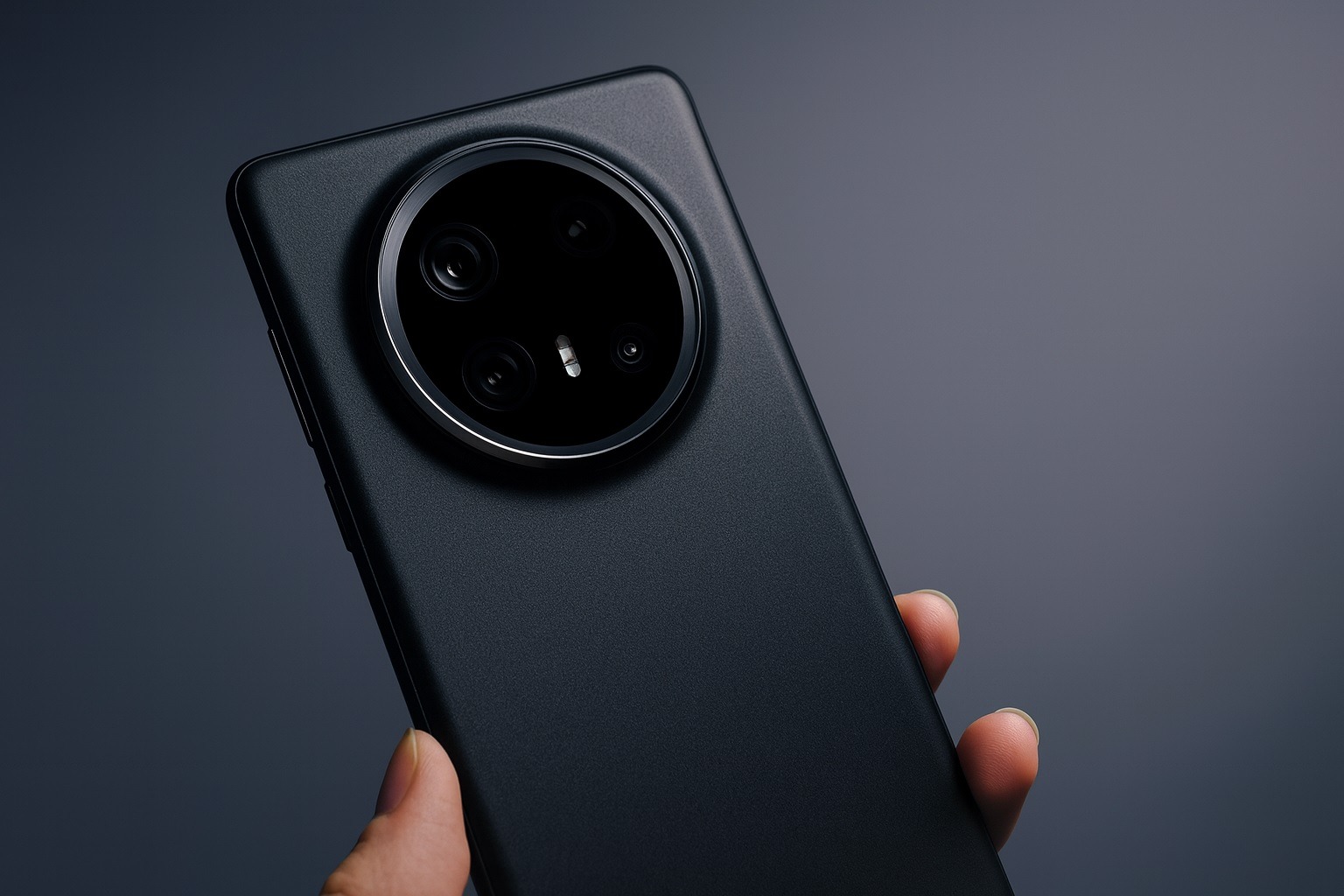

Huawei is turning up the heat in the premium Android race this week. Ahead of a big launch event on November 25 in China, the company has revealed almost the entire Mate 80 flagship family and given us a surprisingly detailed first look at the new Mate X7 foldable – complete with magnetic charging, dual‑layer OLED displays, 20GB RAM and a basalt-reinforced body.
At the same time, a new Huawei flagship with 20GB RAM is already putting pressure on Samsung’s upcoming Galaxy S26 Ultra, which is still expected to top out at 16GB in limited markets.
Mate 80 series: four models, launch date locked for November 25
Huawei has now confirmed that the Mate 80 series will debut in China on November 25, 2025, alongside the Mate X7 foldable. The lineup consists of four phones:
- Mate 80
- Mate 80 Pro
- Mate 80 Pro Max (replacing the old “Pro+” naming)
- Mate 80 RS Ultimate Design
According to Huawei’s official listings on Vmall and multiple regional reports, the series will ship with the new Kirin 9030 platform, with some models using an upgraded Kirin 9030 Pro variant.
Colors and memory options
A detailed breakdown of the design and storage variants has already surfaced:
- Mate 80 / Mate 80 Pro
- Colors: Dawn Gold, Obsidian Black, Snowy White, Spruce Green
- Configurations:
- 12 GB + 256 GB
- 12 GB + 512 GB
- 16 GB + 512 GB
- Pro-only option: 16 GB + 1 TB
- Mate 80 Pro Max
- Colors: Polar Night Black, Polar Silver, Polar Day Gold, Aurora Blue
- Configurations: 16 GB + 512 GB and 16 GB + 1 TB
- Mate 80 RS Ultimate Design
- Colors: dark black, pure white, hibiscus purple
- Configurations: 20 GB + 512 GB and 20 GB + 1 TB
All four models are expected to run HarmonyOS NEXT, Huawei’s fully Android‑free OS generation, although Huawei hasn’t laid out every software detail yet.
New dual‑ring “infinity” camera design – and built‑in magnets
Visually, Huawei is making one of its biggest design changes since the Mate 20 era. The Mate 80, 80 Pro and 80 Pro Max all swap the traditional single camera ring for a dual‑ring layout that forms an “∞” / figure‑8 shape on the back. Huawei Central
- The outer ring houses the lenses in a square-like array.
- The inner “record” ring creates a floating disc with prominent XMAGE branding.
- Flat metal sides and smoothed corners give the phones a sharper, more modern look.
The RS Ultimate Design sticks with its octagonal camera island, but refines the cut lines and finishes for a more aggressive, luxury‑phone look.
Magnetic charging for the Mate 80 series
One of the most intriguing details is the integration of magnets into that new dual‑ring back, with Chinese leakers and Huawei‑watcher sites reading this as Huawei’s first move toward native magnetic wireless charging on a Mate phone.
Until now, recent Huawei flagships like the Pura 70, Mate 70 and Pura 80 only gained MagSafe‑style functionality when used with special magnetic cases; older models relied purely on standard Qi wireless charging.
With the Mate 80 family:
- The dual‑ring structure is believed to hide a magnetic coil, aligning with third‑party or Qi2 accessories in a way similar to Apple’s MagSafe implementation.
- This should improve alignment, charging stability, port longevity and allow faster wireless charging speeds compared to regular loosely‑aligned wireless pads.
Huawei has not yet publicly branded this as “Qi2” or confirmed exact wattages. For now, the company is simply teasing the design while accessory leaks mention an external magnetic case to extend compatibility. Huawei Central
Mate 80 Pro Max: Visionox dual‑layer OLED and flagship Kirin 9030
Today’s biggest technical headline belongs to the new Mate 80 Pro Max. Huawei Central reports that the phone will use a dual‑layer (tandem) OLED panel supplied by Visionox and BOE, bringing tech previously reserved for ultra‑premium RS variants down to a more mainstream flagship.
Dual‑layer OLED stacks two OLED emissive layers on top of each other. Compared with conventional single‑layer OLED, this can:
- Push higher peak brightness without stressing each layer as much
- Improve power efficiency, because each layer can run at lower intensity
- Extend overall panel lifespan, which is especially important on high‑refresh screens
Huawei already experimented with this in the Mate 70 RS; in the Mate 80 Pro Max, the same concept should offer brighter HDR highlights and better endurance, especially when paired with the new Kirin 9030 chipset.
Meanwhile, pre‑orders for the Mate 80 Pro have exploded: over 1 million reservations in just 24 hours, according to Huawei’s own sales channel data relayed by Chinese media.
The Pro is reportedly:
- Powered by Kirin 9030 Pro (a higher‑binned variant)
- Slightly cheaper than the Pro Max
- The “sweet spot” model for buyers who want high performance without RS‑level pricing Huawei Central
Mate 80 RS Ultimate Design: Huawei’s first 20GB RAM phone
Huawei has now officially confirmed a 20GB RAM variant of the Mate 80 RS Ultimate Design – the first Huawei smartphone to cross that 16GB ceiling.
Key points:
- 20GB RAM with either 512GB or 1TB of storage
- Distinctive octagonal camera module and luxury‑style back panel
- Three colorways: black, white and purple/hibiscus
The move goes beyond rumor; Vmall’s listing already shows the 20GB options, although some variants briefly appeared as “temporarily out of stock” because of early demand. Huawei Central
Samsung‑focused outlet Sammy Fans notes that this 20GB figure directly undercuts the Galaxy S26 Ultra, which is still expected to ship with 12GB RAM by default and 16GB RAM in a few select markets, with no 20GB option in sight.
Given Huawei’s U.S. sanctions and limited global reach, the Mate 80 RS isn’t really about volume. Instead, it’s a statement device, signaling that:
- Huawei can still push hardware boundaries despite supply constraints.
- It’s willing to use brute‑force memory to complement its in‑house Kirin chips and HarmonyOS NEXT.
Whether 20GB genuinely improves day‑to‑day usage over 16GB will depend on Huawei’s software optimization and how aggressively it pushes local AI workloads and imaging pipelines on‑device.
Mate X7: First official look at Huawei’s next side‑folding flagship
While the Mate 80 series grabs headlines for design and RAM, today’s freshest news is about the Mate X7 foldable. Huawei executives have now shared an official first look at the device ahead of its November 25 launch.
Design and display
From Huawei’s teasers and early media hands‑ons:
- Form factor: horizontal book‑style side‑folding design, following the Mate X6 line
- Main display: around 7.95‑inch foldable panel, 2K resolution, with COE LTPO tech and ultra‑thin flexible glass (UTG) on top
- Frame:high‑gloss golden metal frame, with other color options expected
- Back panel: teased in a brocade-inspired finish, hinting at fabric‑like or patterned composite materials
The rear camera module remains a quad‑camera setup in a similar layout to the Mate X6 but with refined contours and what appears to be upgraded optics.
Reported camera highlights include:
- 50MP main sensor with variable aperture
- 50MP periscope telephoto macro lens
- A second‑generation multispectral color sensor, shared with the Mate 80 series, aimed at more accurate color and improved low‑light performance
Huawei watchers expect the Mate X7 to use the highest‑end Kirin 9030 Pro silicon, positioning it as the foldable flagship counterpart to the Mate 80 Pro Max and RS.
Basalt body architecture and brutal durability tests
Where the Mate X7 really differentiates itself is durability. Huawei has started a mini‑campaign around what it calls an “ultra‑reliable folding basalt architecture”. Huawei Central
From today’s teasers and lab videos:
- The body structure combines basalt‑inspired composite, Kunlun Glass, and brocade fiber support layers to absorb drops and impacts.
- The phone is rated for IP58 and IP59 protection, meaning serious resistance to dust, submersion and high‑pressure water jets.
- Huawei shows the Mate X7 shrugging off a spray of 80°C hot water without cracking or malfunctioning.
- Another clip demonstrates the screen surviving an iron ball drop onto the display, thanks to second‑gen Kunlun Glass and the revised hinge structure.
These demos are obviously controlled, but they send a clear message: Huawei wants the Mate X7 to be seen not just as stylish, but as a foldable you don’t have to baby.
How Huawei’s 20GB Mate 80 RS stacks up against Samsung’s Galaxy S26 Ultra
The 20GB RAM Mate 80 RS has already sparked debate among Samsung fans. According to the Sammy Fans report, the Galaxy S26 Ultra is expected to ship with:
- 12GB RAM for most configurations
- A 16GB RAM variant tied to top storage tiers, limited to a handful of markets
- Up to 1TB storage, but no 20GB, 24GB or similar “hero” memory option on the roadmap
Samsung’s approach leans heavily on software optimization – tighter LPDDR5X tuning, advanced thermal management, and AI‑assisted resource scheduling – rather than raw RAM capacity. Huawei, by contrast, is clearly making a spec‑sheet play with the 20GB Mate 80 RS.
Practically speaking:
- For most users, 16GB is already more than enough; the benefit of 20GB will mainly appear in heavy multitasking, local generative AI, and professional‑grade video/photo editing.
- But in marketing terms, “20GB RAM” is simple and powerful – and that’s exactly the sort of headline Huawei needs as it battles perceptions against Apple and Samsung in China.
This is happening against a backdrop where China’s smartphone market has just grown 8% year‑on‑year, with Apple taking around 25% share in October thanks to strong iPhone 17 sales, while local brands like Huawei and Honor help drive the recovery.
What it means for buyers
If you’re watching from China, the story is straightforward:
- Pre‑orders are already live on Vmall for all four Mate 80 models.
- The Mate 80 Pro is emerging as the early favorite, with more than 1 million pre‑orders in a day.
- The Mate X7 looks like Huawei’s most durable foldable yet, pairing a big 2K LTPO display with serious drop and water protection.
For international readers, availability is still the big unknown. U.S. sanctions and Google Play restrictions remain, and HarmonyOS NEXT dropping Android underpinnings will make installing Western apps even trickier out of the box.
Still, from a pure tech‑watching standpoint, today’s news paints a clear picture:
- Mate 80 series is about design + display + RAM arms race (dual‑ring magnets, dual‑layer OLED, up to 20GB RAM).
- Mate X7 is about foldable durability and imaging (basalt architecture, Kunlun Glass, 80°C testing, 2nd‑gen multispectral camera).
With November 25 now locked in, Huawei is clearly aiming to close 2025 by proving that, even in a constrained global footprint, it can still change the conversation at the top end of the smartphone market.