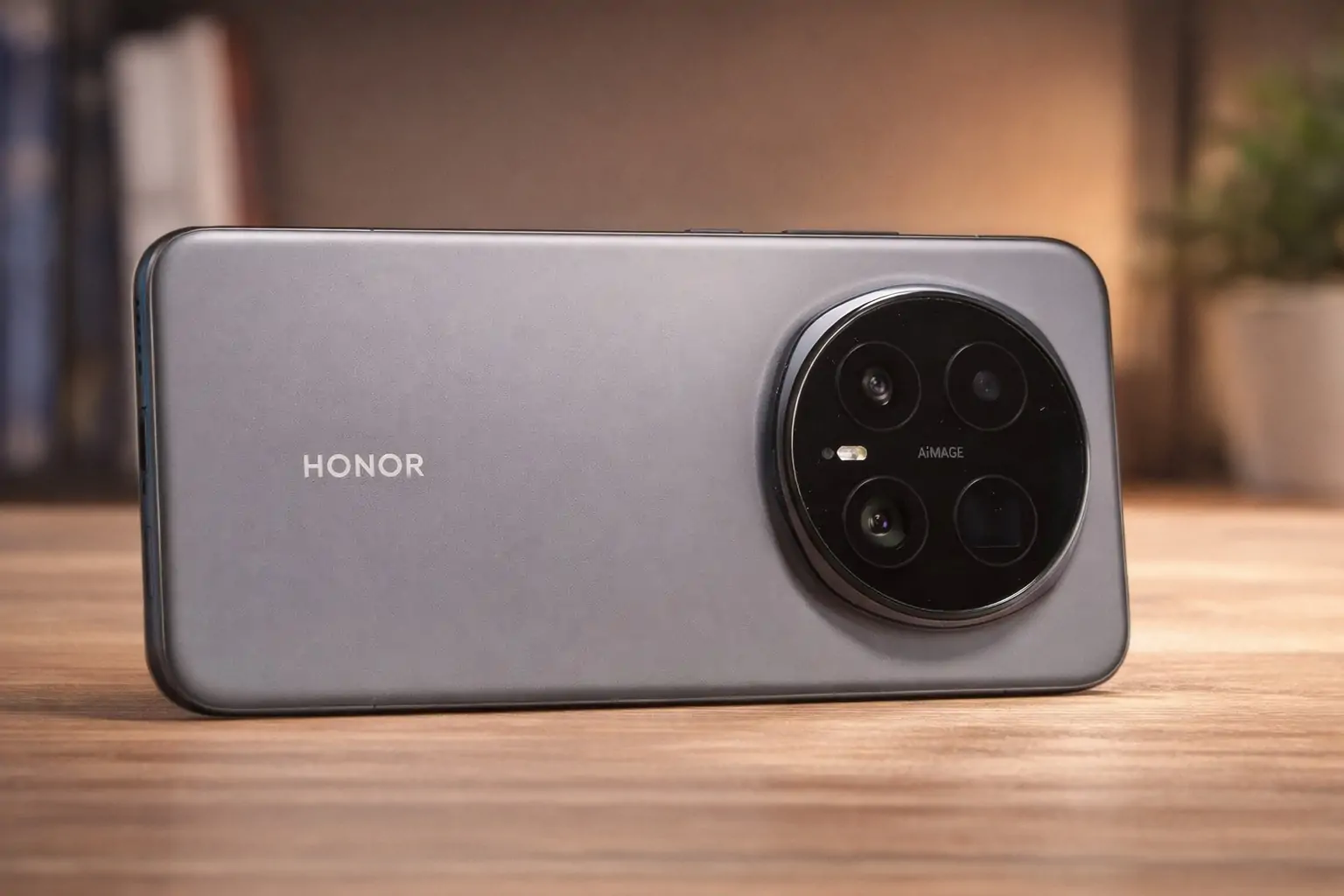

Honor’s Magic 8 Pro is rolling out in the UK and Europe with a 200MP “Ultra Night” telephoto, a new AI Button, a 6,000‑nit OLED, and big-battery endurance. Here’s the latest news and review roundup as of Jan. 10, 2026. Honor
Honor’s latest flagship — the Honor Magic 8 Pro (also styled “Magic8 Pro” in some coverage) — is now in the middle of its global rollout, and the early verdict from reviewers is clear: this is a phone trying to win 2026’s premium Android fight with one headline feature above all — a 200MP telephoto camera tuned for night photography, backed by unusually serious stabilization and a heavy dose of AI. Honor
But the Magic 8 Pro story on January 10, 2026 isn’t just “another flagship launches.” In just a couple of days, the device has sparked a multi-angle coverage cycle: hands-on impressions, a display deep dive, multiple camera-focused reviews, and a wave of early UK carrier bundles and discounts. Here’s what matters right now — and what early reviewers are praising (and criticizing). Digital Camera World
Honor Magic 8 Pro release date, price, and availability
Honor says the Magic 8 Pro has launched in the UK with an official UK price of £1,099.99, and it’s coming in Sunrise Gold, Sky Cyan, and Black.
For the U.S., the situation hasn’t changed: multiple outlets note the Magic 8 Pro isn’t slated for a U.S. release, at least at launch.
Across Europe, pricing is starting to crystallize via retailer listings. NotebookCheck reports a German listing that points to €1,299 as a recommended retail price, with €1,099 referenced as a preorder figure — and suggests preorders could begin January 15 (while noting the official EU release date hasn’t been confirmed).
Magic 8 Pro specs at a glance: what Honor is selling (and reviewers are testing)
Here are the key hardware highlights being repeated across launch coverage and reviews:
- Chipset: Snapdragon 8 Elite Gen 5
- Display: 6.71-inch LTPO OLED, 1–120Hz adaptive refresh rate
- Peak brightness claim: up to 6,000 nits (Honor claim; varies by mode/conditions)
- Battery (Europe/UK): 6,270mAh silicon‑carbon (Honor’s UK launch materials)
- Charging: 100W wired + 80W wireless
- Cameras (rear): 50MP main + 50MP ultrawide + 200MP telephoto (3.7x optical)
- OS: MagicOS 10, based on Android 16
- Ingress protection: IP68 + IP69K mentioned in review coverage
Two details worth underlining because they’re central to the Magic 8 Pro narrative:
- Honor is pushing the camera hardware + stabilization combo as the foundation for better low-light telephoto photos.
- Honor is also putting AI into hardware — with a dedicated AI Button on the frame.
The headline camera story: 200MP “Ultra Night” telephoto + CIPA 5.5 stabilization
Honor’s UK launch announcement pitches a 200MP Ultra Night Telephoto Camera built around a large 1/1.4-inch sensor, f/2.6 aperture, OIS, and 3.7x optical zoom, alongside a 50MP main camera and 50MP ultrawide with macro support.
A key phrase you’ll see repeated is CIPA 5.5 stabilization. Honor says the Magic 8 Pro hits the industry’s most stable “CIPA 5.5-level” result (and ties that to an “AI Adaptive Stabilization Model”). Honor
Digital Camera World goes further, calling out that the telephoto features the first CIPA‑rated optical stabilization system on a phone, and it makes that stabilization a centerpiece of the phone’s night-photography pitch. Digital Camera World
What reviewers are saying about the camera so far
Across the first wave of reviews, the Magic 8 Pro’s camera reputation is forming in a very specific shape:
- Digital Camera World lists “outstanding night photography and stabilisation” and “excellent telephoto and macro performance” as core strengths, while flagging that sharpening can be aggressive and video is the phone’s “biggest missed opportunity.” Digital Camera World
- Android Central’s camera review spotlights the telephoto and its OIS improvements as the real upgrade that changes how the phone shoots, arguing the telephoto can produce natural bokeh without relying on portrait mode and that the stabilization allows longer exposures handheld.
- The Verge frames the telephoto as the current battleground for flagship cameras — and says the Magic 8 Pro gets impressively close to the best, while still sometimes producing oversharpened shots, boosted contrast, and mixed results with fast-moving subjects.
If you’re trying to understand the Magic 8 Pro in one sentence: reviewers are treating it like a serious camera phone first, and everything else (software design, AI button ergonomics, even video) is being judged through that lens.
The display angle: “6,000 nits” is the marketing headline — but the comfort story is the real differentiator
Honor claims the Magic 8 Pro’s 6.71-inch LTPO OLED can hit HDR peak brightness up to 6,000 nits (and also mentions a 1,800‑nit “global peak” figure in the same release notes). Honor
What makes the display newsworthy today is that Android Central’s display-focused testing doesn’t just repeat the peak-brightness claim — it argues the Magic 8 Pro is an unusually complete OLED package for people who care about comfort and accessibility:
- Android Central reports it measured ~3,600 nits in a 10% HDR window (and compares that to other phones it measured, including Samsung and Google models).
- The same piece emphasizes Honor’s multi-pronged eye-care approach, including DC dimming at many brightness levels and high‑frequency PWM dimming options, plus a new built-in flicker detection tool that maps to the IEEE 1789‑2015 guidance graph.
- Honor’s own launch materials list features like “Chip‑Level AI Defocus Display,” “Circular Polarized Display 2.0,” “Circadian Night Display,” and 4320Hz PWM dimming for low‑flicker viewing comfort. Honor
In other words: yes, this is a “brightest OLED” story — but the bigger theme is display comfort as a flagship feature, not just a spec-sheet flex. Android Central
The AI Button: the most controversial new hardware feature
Honor’s new side key is being marketed as a dedicated AI Button separate from the power key. By default, Honor says a double press launches the camera instantly, even from the lock screen, and the button can be customized for quick access to Honor’s AI tools.
This is also the one feature that seems to split reviewer opinion:
- Android Police’s hands-on notes Honor “putting a button on the side of the phone to control AI features” and that it “also doubles as a camera” control. Android Police
- Digital Camera World says the AI button is a shortcut for Honor’s AI features and can double as a camera key — but the reviewer didn’t find Honor’s camera-key implementation particularly useful in practice.
- The Verge calls out that the AI button isn’t very customizable and says you can’t use it to open apps beyond the camera and Honor’s AI features.
The subtext here is bigger than one button: 2026 flagships are increasingly debating whether AI should live in the cloud, in software, in the OS — or in hardware shortcuts that brands hope you’ll actually use. Honor is betting the button makes AI feel immediate, but early coverage suggests it may take time (and better customization) to win over power users.
AI features: AI Photos Agent, Magic Color, deepfake detection, and Gemini integration
Under the hood, Honor’s AI pitch lands in three buckets:
1) AI photography + editing
Honor is promoting an “AiMAGE” system, an AI-powered “Magic Color” engine, and an “AI Photos Agent” with tools like AI Eraser, AI Outpainting, AI Cutout, and AI Color. Honor
Digital Camera World highlights “AI Magic Color” as a way to sample a color style from one image and apply it to other photos (or even new photos), while also noting that results can be inconsistent. Digital Camera World
2) Safety and verification
Honor says the Magic 8 Pro includes AI Deepfake Detection and AI Voice Cloning Detection aimed at flagging face-swap and voice-clone fraud during calls and video chats. BGR notes the claim while also pointing out the obvious question: how well these protections work in practice.
3) Google AI integration
Honor’s launch materials state the phone comes pre-installed with Google Gemini, and it also promotes a three‑month trial of Google AI Pro in some markets.
BGR also reports that Honor is mixing Gemini with Honor’s own AI features and references Google models and features in the AI stack — and notes that MagicOS 10 adds a more transparent visual style compared with previous versions.
Performance and battery: silicon‑carbon endurance (with region differences)
Honor’s launch messaging is straightforward: a 6,270mAh silicon‑carbon battery paired with 100W wired and 80W wireless charging.
But there’s an important detail for buyers comparing reviews: battery capacity varies by region.
- The Verge says the global model it tested is 7,100mAh, while the version going on sale in Europe is 6,270mAh — and still describes it as an “easily” two‑day phone in use. The Verge
- BGR similarly notes the global battery (6,270mAh) is smaller than the Chinese version (7,200mAh).
On the performance side, Honor is also leaning into gaming: the company claims an industry-first GPU–NPU heterogeneous AI super-resolution and frame-generation tech that can upscale and boost frame rates (it gives a specific example of 120fps at 1080p from an original 60fps at 850p).
MagicOS 10: a cleaner look, more ecosystem hooks — and “agree to continue” friction
Honor describes MagicOS 10 as a translucent design refresh and highlights cross-platform sharing and migration tools — including bidirectional transfers with Android, iOS, macOS, and Windows, and device cloning from iPhones (contacts, calendars, photos, notes, reminders, and more).
Reviewers, however, aren’t unanimously sold on the software feel:
- The Verge says MagicOS isn’t its favorite take on Android and calls out preinstalled apps and design choices as irritations — while also noting Honor is promising seven years of software support in Europe (with at least four elsewhere) and that the phone ships with Android 16.
- The Verge also includes a detailed “Agree to Continue” section, listing the terms and agreements users must accept (and additional optional agreements) during setup. The Verge
- Android Headlines’ review echoes a more mixed software stance, listing “MagicOS 10 still needs work” among its cons (along with “camera performance lacks consistency” and the note that the charger and case aren’t included). Android Headlines
Review roundup: what matters most in today’s coverage
Across the reviews and features landing this week, the Magic 8 Pro is consistently being described through a few themes:
The “camera-first flagship” theme
The Magic 8 Pro’s strongest early consensus is that it’s built to compete on photography — especially telephoto and low light — and that it largely succeeds at that mission.
The “display comfort without compromise” theme
Android Central’s display coverage frames the Magic 8 Pro as a rare OLED that combines high brightness, strong eye-care options, and accessibility features in one package.
The “AI everywhere — but is it useful?” theme
Honor’s AI is both ambitious and broad: it spans camera, editing, system actions, safety features, and Gemini integration — yet the dedicated AI Button is already being questioned for customization and real-world usefulness.
The “great hardware, mixed software polish” theme
Even positive reviews tend to be more cautious about MagicOS 10’s overall refinement compared with the enthusiasm around camera/battery/display.
Today’s UK deals and bundles: what’s being advertised on Jan 10
Alongside reviews, UK deal coverage is ramping up — and the angle is familiar: bundle a flagship with wearables/tablets to make the sticker price feel easier to swallow.
One example highlighted in UK deal reporting today: a Vodafone promotion described as offering a “free tech bundle” valued at £814 (including items like an Honor tablet and smartwatch) when purchasing the Magic 8 Pro within a specified window, with claim deadlines and stock limits. As always, these bundles are promotion-specific and typically come with eligibility rules and redemption steps. The Sun
If you’re buying primarily for the phone (not the extras), it’s worth doing the quick math: promotional bundles can look huge on paper, but the true value depends on whether you’d have bought the add-ons anyway.
Should you buy the Honor Magic 8 Pro right now?
The early coverage suggests the Magic 8 Pro makes the most sense for three groups:
- Mobile photographers who care most about telephoto portraits, night shooting, and stabilized zoom.
- Heavy users who want two-day endurance and very fast charging (even on the smaller EU battery variant).
- Display-sensitive users who care about eye comfort features and want an OLED that doesn’t force trade-offs in brightness.
And it may be a tougher sell if:
- You shoot a lot of video and want the most consistent flagship video pipeline (a specific criticism raised in camera-focused review coverage).
- You value a super-clean, minimal Android skin and dislike setup “agree” friction. The Verge
- You’re in the United States, where major outlets say it’s not available at launch.
Quick FAQ for Google Discover readers
What’s the Honor Magic 8 Pro price in the UK?
Honor lists the Magic 8 Pro at £1,099.99 in the UK.
What’s the main new camera feature?
A 200MP “Ultra Night” telephoto with a large sensor, OIS, and a heavy emphasis on stabilization and low-light zoom performance. Honor
Does it really hit 6,000 nits?
Honor advertises up to 6,000 nits peak HDR brightness. Independent testing discussed in early coverage highlights extremely high measured HDR brightness too, though real-world brightness varies by content, window size, and conditions.
What does the AI Button do?
Honor says it can launch the camera with a double press and can be set up for AI shortcuts. Early hands-on and review coverage says customization is limited and usefulness depends on how you work.
Is the Magic 8 Pro coming to the U.S.?
Early UK/Europe launch coverage says it’s not launching in the U.S. right now.