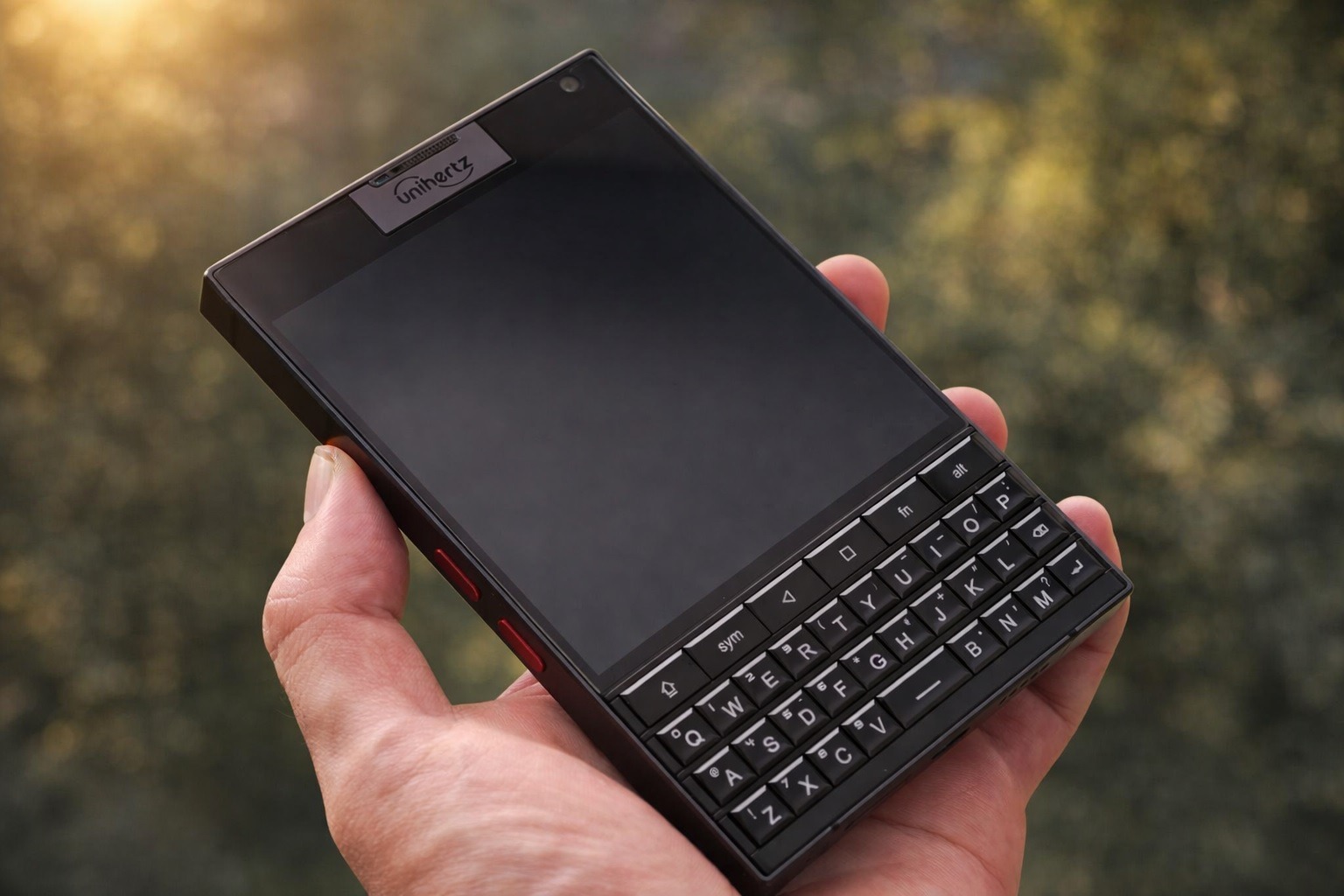

Unihertz teases the Titan 2 Elite, a smaller BlackBerry‑style Android QWERTY phone headed for MWC 2026—just as Clicks and others push keyboard phones back into the spotlight.
Jan. 14, 2026 — The touchscreen “glass slab” era has dominated smartphones for nearly two decades, but 2026 is starting with a surprisingly loud counter‑signal: the physical keyboard is back in the headlines. This week, Unihertz teased the Titan 2 Elite, a slimmer, more modern‑looking follow‑up to its Titan line—while Clicks is pushing the idea of a keyboard‑first “second phone” after its CES 2026 reveal. The Verge
For most people, a QWERTY smartphone is an anachronism. For a niche—but persistent—crowd of writers, email power users, and BlackBerry nostalgics, it’s a productivity tool modern phones never fully replaced. And on Jan. 14, new reporting and editorials are framing these devices not as pure nostalgia, but as a deliberate alternative to attention-hungry smartphones.
What’s happening today: the Titan 2 Elite joins a growing “keyboard phone” wave
A Polish handset site, mGSM, published new coverage on Jan. 14, 2026 noting that QWERTY phones remain too niche for most major brands—yet Unihertz is preparing another entry anyway, following last week’s Clicks Communicator news.
That timing matters. In the span of days, we now have two distinct takes on “phones with buttons”:
- Unihertz Titan 2 Elite: a traditional smartphone form factor with an integrated physical keyboard, pitched as a more pocket-friendly evolution of the Titan line.
- Clicks Communicator: a messaging‑first device positioned as a companion/secondary phone—designed to help users communicate without falling into endless scrolling.
The result is that “keyboard phones” are suddenly being discussed less as a retro novelty, and more as a small-but-real product category trying to re-emerge in 2026. Gizmodo
Unihertz Titan 2 Elite: what we know so far
Unihertz hasn’t done a full announcement yet—this is still in teaser territory. But the teaser image(s) already reveal several concrete design decisions.
A smaller, sleeker Titan is coming
The Verge reports Unihertz plans to announce a “smaller and sleeker Titan 2 Elite” at MWC in March 2026, specifically targeting people who liked the idea of the Titan 2 but wanted something easier to pocket. The Verge
Gizmodo similarly describes the Titan 2 Elite as a less “gimmicky” take compared to the Titan 2, while noting the sudden clustering of QWERTY announcements early this year. Gizmodo
The teaser points to a modern screen and a reworked keyboard layout
Based on the official render shown so far, Notebookcheck highlights:
- Rounded corners and a more contemporary front design
- A punch‑hole selfie camera (visible in the top-left area in the teaser render)
- A four-row physical QWERTY keyboard, apparently without a dedicated number row (numbers likely accessed via a function key)
- Navigation keys moved closer to the spacebar, hinting at a tighter, more compact layout
Yanko Design also points to the punch‑hole front camera and the navigation-key/spacebar layout change as a major clue that Unihertz is shrinking the overall footprint while keeping the keyboard-centric identity.
The big unknowns: specs, price, and launch timing
Unihertz has not fully disclosed what will power the Titan 2 Elite. The Verge explicitly notes that the chipset is not yet known.
Some coverage has floated specific spec claims, but even those outlets acknowledge there’s no official word yet on the full display/battery details, pricing, or the release timeline beyond the MWC plan.
Android Police’s coverage frames it similarly: the Titan 2 Elite appears to be a smaller, BlackBerry-like revival play—yet the meaningful details will come later.
Why the Titan 2 Elite matters: Unihertz is moving from “quirky” to “mainstream-ish”
Unihertz has long existed in the corners of the smartphone market, building devices that big OEMs rarely touch: tiny Android phones, rugged battery monsters, and niche keyboard devices. Gizmodo points to that identity directly, mentioning Unihertz’s small Jelly phones and its Tank series.
What’s different with Titan 2 Elite is the design language. Compared with the Titan 2’s more squared, distinctive look, the Elite render leans into the modern smartphone silhouette—rounded edges, big screen presence, and a keyboard that looks integrated rather than “bolted on.”
If the Titan 2 was about proving the concept still sells, the Titan 2 Elite looks like it’s trying to make the concept feel normal again—or at least less “novelty gadget.”
Titan 2 vs. Titan 2 Elite: the clearest differences (so far)
Unihertz is already selling the Titan 2 on its site as a “5G QWERTY physical keyboard smartphone” with a listed price of $399.99.
So the Titan 2 Elite’s promise isn’t “a keyboard phone exists.” It’s “a keyboard phone that’s easier to live with.”
Here’s what the current reporting suggests:
- Size/shape: Titan 2 Elite is expected to be smaller and more pocketable, with rounded corners.
- Keyboard layout: The Elite teaser shows a keyboard arrangement that appears more compact, with navigation keys near the spacebar and likely no dedicated number row.
- Hardware details: Titan 2 Elite specs are not confirmed yet, while the Titan 2 is a known quantity already on sale.
If Unihertz gets the thickness, weight, and key feel right—without sacrificing modern essentials (5G bands, good radios, decent cameras, and reasonable software support)—the Titan 2 Elite could be the most “approachable” modern QWERTY Android phone in years.
The other big keyboard-phone headline: Clicks Communicator goes “second phone” at CES 2026
Clicks has been known for keyboard accessories, but at CES 2026 the company moved into hardware: the Clicks Communicator, presented as a phone built around communication rather than consumption. Gizmodo describes it as a $500, QWERTY-equipped “second phone,” shown at CES without a fully functional unit on the floor. Gizmodo
Other outlets and reporting add detail:
- MacRumors, citing a press release, quotes Clicks’ leadership describing Communicator as a complementary device—“a smartphone” optimized for communication—and argues a “two-phone lifestyle” is becoming more common.
- The same report lists hardware specifics including USB‑C, a 3.5mm headphone jack, microSD support, and cameras—leaning hard into practical, old-school “everything you actually use” features.
- Stuff frames it as an antidote to doomscrolling, describing a custom launcher approach that aggregates messaging notifications for triage, plus features like a signal-style notification light.
Pricing is also being positioned as a deliberate “early adopter” funnel: MacRumors reports a U.S. introductory price of $499, with an option to lock a $399 price via a deposit before late February.
The key distinction from Unihertz is philosophical: Clicks is openly leaning into intentional use and specialization, while Unihertz tends to sell keyboards as a way to make a primary smartphone more productive.
That difference is showing up in today’s conversation. A PhoneArena editorial published today argues that 2026 may be the year “companion phones” become a real category—devices that don’t remove capability, but reshape behavior by design (smaller screens, text-first interfaces, physical keys).
Why the physical QWERTY phone is resurfacing now
The most obvious explanation is nostalgia. But the current wave is being pitched more as friction by design—a way to slow down the interaction loop.
Gizmodo points to several motivations being floated across the discourse: frustration with software keyboards, boredom with same-y slabs, and the simple appeal of tactile typing.
There’s also a market timing angle:
- Smartphones are increasingly defined by AI features, big screens, and social-first consumption patterns.
- At the same time, a growing slice of users wants devices that feel more like tools—focused, reliable, and less attention-extractive.
In that context, keyboard phones become less of a throwback and more of a counter-programming product: not for everyone, but potentially valuable for the people who live in email, Slack, and long-form messaging.
What to watch next: MWC 2026 will be the Titan 2 Elite’s real moment
The Titan 2 Elite teaser is compelling, but the device won’t be judged on the render. The real questions likely won’t be answered until MWC:
- How small is “smaller”? Dimensions and weight matter more than nostalgia. The Verge
- Keyboard feel and layout: Are the keys clicky enough? Is there smart key mapping for modern apps?
- Software support: Niche phones often struggle with long update promises; buyers increasingly care about patch cadence and Android version upgrades. (Not yet detailed for Titan 2 Elite.)
- Price and availability: Will Unihertz keep the Elite in an impulse-buyable range, or position it as a premium niche device?
Unihertz has already built a reputation for serving weird-and-wonderful niches. If it can pair that with a design that doesn’t feel like a novelty, the Titan 2 Elite could be the most credible “modern BlackBerry-ish” Android phone teased in a long time. The Verge
Quick FAQ
Is the Unihertz Titan 2 Elite a real BlackBerry phone?
No. It’s a Unihertz device styled in the spirit of classic BlackBerry-era QWERTY phones, but it’s not a BlackBerry-branded handset.
When will the Titan 2 Elite be announced?
Unihertz is expected to announce it at MWC in March 2026, based on current reporting.
Do we know the Titan 2 Elite specs yet?
Not fully. Reporting notes that Unihertz has not disclosed key hardware details such as what will power the phone.
Why are keyboard phones coming back in 2026?
The current pitch mixes nostalgia with productivity and “intentional tech” framing—devices designed to make typing feel better and reduce mindless scrolling. Gizmodo