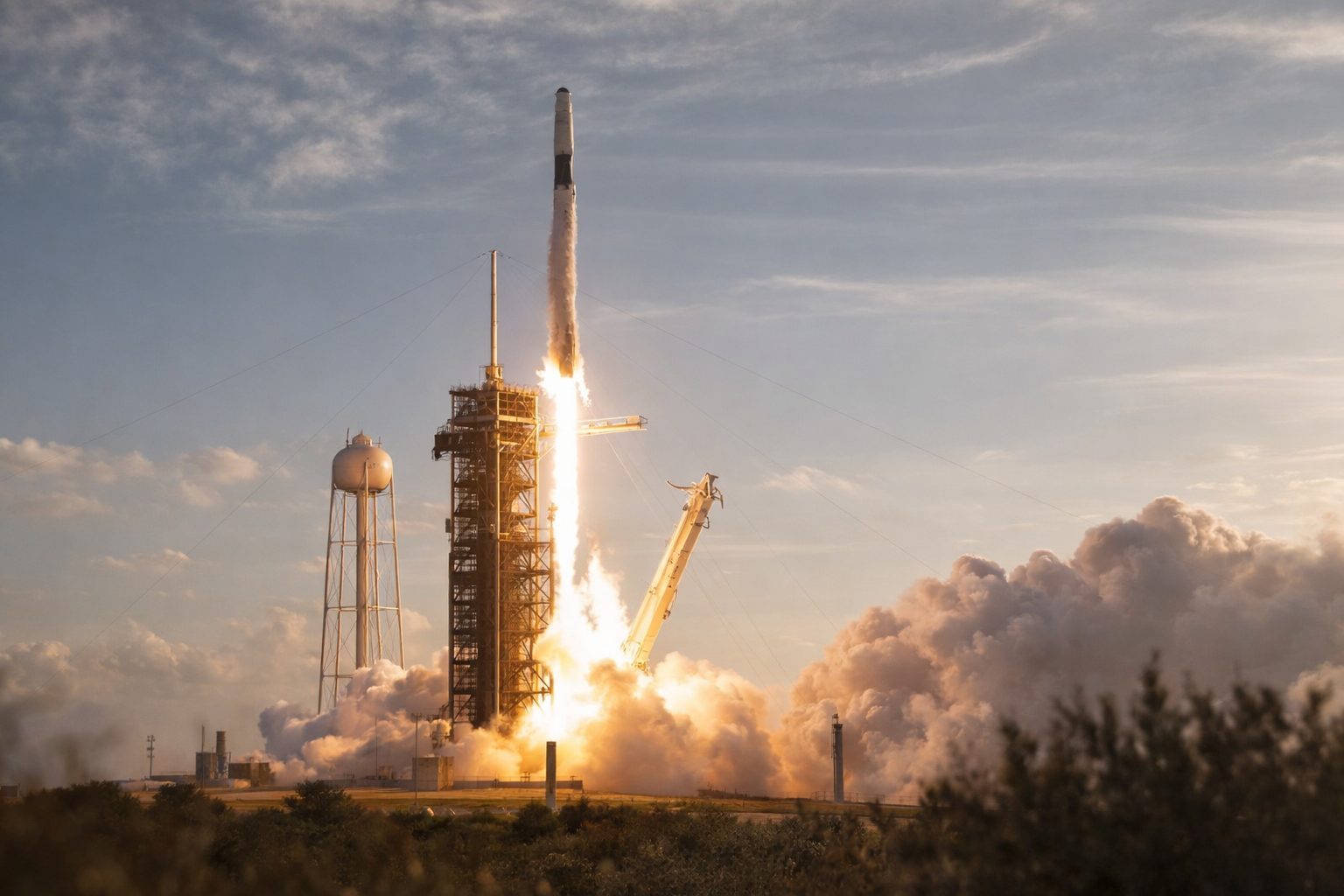

VANDENBERG SPACE FORCE BASE, Calif., Jan. 18, 2026, 03:27 PST
- SpaceX carried out the NROL-105 mission for the U.S. National Reconnaissance Office, launching from California
- The NRO labeled this its 12th launch under the “proliferated architecture” program and mentioned roughly a dozen missions slated for 2026
- Details about the payload, such as the number of satellites and orbit information, were not revealed
SpaceX kicked off a classified mission for the U.S. National Reconnaissance Office late Friday, lofting the NROL-105 payload into orbit from California’s Vandenberg Space Force Base. After deploying the national security satellite, the Falcon 9 booster touched down at Landing Zone 4. The agency described this launch as the 12th in support of its proliferated architecture.
This launch supports the NRO’s shift toward a “proliferated architecture”—deploying numerous smaller satellites in low Earth orbit rather than relying on a few large ones—as it revamps its approach to gathering and transmitting surveillance data. “Having hundreds of small satellites on orbit is invaluable to the NRO’s mission,” said NRO Director Chris Scolese in a press kit.
Military and intelligence clients are banking on numbers: having more satellites reduces the gap between revisits of the same spot and strengthens the network’s resilience against interference. This approach is crucial now, as the NRO is pushing for a rapid launch pace instead of a drawn-out deployment over several years.
SpaceX ended its webcast soon after the booster touched down, with neither the company nor the NRO revealing the number of satellites onboard or their deployment schedule, according to Space.com. The report noted that the proliferated-architecture spacecraft are developed by SpaceX and Northrop Grumman, describing NROL-105 as the firm’s inaugural national security mission of 2026.
Spaceflight Now reported the launch took place at 8:39:51 p.m. Pacific time, with the first-stage booster identified as B1100 on its second mission. The outlet also noted that the NRO has arranged Falcon 9 launches for the expanded constellation outside the National Security Space Launch program, which is the Space Force’s primary contract for top-tier payloads.
That sheds light on why SpaceX’s Falcon 9 continues to dominate intelligence launches, despite the Space Force’s efforts to keep competition alive. United Launch Alliance, the joint venture between Boeing and Lockheed Martin, still stands as the other major U.S. player in national security launches. Yet, the growing constellation has increasingly depended on Falcon 9’s rapid turnaround thanks to its reusability.
The jargon can get dense. “Revisit rate” just means how frequently a satellite passes over the same spot. Low Earth orbit places spacecraft closer to Earth, causing them to orbit rapidly — which helps, but it also nudges operators to deploy bigger constellations to keep coverage steady.
This mission touches down amid SpaceX’s relentless stream of Falcon 9 launches, many aimed at growing its Starlink internet constellation. While government missions carry a different air of secrecy and purpose, they still rely on the very same rocket factory and launchpads.
The NRO’s mission brief revealed the NROL-105 emblem sporting the tagline “Strength in Numbers,” highlighting the agency’s reliance on a fleet of numerous small satellites. It kept specifics about the payload under wraps. National Reconnaissance Office
Yet, a large part of the mission remains shrouded in secrecy. Classified payloads prevent outsiders from verifying satellite deployment, while any Falcon 9 launch failure or lengthy ground delay could disrupt a tightly packed schedule blending government and commercial flights.
The NRO is currently betting on volume and repetition, planning a wave of launches through the decade to grow what it calls an expanding constellation. With Falcon 9 reuse now standard practice, SpaceX stands ready to handle a steady stream of those missions.