
LONDON, January 18, 2026, 11:31 GMT
- In 2027, Eutelsat will begin launching OneWeb LEO satellites under a multi-launch agreement with MaiaSpace.
- Qualcomm had already brought six Android manufacturers on board to build phones featuring Snapdragon Satellite messaging.
- Standards-based “direct-to-handset” connections are picking up momentum, though the schedule and adoption rates are still unclear.
European satellite operator Eutelsat has inked a multi-launch deal with French startup MaiaSpace to deploy its low-Earth-orbit satellites starting in 2027. MaiaSpace, part of ArianeGroup, is working on a partially reusable rocket—an innovation set to be a European first. Eutelsat also owns OneWeb, which operates the only other low-Earth orbit constellation rivaling SpaceX’s Starlink. Reuters
Competition for launch slots and satellite bandwidth is heating up as firms strive to expand mobile coverage from orbit—even to standard smartphones. Last year, Starlink landed what it called its largest “direct-to-cell” agreement with telecom group Veon, offering satellites that function like cell towers to reach areas beyond traditional networks. Reuters
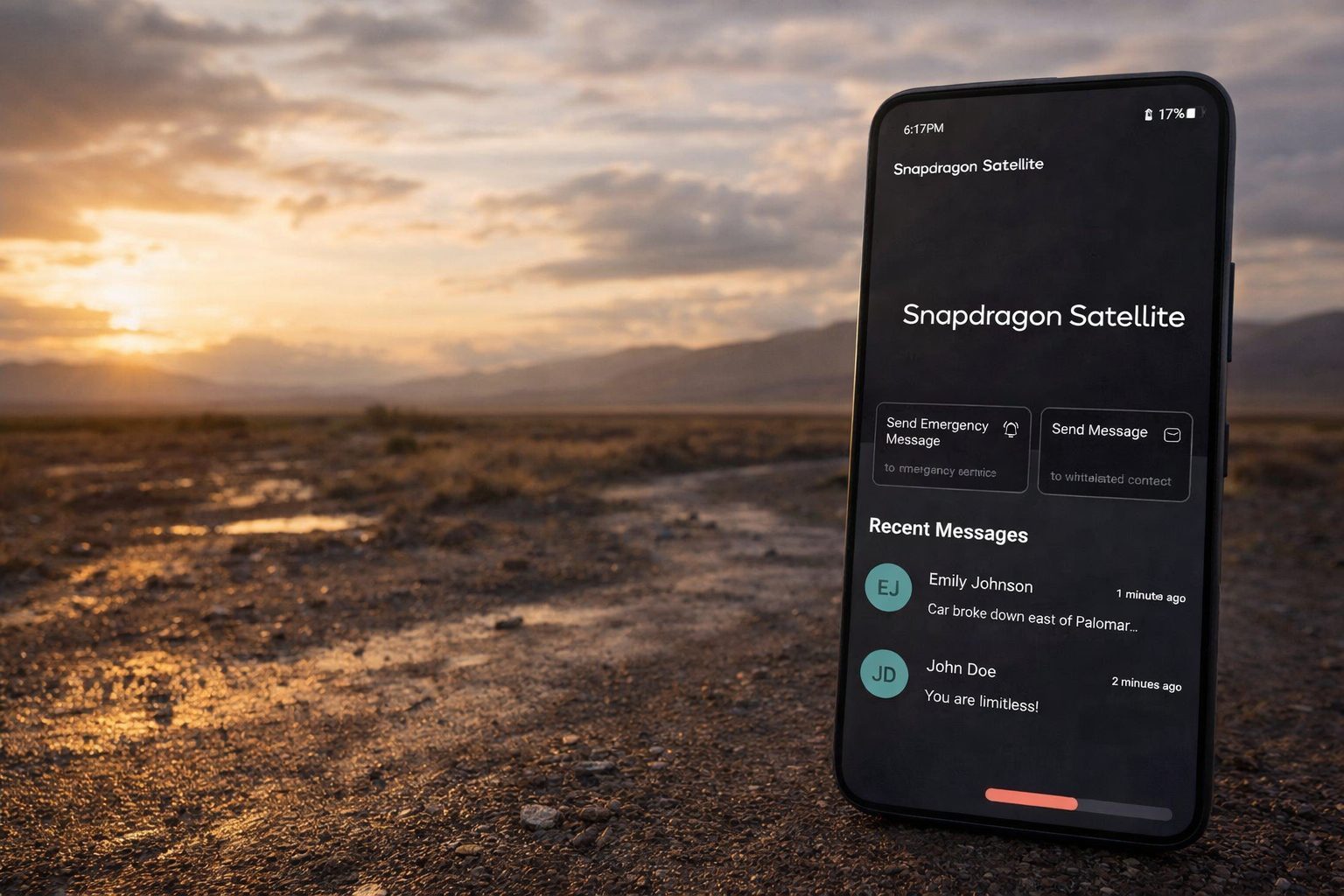
Qualcomm, known for powering many Android devices, has been targeting the off-grid messaging space. At Mobile World Congress in Barcelona in March 2023, it announced early partners for its Snapdragon Satellite feature: Honor, Motorola, Nothing, Oppo, vivo, and Xiaomi. This system connects to Iridium’s low-Earth-orbit network, enabling emergency messaging and SMS. Qualcomm’s Francesco Grilli called Iridium a “mature” LEO constellation suitable for this use. Uktin
Qualcomm unveiled Snapdragon Satellite at CES in January 2023, promising initial device rollouts in select markets during the second half of the year, beginning with phones powered by its Snapdragon 8 Gen 2 chip. The messaging system would leverage Iridium’s satellite network, while Garmin was tapped to manage emergency response coordination, Qualcomm revealed. Meanwhile, Apple has been developing satellite emergency communication for iPhones in partnership with satellite provider Globalstar. Reuters
The initial wave of proprietary satellite-to-phone initiatives has hit a snag: handset makers and carriers favor standards-based solutions over ones locked to a single network. When Qualcomm and Iridium ended their satellite chip partnership in 2023, Peter Kibutu, advanced technology lead for non-terrestrial networks at consultancy TTP, remarked that “proprietary satellite technology” should be viewed as a stopgap. Telecoms
Standards work has kept progressing. In late 2024, Deutsche Telekom, Skylo, and Qualcomm announced they had successfully completed an end-to-end SMS test over satellite using 3GPP Release 17 — the 5G standards package that introduces support for “non-terrestrial networks,” or NTN, which refers to satellite links. Qualcomm’s Dino Flore explained the test “achieved NB-NTN direct-to-handset messaging,” leveraging a narrowband, low-data-rate satellite connection tailored for texts and alerts. Skylo
In September 2024, Skylo announced plans to integrate satellite messaging, location sharing, and SOS capabilities into smartphones via Qualcomm’s Snapdragon X80 Modem-RF system. The goal is to make satellite connectivity feel like a seamless extension of regular coverage, rather than a niche add-on. Grilli described this as an “impressive moment” for cellular connectivity. Skylo CTO Andrew Nuttall highlighted that satellite access offers users “peace of mind” when terrestrial networks fail. Skylo
Qualcomm is pushing satellite connectivity beyond just smartphones, highlighting wearables as a logical next frontier for emergency messaging. In an August 2025 update, the company revealed that its Snapdragon X80 modem supports both terrestrial and satellite networks, enabling devices meant for constant use—like those worn on the wrist—to send emergency data. Qualcomm
Eutelsat is keen on having more launch options as it works to rebuild and expand OneWeb’s satellite fleet. Just earlier this month, the company and Airbus announced an order for 340 additional low-Earth-orbit satellites, pushing their total contracted count to 440. Deliveries are slated to begin at the end of 2026. Reuters
Bringing satellite connectivity to the average phone hasn’t happened as quickly as promised. Added radio components, service charges, and patchy regulations have all held back widespread use. Plus, a user still needs an unobstructed view of the sky. Qualcomm pulled the plug on its direct-to-device deal with Iridium after smartphone manufacturers steered clear of satellite-compatible chips. Analysts blame the price and the absence of unified standards for the slow progress. Via Satellite
European carriers are still pushing boundaries. In January 2025, Vodafone announced it had completed what it claimed was the world’s first satellite video call on a regular smartphone from a remote spot. The company aims to expand this technology throughout Europe later in 2025 and into 2026. Reuters