
NEW YORK, Jan 19, 2026, 06:34 (EST)
- In SlashGear’s recent showdown, the iPhone 17 Pro Max came out ahead of Google’s Pixel 10 Pro XL
- Earlier, the same source showed a preference for Samsung’s Galaxy S25 Ultra over Apple’s leading iPhone
- Leaks and early previews have started to turn the spotlight on Samsung’s upcoming Galaxy S26 Ultra
On Monday, SlashGear published a fresh head-to-head review that placed Apple’s iPhone 17 Pro Max just ahead of Google’s Pixel 10 Pro XL. This latest showdown adds to a growing wave of direct comparisons, turning spec sheets into an early battleground for the high-end smartphone market.
As the U.S. smartphone market tightens around a handful of major players, buyers face the choice: upgrade now or hold off. According to Canalys data highlighted in a Filmogaz roundup, Apple holds 49% of the U.S. market by mid-2025, with Samsung trailing at 31%. That leaves scant room for smaller brands to make a dent.
The $1,000-plus phone segment is where much of the industry’s profit lives now, and the focus is shifting once more—this time to on-device AI, camera zoom, and faster charging. “Apple and Samsung posted strong results as their latest devices encouraged consumers to upgrade in the premium segment,” said Francisco Jeronimo, a vice president at IDC. Idc
On Jan. 17, SlashGear compared Samsung Electronics’ Galaxy S25 Ultra and the iPhone 17 Pro Max, noting the Galaxy starts at $1,049.99—cheaper than the iPhone’s $1,199. They highlighted Samsung’s built-in stylus and more versatile camera setup as key advantages for many users. Both phones kick off with 256GB storage and 12GB RAM, the article noted.
That earlier article also focused on the hands-on details users pick up after about a week. Samsung sticks with a physical SIM slot, whereas Apple in the U.S. goes purely with eSIM — a digital SIM embedded in the device. Plus, the iPhone drops the fingerprint reader in favor of Face ID, according to SlashGear.
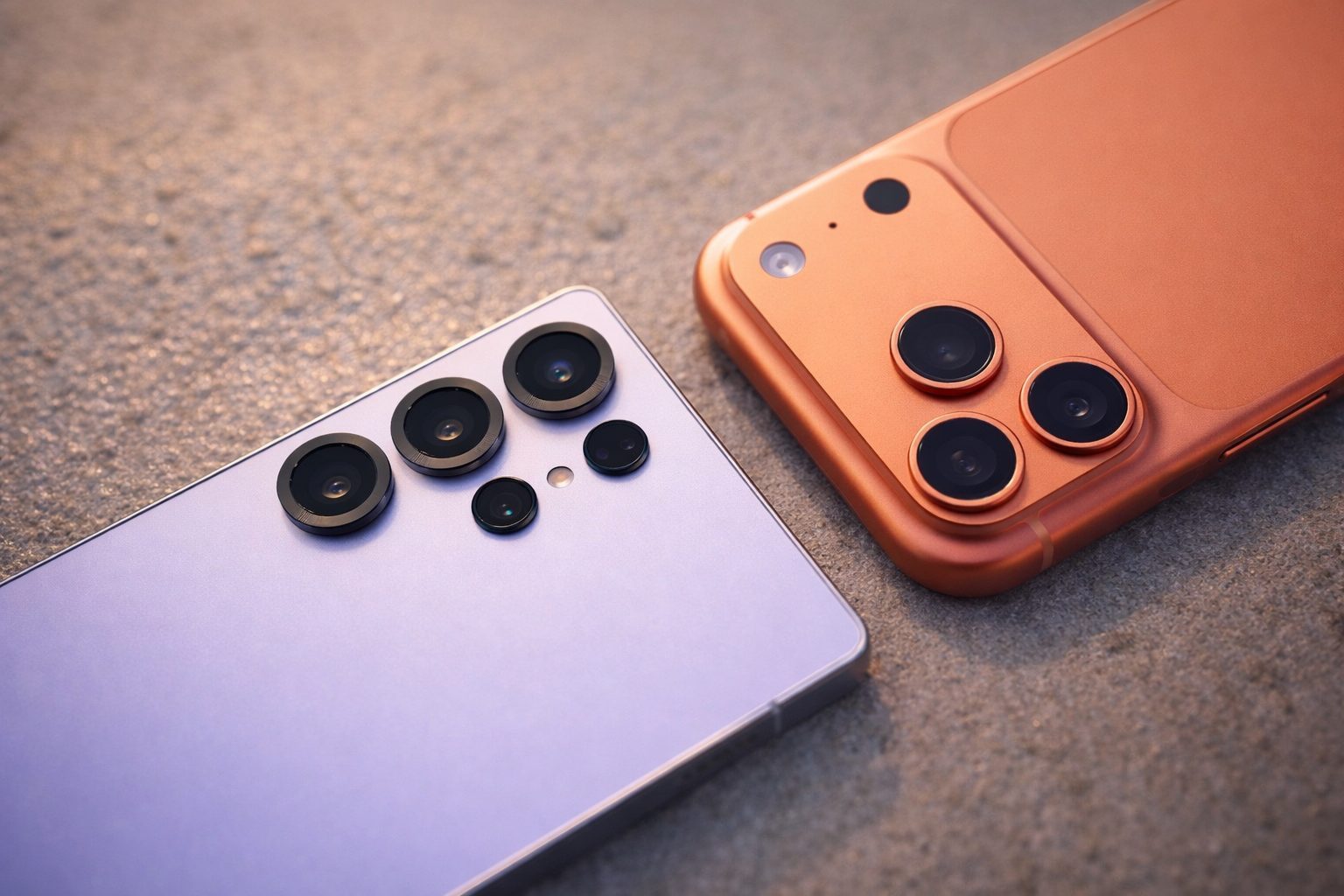
SlashGear called Samsung’s camera setup more flexible, featuring a 200-megapixel main sensor backed by two telephoto lenses. In comparison, Apple’s iPhone 17 Pro Max sticks with three 48-megapixel rear cameras, relying heavily on software tricks like portrait effects and a dedicated Camera Control button.
Monday’s iPhone-versus-Pixel showdown saw SlashGear label the Pixel 10 Pro XL a niche player that’s “steadily gaining market share,” though Apple and Samsung remain ahead, with Motorola trailing in the midrange segment. The site also noted Apple’s A19 Pro chip “almost” doubled Google’s Tensor G5 in Geekbench 6, a go-to benchmark for processor speed comparisons.
The article pinpointed AI as the true battleground. Apple is launching new features branded under Apple Intelligence, while Google has woven Gemini further into the Pixel’s software and camera functions — like the “Add me” feature that merges two group shots to add the photographer into the frame.
Apple says the iPhone 17 Pro models are powered by an A19 Pro chip featuring a vapor chamber—a heat spreader that helps dissipate heat during intense use. The phones boast 48-megapixel rear cameras alongside an 18-megapixel front shooter. They also support 4K video recording at 120 frames per second, enabling smooth motion and slow-mo effects.
Talk is already shifting to the next Galaxy, with Samsung-centric site SammyFans advising some to hold off for the Galaxy S26 Ultra. Leaks hint at 60-watt wired charging and a Snapdragon 8 Elite Gen 5 chip. Samsung’s next Unpacked event is “reportedly” scheduled for Feb. 25 in San Francisco. Sammyfans
PhoneArena, referencing leaks, reports the base Galaxy S26 might stick with 25W charging, while the S26 Ultra could jump to 60W wired and 25W wireless charging. Watts indicate charging power—higher numbers usually mean quicker charges—but the site notes conflicting info on the Ultra’s battery size.
The downside is clear: leaks create chaos, and prices might rise even if the hardware gets better. Counterpoint Research reported a 2% jump in global smartphone shipments for 2025, with Apple leading at a 20% share, followed closely by Samsung at 19% and Xiaomi at 13%. Still, Tarun Pathak, Counterpoint’s research director, cautioned that the market could “soften in 2026 amid chip shortages and rising component costs.” Reuters
Right now, the comparisons highlight where the battle is really focused: cameras, AI capabilities, and charging tech—not just screen dimensions or brand loyalty. The bigger challenge? Getting customers to believe the next upgrade is actually worth the price—once more.