
Beijing, January 29, 2026, 21:08 (GMT+8)
- China’s main space contractor plans space-based AI data centres within five years, state media reported.
- The plan also sets a target for suborbital tourism flights and points to a solar-powered “Space Cloud” by 2030.
- SpaceX chief Elon Musk has pitched solar-powered AI satellites in orbit as a cheaper answer to Earth’s energy limits.
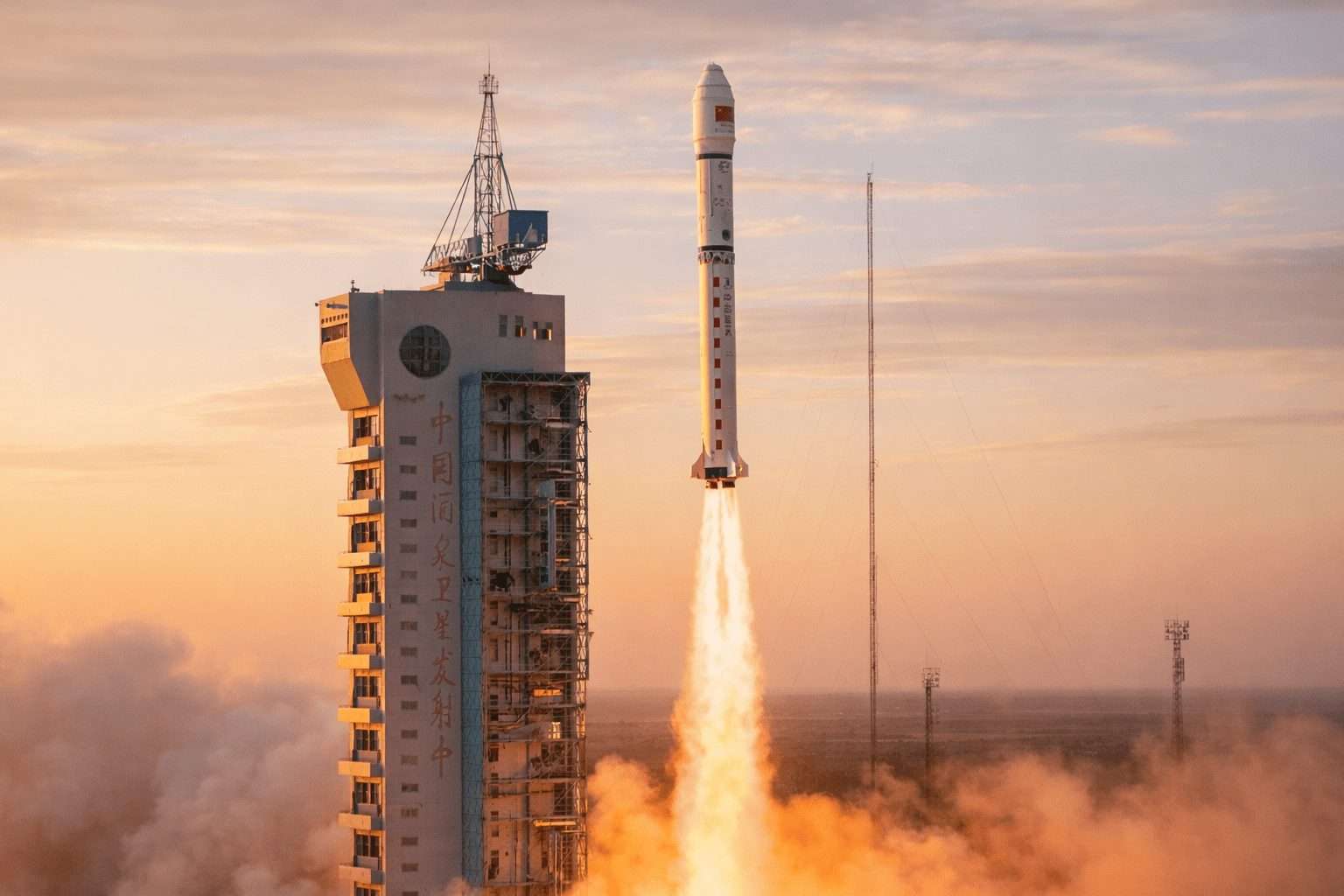
China plans to launch space-based artificial intelligence data centres over the next five years, state media reported on Thursday, as the country’s main space contractor also set out goals for space tourism and deeper space work.
The push matters now because AI systems are driving a surge in demand for data centres — giant clusters of computers — and the power they consume is becoming a constraint as much as chips are. It also opens a new front in the U.S.-China contest over space, shifting part of the argument from rockets and moonshots to computing and energy.
China Aerospace Science and Technology Corporation (CASC), the country’s main space contractor, outlined the goals in a five-year development plan cited by state broadcaster CCTV. A December CASC policy document also points to an industrial-scale “Space Cloud” — a network of solar-powered computing hubs in orbit — by 2030, as part of the upcoming 15th Five-Year Plan. Yahoo
CCTV said the new space data centres would integrate “cloud, edge and terminal” computing — meaning some processing happens closer to where data is collected — and combine computing power, storage and transmission so data can be handled in orbit rather than sent back down first.
SpaceX expects to use funds from a planned $25 billion initial public offering this year to develop orbital AI data centres, the report said. Musk told the World Economic Forum in Davos last week that building solar-powered data centres in space was “a no-brainer,” arguing that solar generation in orbit can produce about five times more power than panels on the ground. Reuters
CASC’s plan also vows to “achieve the flight operation of suborbital space tourism” and then develop orbital tourism, CCTV reported. Suborbital flights reach space and return without circling Earth; orbital trips complete at least one lap around the planet.
The same week, the University of the Chinese Academy of Sciences launched a new School of Space Exploration aimed at cultivating talent in interstellar propulsion and deep-space communication and navigation, according to a report on the academy’s website. Zhu Junqiang, an academician and the school’s dean, said it aimed to become “a key base” for foundational aerospace research and high-level talent training. Cas
At the inauguration in Beijing, UCAS President Zhou Qi said China had already “stepped beyond Earth,” citing the country’s space station, far-side lunar exploration and Mars missions, China Daily reported. Zhou also called talent the core of the project, saying “the heart of a school is nurturing people.” Com
The announcements land as Washington and Beijing push to return astronauts to the moon, where no humans have gone since the last U.S. Apollo mission in 1972. China and the United States are also racing to make space a bigger commercial market, while weighing the military and strategic value of satellites and launch capability.
But China’s biggest bottleneck so far is reusable rocketry, after failing to complete a reusable rocket test, the report said. SpaceX’s reusable Falcon 9 has helped its Starlink unit build a near-monopoly in low Earth orbit — a band a few hundred kilometres up where many satellites operate — and Falcon 9 is also used for orbital space tourism.
China logged a record 93 launches in 2025, according to official announcements, helped by a fast-growing crop of commercial space startups. The next test is whether the country can pair that pace with cheaper, reusable launches and the power-and-data links needed to keep large computing platforms running in orbit.