
Cupertino, California, Feb 2, 2026, 00:07 (PST)
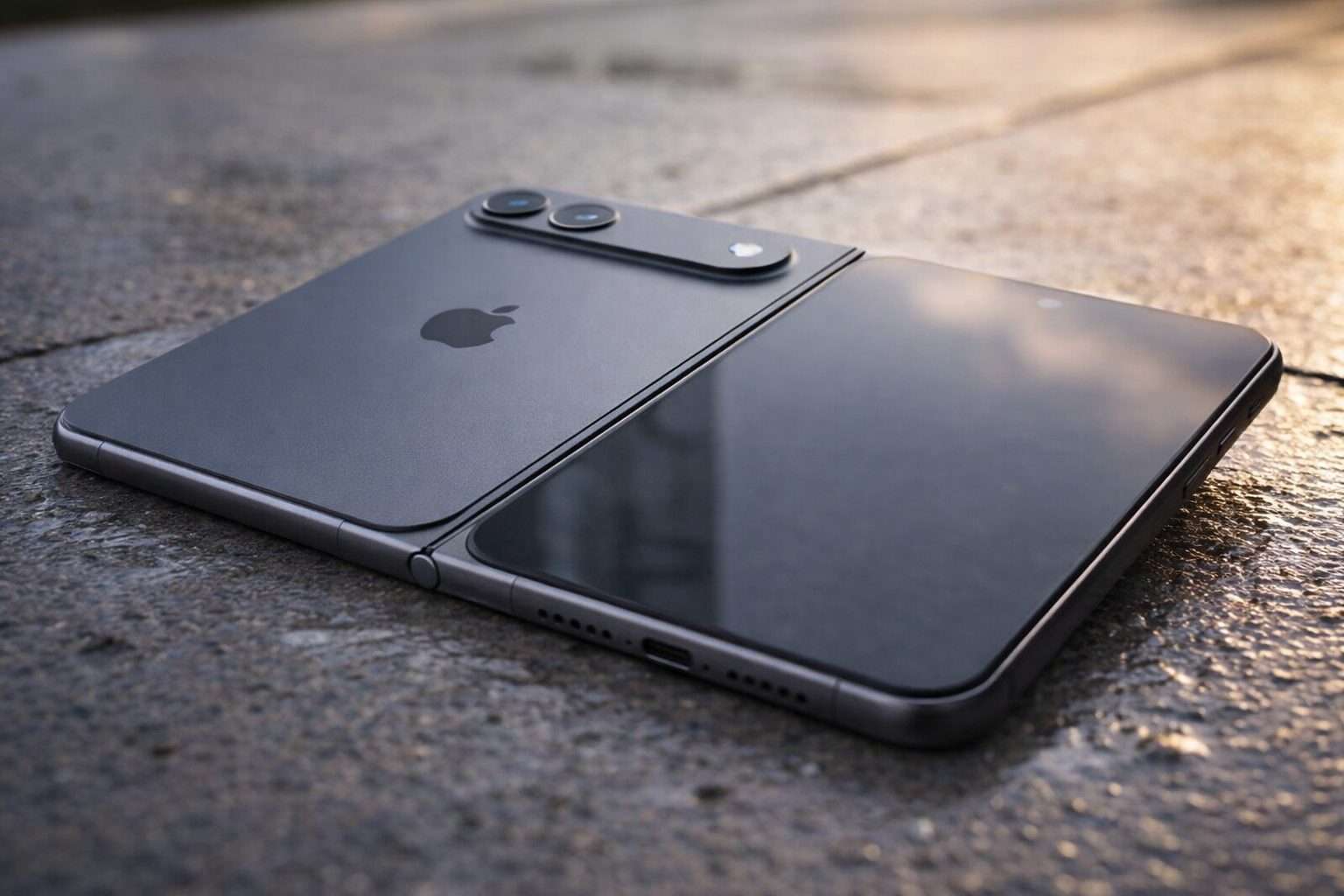
- Reports suggest Apple is considering a foldable phone with a square, clamshell design.
- Another leak suggests the first foldable iPhone will feature a battery exceeding 5,500 mAh, surpassing all previous iPhone models.
- Samsung Electronics and Google both offer foldables, yet battery life continues to be a key challenge.
Mark Gurman shared in Bloomberg’s Power On newsletter that Apple is exploring a new foldable device: a square, clamshell-style phone, as reported by The Mac Observer. He cautioned, though, that this clamshell concept is still “far from guaranteed” to make it to market. The Mac Observer
This matters because the chatter about a foldable iPhone has moved from “if” to “what shape.” And the shape influences cost, battery life, and user experience. Foldables have carved out a premium spot, but they still compromise on bulk, heat, and battery runtime to deliver larger screens.
MacRumors reported that a Weibo user named Fixed Focus Digital revealed Apple’s first foldable might pack a battery exceeding 5,500 mAh — that’s milliampere-hours, the standard for capacity. For comparison, the site noted the iPhone 17 Pro Max houses a 5,088-mAh battery, while the Pixel 10 Pro Fold comes with 5,015 mAh and the Galaxy Z Fold 7 runs on 4,400 mAh.
PhoneArena highlighted that 5,500-mAh figure too, suggesting it might push Samsung to finally outgrow the 5,000-mAh battery standard that’s been a staple in Galaxy phones for years.
Battery size by itself doesn’t answer the question. Foldables push more pixels and usually run two screens, so that extra capacity can drain quickly—especially when brightness is high and 5G is active.
The numbers suggest Apple’s goal: cutting down compromises. In a March 2025 Medium post, supply-chain analyst Ming-Chi Kuo mentioned the foldable iPhone will “use the same high-density battery cells as the ultra-thin iPhone 17.” Medium
The competitive scene is anything but subtle. Samsung’s Galaxy Z Fold and Z Flip dominate major markets, while Google’s Pixel foldables and Motorola’s Razr-style clamshells maintain that format’s presence. The battleground? Battery life and device thickness, every time.
Here’s the downside: none of this launches, or it arrives late and overpriced. Foldable hinges and ultra-thin screens still fail under real-world use, and bigger batteries add weight—a tough sell if Apple wants foldables to feel familiar.
Reports on Apple’s first foldable point to a book-style gadget featuring a large inner screen alongside a smaller cover display. Changes like Touch ID making a comeback in the side button have also been mentioned. However, details—including the battery capacity—are still unconfirmed and may change as the design finalizes.
Apple is reportedly experimenting with two designs simultaneously: a bigger “book” fold and a smaller “flip” that folds into a square. Should they choose this path, competitors won’t only scrutinize the screen crease—they’ll be eyeing the battery, too.