
SEOUL, Feb 3, 2026, 18:31 (KST)
- Leaks and a Korean media outlet indicate that Samsung’s upcoming Galaxy S26 Ultra may come with a higher price tag due to rising memory chip costs.
- Reports differ on whether the camera module has been redesigned and if tuning tweaks are in play, while the status of built-in Qi2 magnets remains unclear.
- Samsung hasn’t revealed the Galaxy S26 series yet, but the next Unpacked event is widely expected to take place later this month.
Samsung Electronics’ upcoming Galaxy S26 Ultra might carry a steeper price, thanks to rising costs for memory parts in smartphones, a report cited by Android Headlines suggests.
The key point now: DRAM, the phone’s working memory, and NAND flash, which handles storage, are becoming pricier once more. That puts pressure on device makers’ margins unless they hike prices, cut features, or push more trade-ins and promotions.
The leak cycle has evolved. As the launch date nears, information is shifting from vague rumors to concrete images and accessory details that influence buyer expectations — covering everything from camera modules to wireless charging magnets.
Android Headlines reported that Korean news site NewDaily estimates the Galaxy S26 Ultra will cost around 6% more than its predecessor, citing rising DRAM and NAND prices. They suggest a U.S. starting price between $1,350 and $1,400, compared to the Galaxy S25 Ultra’s $1,299.99 launch price.
The report mentioned a starting price of 1.8 million won in South Korea, up from 1.69 million won when the Galaxy S25 Ultra launched. Samsung hasn’t confirmed any pricing or officially announced the S26 lineup yet.
TrendForce, the research firm, predicted on Monday that memory prices will surge sharply quarter-on-quarter. Their updated outlook projects “conventional” DRAM contract prices to rise between 90% and 95%, while NAND flash prices are expected to jump 55% to 60% in Q1 2026. Trendforce
Samsung’s mobile chief Roh Tae-moon cautioned about looming price pressures, saying, “There will be some form of price impact.” Meanwhile, Sohn In-joon, an analyst at Heungkuk Securities, warned that “the profitability gap” between Samsung’s memory and device units “could widen further.” Joins
9to5Google reports a new leak of Samsung’s first-party cases hinting that the Galaxy S26 lineup might ditch built-in Qi2 magnets. Instead, Samsung appears to be offering both magnetic and non-magnetic cases. The site points out this setup doesn’t quite add up if the phones themselves had magnets inside their chassis.
Qi2 is a wireless charging standard that leverages magnets to line up the charger precisely—and in real-world use, to attach accessories like wallets and mounts. Apple’s iPhone has relied on magnets for this ecosystem for a while now, but according to 9to5Google, Google’s Pixel 10 series is the only major Android lineup to natively support Qi2 magnets so far.
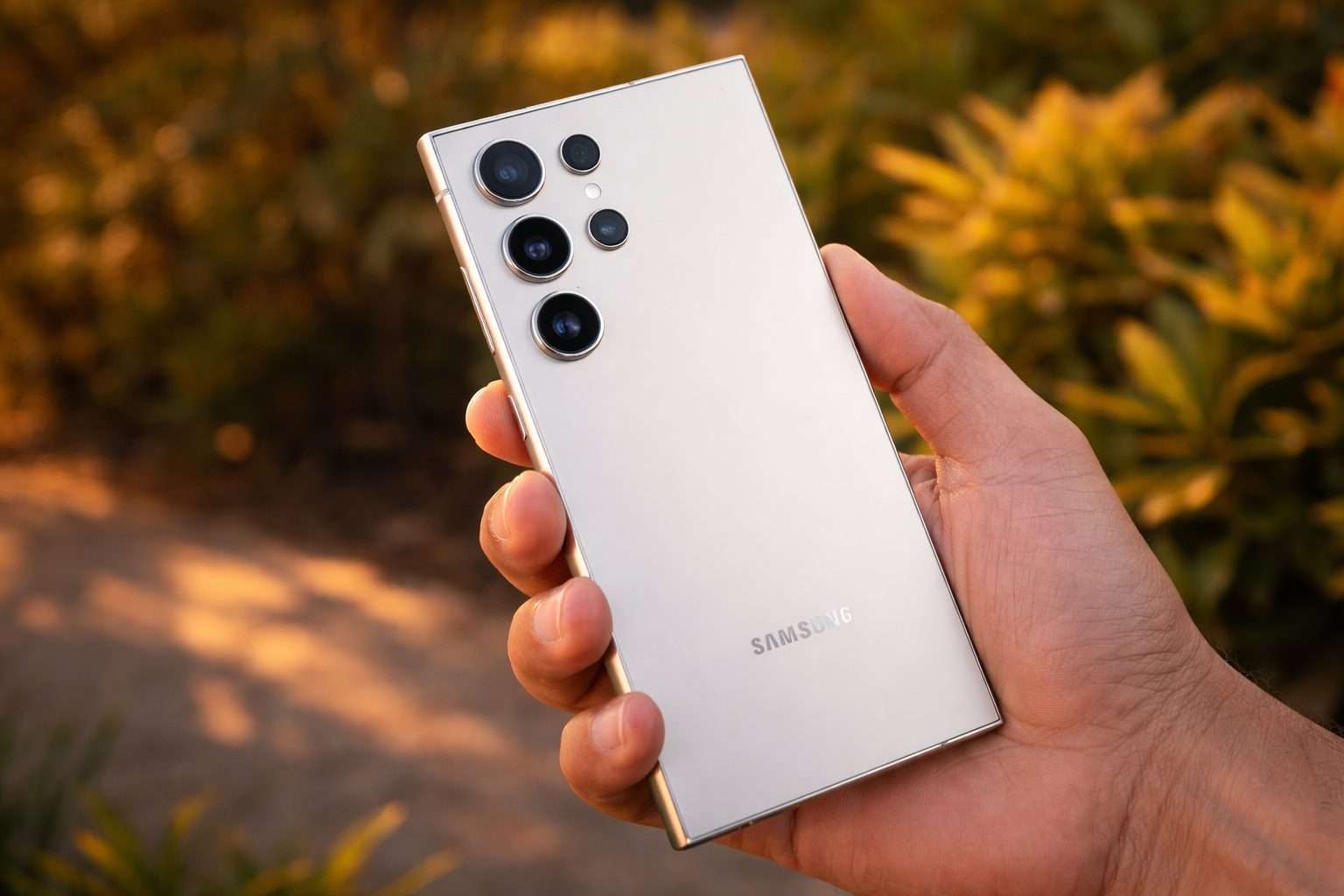
Camera updates seem increasingly likely, at least externally. TechRadar spotted a leaked promo-style image from tipster Evan Blass showing a new camera housing where three lenses rest on a raised platform. This contrasts with the current design, where each lens sticks out separately.
The report mentioned a source claiming the 3x telephoto camera will jump from 10 to 12 megapixels, alongside a potential new lens and bigger sensor for the 200-megapixel main shooter. It also highlighted expected image-processing improvements targeting more natural colors and reduced artefacts like “banding”—those faint stripes you sometimes see in smooth skies. However, TechRadar noted that the telephoto upgrade isn’t confirmed by all sources.
Recent leaks point to Samsung keeping a 5,000 mAh battery in the S26 Ultra but boosting wired charging speeds. Evan Blass’ posts and reposts hint at an Unpacked event set for Feb. 25, according to reports from the Times of India and Gadgets360. Forbes also ran a piece summarizing these same leaks. Gadgets360
Of course, this remains speculation. Prices might shift due to currency fluctuations, carrier deals, and special offers. Samsung might also eat some of the rising parts costs to keep sales steady. Plus, the choice on Qi2 isn’t set in stone—Samsung could decide to include magnets in certain markets or lean on cases for that function instead.