
IRVINE, California, February 12, 2026, 13:55 PST
- Rivian is projecting 62,000 to 67,000 vehicle deliveries in 2026, setting the stage as it gets ready to roll out its compact R2 SUV to customers in the second quarter.
- The EV maker is projecting an adjusted EBITDA loss ranging from $1.8 billion up to $2.1 billion, while capital expenditures are set between $1.95 billion and $2.05 billion for this year.
- Rivian turned in $120 million in gross profit for the fourth quarter, and $144 million over the full year 2025, yet the company is still operating at a loss.
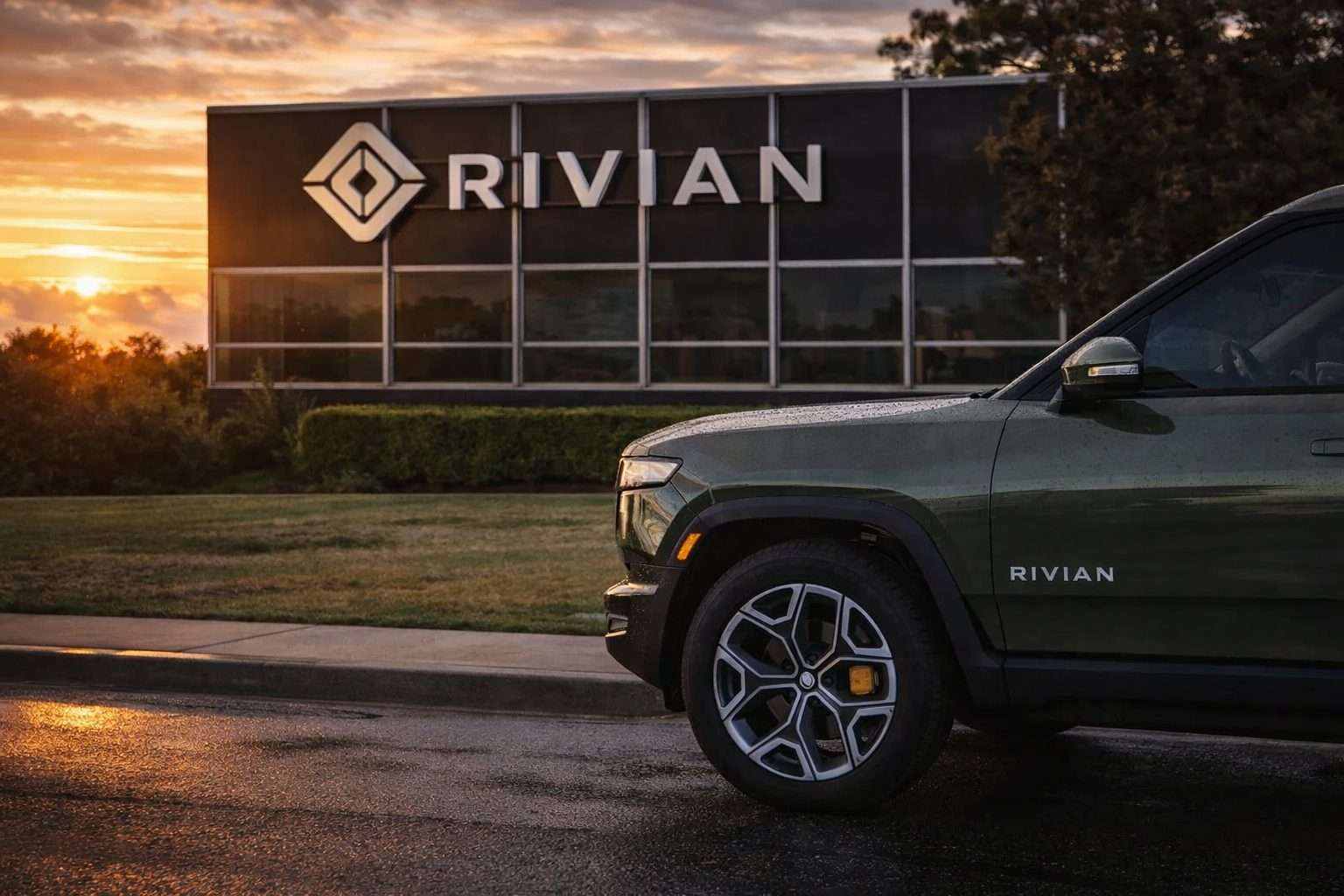
Rivian Automotive is betting on a surge in deliveries for 2026—up 53% by its own estimate—driven by the rollout of its smaller R2 SUV in the second quarter. Investors liked what they heard; shares popped roughly 10% after hours on Thursday. The company projected 62,000 to 67,000 deliveries for this year, after getting 42,247 vehicles out the door in 2025. “The growth is really, of course, what we see in R2,” CEO RJ Scaringe told Reuters. Rivian’s new R2, starting around $45,000, lands in direct competition with Tesla’s Model Y, but it’s coming to market just as EV demand has softened following the end of U.S. federal tax credits, Reuters said. Reuters
Rivian is positioning the R2 as its “mass-market midsized SUV,” sticking with a timeline for first deliveries in the second quarter. The company’s 1.1 million-square-foot expansion in Normal, Illinois, has wrapped up; mid-January saw the first manufacturing validation units roll off the main assembly line. Amazon’s fleet now counts over 30,000 Rivian electric delivery vans (EDVs) serving thousands of U.S. cities. The initial R2 version will be a dual-motor, all-wheel drive setup, good for 0–60 mph in 3.6 seconds and a range topping 300 miles. Rivian logged roughly 22,000 demo drives in the quarter, at a time when it’s working toward 36 retail locations and 97 service centers. SEC
Rivian turned in $1.286 billion in fourth-quarter revenue and posted $120 million in gross profit, but still ended up with a net loss of $804 million, according to a filing. For the full year 2025, gross profit reached $144 million. Looking ahead, the company projected an adjusted EBITDA loss between $1.8 billion and $2.1 billion for 2026, with capital expenditures pegged at $1.95 billion to $2.05 billion. Adjusted EBITDA — a non-GAAP metric — leaves out interest, taxes, depreciation, amortization and some other costs. Software and services revenue climbed to $447 million for the quarter, mostly on the back of expanded software development services linked to its Volkswagen Group joint venture. Scaringe said, “can’t wait to get them to our customers next quarter.” SEC
Rivian posted an adjusted loss of 54 cents per share for the fourth quarter, Bloomberg reported, beating the 69-cent loss analysts had penciled in. Revenue came in at $1.29 billion, just edging past forecasts.
That outlook highlights just how tight things are. Rivian faces expensive ramp-up costs and is pouring resources into its own assisted-driving tech. The spending blueprint doesn’t leave much buffer—any hiccup or weaker demand could throw things off.
The R2 puts Rivian up against stiffer competition than what it faces with the premium R1T pickup and R1S SUV. Tesla’s Model Y leads the pack here, with pricing and incentives that tend to shift quickly.
Rivian’s software and services segment is picking up more slack as the company works to trim costs on its vehicles. Automotive revenue took a hit, partly blamed on a drop in sales of regulatory credits — those emissions credits Rivian sells to other manufacturers to comply with regulations — and also because deliveries were down, according to the company.
Rivian plans to share further details about the R2 line-up come March 12. Right now, the stock action suggests investors care about the timing, but they’re also watching the losses stacked up along the way.