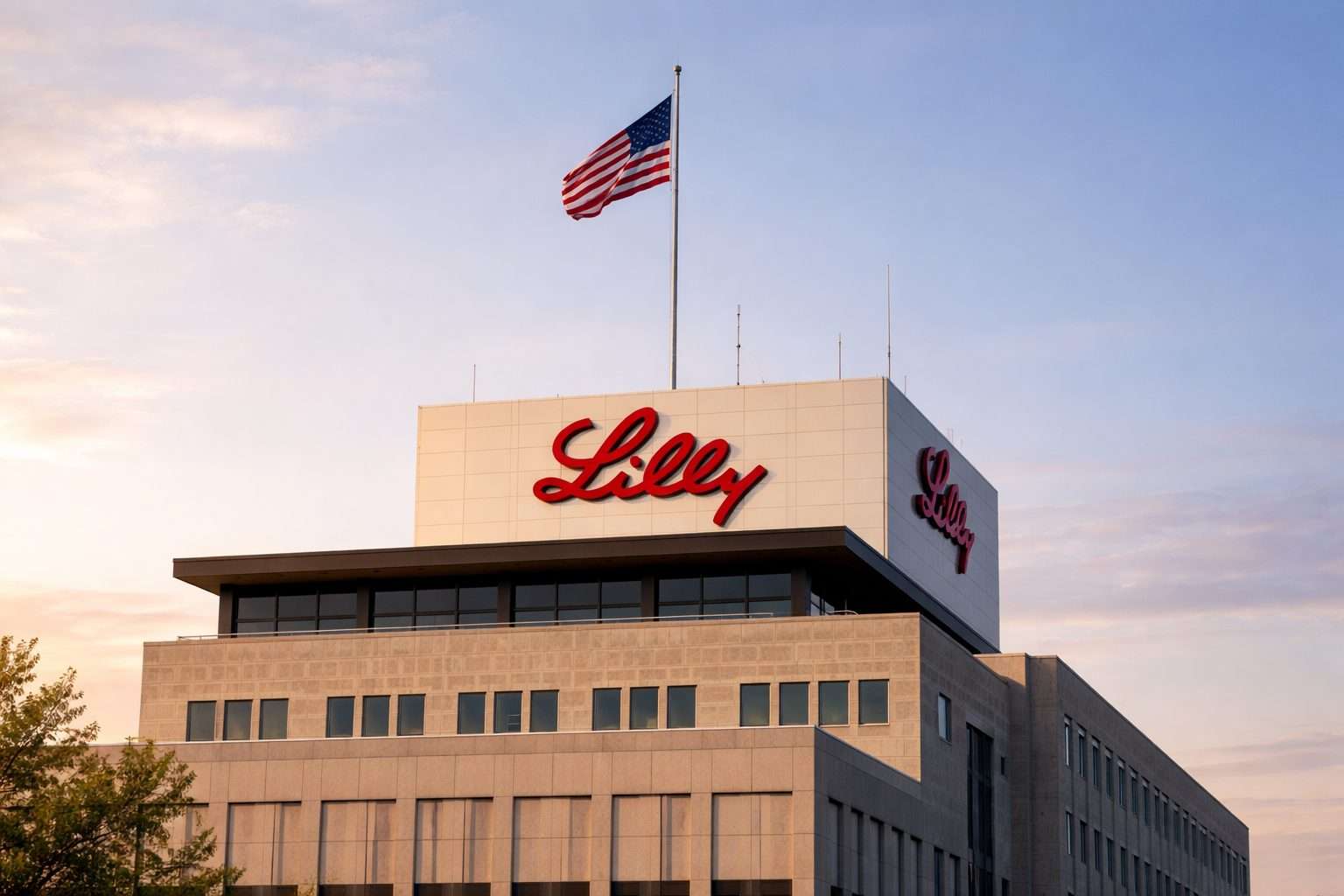

New York, February 18, 2026, 17:52 EST — After-hours trading in focus.
- Eli Lilly dropped 1.5% to finish at $1,020.56, trailing the gains seen in the main U.S. indexes.
- Lilly released late-stage data showing what happens when weight-loss therapy Zepbound is combined with Taltz, its drug for psoriasis.
- CSL set out a $100 million licensing agreement for clazakizumab with Lilly. Investors are also eyeing a March 2 conference appearance.
Eli Lilly dropped 1.5% Wednesday, then hovered near $1,020 in after-hours moves. The closing price landed at $1,020.56, while the S&P 500 posted a 0.56% gain to 6,881.31. The Dow’s advance: 0.26% to 49,662.66.
This pullback is significant—Lilly’s valuation rides on hopes that its obesity franchise will expand: more patient groups, more indications, more countries. If those expectations slip, the stock can move, even when the market’s risk appetite is high.
The past 48 hours tossed a lot onto investors’ plates: new clinical numbers combining Zepbound and Taltz for psoriasis, a modest-yet-notable pipeline deal struck with CSL, and a move to ramp up India’s manufacturing presence as demand for Mounjaro climbs.
Lilly reported Wednesday that its Zepbound, paired with Taltz, outperformed Taltz on its own in a late-stage trial involving adults who have both psoriasis and obesity. Out of 274 patients in the study, 27.1% receiving the combination achieved full skin clearance—what’s known as “PASI 100”—along with at least a 10% drop in weight after 36 weeks. Only 5.8% of patients on Taltz alone reached the same benchmark, which was the study’s primary endpoint. Reuters
Adrienne Brown, who leads immunology at Lilly, put it plainly in a company statement: “Psoriasis and obesity can profoundly impact how people feel, how they are seen, and how they live.” Mark Lebwohl, principal investigator from Mount Sinai, pointed out, “Psoriasis and obesity share underlying inflammatory pathways, yet they are too often treated in silos.” Lilly noted that it plans to publish the complete results and bring them to regulators. PR Newswire
Australia’s CSL has given Lilly certain rights to develop and market clazakizumab, an anti-interleukin-6 (IL-6) antibody, outside of an end-stage kidney disease program. The deal lands CSL a $100 million upfront payment, with the potential for milestones and royalties down the line. “Clazakizumab is a promising therapeutic candidate with the potential to significantly impact the treatment landscape for various immuno-inflammatory and cardiovascular conditions,” CSL’s R&D chief Bill Mezzanotte said. Reuters
Lilly is eyeing India as a bigger piece of its global supply chain, the company said Tuesday, doubling down on a $1 billion contract manufacturing push to boost Mounjaro production. “We are actually looking at India to be a hub, part of our global supply chain, and therefore supplying the world,” Winselow Tucker, Lilly’s India president, told reporters. As rivals like Novo Nordisk’s Wegovy turn up the pressure, Tucker said the company is sticking with its current Mounjaro pricing, calling it “appropriately” set. Reuters
Still, translating positive early data into steady revenue is rarely straightforward. Label negotiations, payer sign-offs, and rock-solid safety profiles are all part of the process for new indications. Obesity drugs also face mounting pricing pressure—this isn’t limited to the U.S., it’s happening in other markets too.
Looking past Thursday, Lilly’s oral obesity drug orforglipron is also in focus. A decision from the U.S. FDA is due in April; Lilly previously noted it stockpiled inventory before that verdict.
Looking ahead, March 2 could draw focus—Lilly’s CFO Lucas Montarce is slated for a fireside chat at TD Cowen’s annual health care conference. That event, where investors routinely press executives on demand, pricing, and manufacturing, might prompt new disclosures.