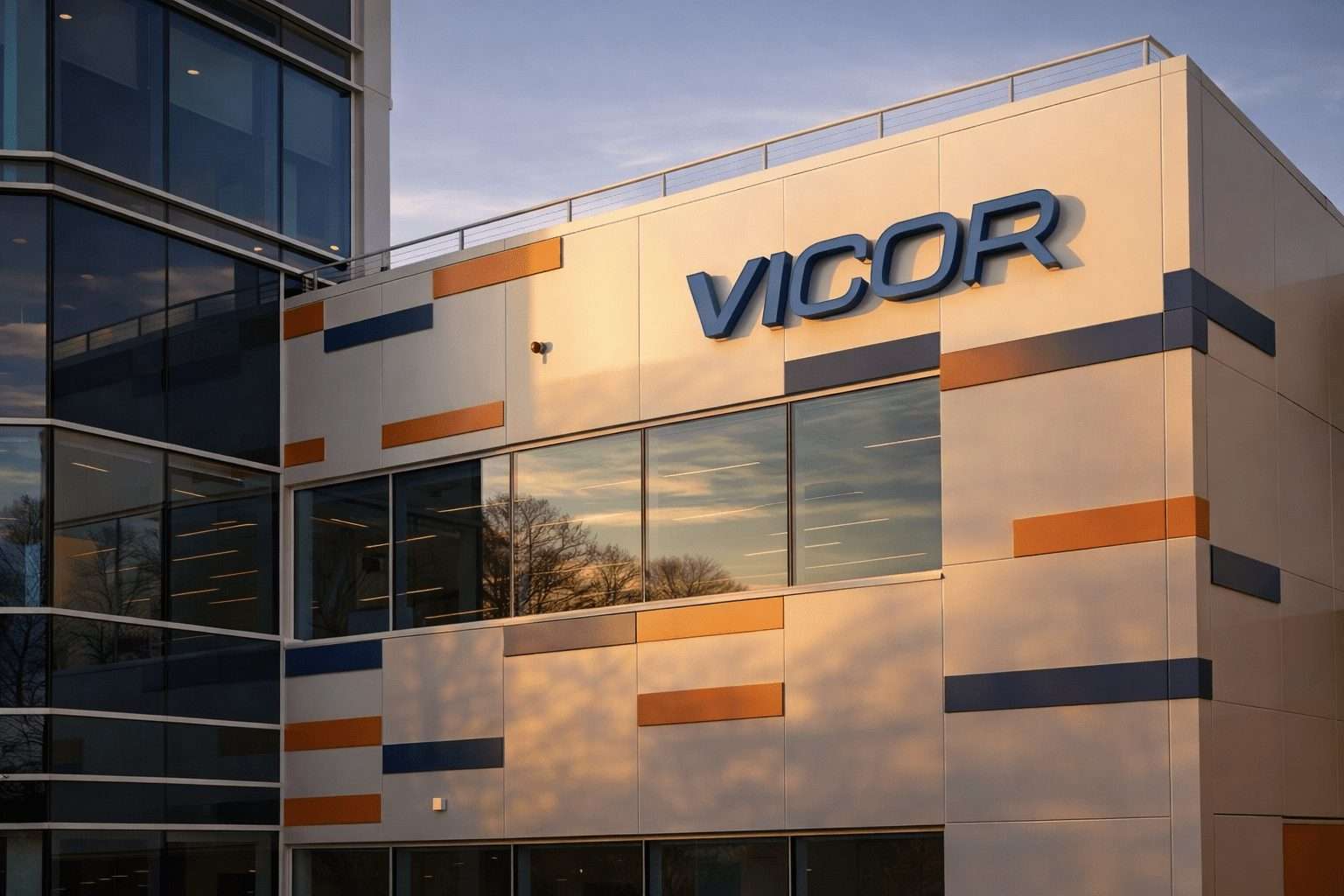

New York, Feb 23, 2026, 08:30 EST — Premarket
- Vicor slipped roughly 1.8% before the bell, giving back some ground following Friday’s sharp rally.
- The stock swung sharply last session, ranging from $126 up to $173.57, and ended the day close to its peak.
- Management highlighted a “record” outlook for 2026 and reiterated its focus on increased IP enforcement.
Shares of Vicor Corp slipped roughly 1.8% to $167 in premarket action Monday, cooling off following last week’s sharp, whipsaw rally that sent the power components maker to fresh highs.
The retreat is notable—Vicor’s stock has become a volatile stand-in for two big investor questions: how much appetite there is for high-density power delivery in cutting-edge computing, and whether the company can convert its patents into fresh licensing revenue and trade relief.
The mix shifts fast. Legal twists, production limits, and one big client scaling up—all in play at once—have traders re-pricing the stock in sudden jumps, not gradually.
Vicor shares surged 11.2% Friday, ending the day at $170.01. The stock kicked off trading well under its previous close before whipping through a wide $126.00 to $173.57 band, with volume running higher than normal.
Vicor shares jumped after the company posted its most recent quarterly results, reporting fourth-quarter product revenue at $92.7 million and royalties of $14.5 million. Net income came in at $46.5 million, or $1.01 a share. The backlog—orders not yet shipped—climbed to $176.9 million. Cash and equivalents totaled roughly $402.8 million at the close of 2025. CEO Patrizio Vinciarelli flagged “rising demand” and expects “a record year” for product revenue in 2026. He also highlighted a “second investigation” underway at the U.S. International Trade Commission regarding alleged infringement tied to Vicor’s NBM technology. SEC
During the earnings call, Needham’s Nathaniel Quinn Bolton zeroed in on what management’s demand and capacity remarks signaled. Bolton mapped out a scenario for an “$800,000,000” product revenue run rate—annualized, not a full-year forecast—and got a direct response from Vinciarelli: “I think your analysis is on point.” The ramp, Vinciarelli added, was “pretty much baked in” given the orders already on the books. The Motley Fool
The trade dispute looms large. On Feb. 11, the ITC kicked off a Section 337 investigation—this is the type of trade probe that can result in import bans—after a complaint was lodged for Vicor. Delta Electronics, Monolithic Power Systems, and several others are named as respondents. For now, the agency hasn’t weighed in on the merits. A target date for wrapping up the investigation will be set within 45 days of the case being launched.
Vicor submitted its earnings release via a Form 8-K, the regulatory filing companies use to alert investors to significant developments.
Investors are left questioning just how sustainable the latest profit leap might be. Vicor’s fourth-quarter net income got a $27.3 million boost from a tax benefit linked to partial recognition of deferred tax assets—basically, an accounting move that fattens earnings if the company thinks it can offset future taxes with past losses. Royalty revenue, on the other hand, slipped from the previous quarter; Vicor said that’s because last quarter’s figure had been padded by a catch-up payment.
There’s also the legal angle to consider. ITC cases aren’t quick, and results can go either way. Even if the company wins, don’t count on immediate, easy revenue—customers and suppliers might just change their sourcing or push the fight back into the courts.
Monday brings a straightforward question: will the stock stick close to Friday’s finish after the bell, or do quick-trigger buyers back off following the pop and those sharp swings earlier?
After the 9:30 a.m. ET open, investors are eyeing fresh analyst commentary, along with updates on factory expansion plans. They’re also tuned in for any specifics on licensing and trade moves—key points management has highlighted in its 2026 story.