
New York, February 23, 2026, 13:14 (ET) — Regular session
- ANET slid as fresh tariff uncertainty dragged on U.S. stocks and broader risk appetite pulled back.
- Big Tech’s AI infrastructure spending forecasts are drawing renewed scrutiny—demand prospects are on the table, but so are doubts about how quickly those investments can pay off.
- This week, Nvidia’s earnings are in focus, with Arista also set for planned investor events.
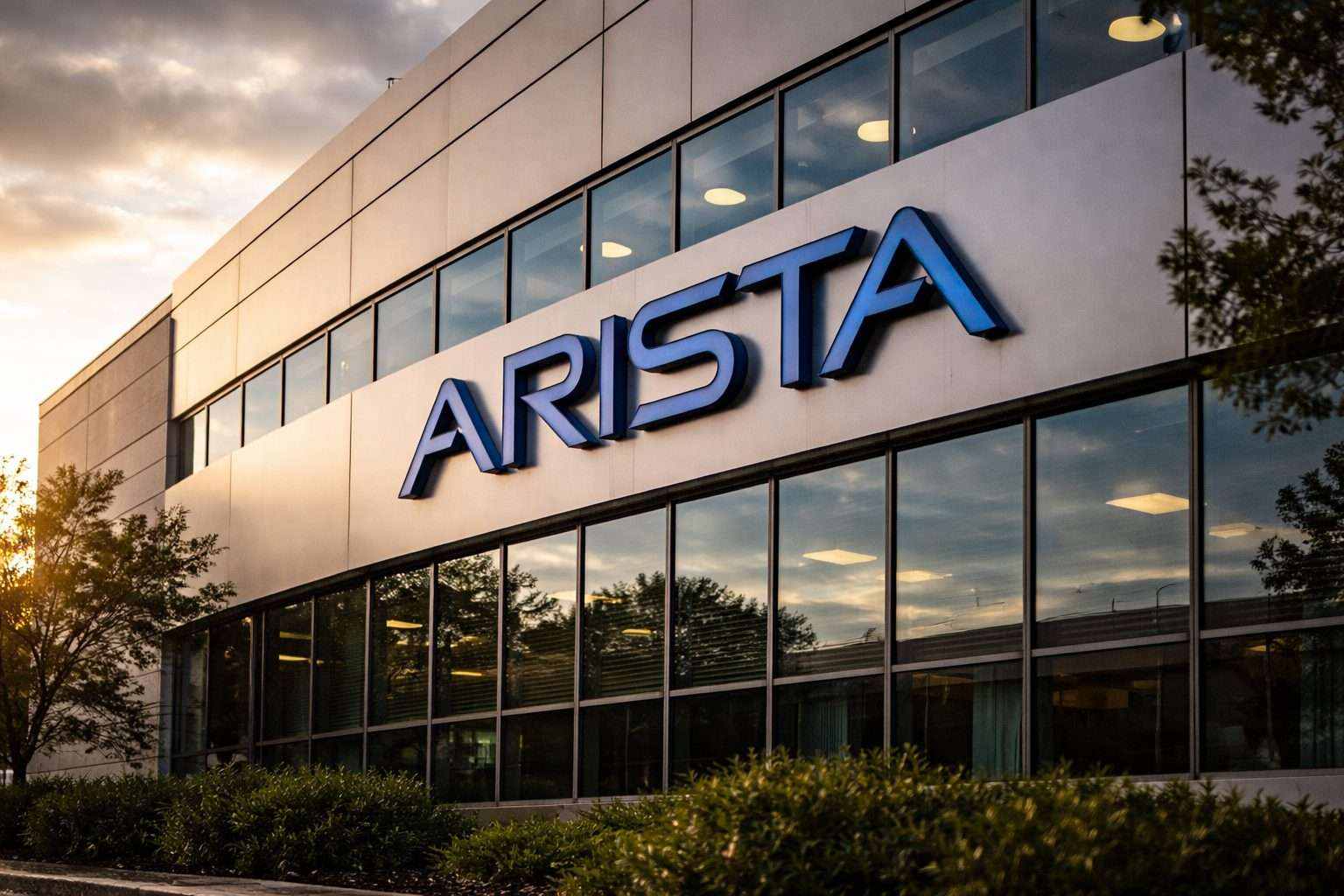
Shares of Arista Networks, Inc. slipped 3.1% to $128.62 in early afternoon trading Monday, with investors pulling back from tech growth stocks during a broader market downturn.
It matters now: Arista’s stock is standing in as a bellwether for high-speed networking gear demand inside AI data centers, and lately those bets have been jumpy as investors toggle between “buildout” hopes and “payback” worries.
Bridgewater Associates estimates that spending by Alphabet, Amazon, Meta and Microsoft on AI infrastructure could reach $650 billion in 2026, a jump from $410 billion the year before. The firm described this rapid escalation as a “more dangerous phase” for the sector, pointing to surging costs and growing pressure on returns. Reuters
Stocks struggled after President Donald Trump’s announcement of fresh global tariffs, coming right on the heels of a Supreme Court decision that tossed out much of his initial tariff package. “Markets don’t like uncertainty,” said Steve Sosnick, chief market analyst at Interactive Brokers. The Dow was down roughly 1.5%, with the Nasdaq off about 1.2% by midday. Reuters
Cisco slipped roughly 2.1% and Hewlett Packard Enterprise dropped close to 5.9%. Nvidia, on the other hand, edged up a bit.
Arista last updated investors with its quarterly results on Feb. 12, posting full-year 2025 revenue of $9.006 billion and projecting around $2.6 billion for the first quarter of 2026. CEO Jayshree Ullal highlighted that the company “exceeded both our AI networking and campus expansion goals.” CFO Chantelle Breithaupt flagged “strong operating leverage” in the business model. Arista
Right now, investors aren’t arguing over whether AI data centers will ramp up switching capacity. Instead, the questions center on timing, customer concentration, and the speed at which those orders actually hit the revenue line—margin leakage remains a sticking point.
Hardware manufacturers find themselves tangled in trade policy shifts. New tariffs tack on expenses, jumbling supply chains further. Lingering uncertainty? That’s enough for major buyers to rethink their budgets.
Arista’s position comes with risks and rewards. Hyperscaler buildouts pick up speed? Demand can snap back in a hurry. But if customers slow spending to take stock, or if tariffs widen, orders and valuations often drop off sharply.
Nvidia will post its results after Wednesday’s closing bell, Feb. 25—a release that investors watch closely for signals on the AI infrastructure cycle.
Arista’s leadership will take questions on cloud demand, pricing, and future AI networking orders at Bernstein’s “What’s next in Tech” event, set for Feb. 25. They’re also on the docket for the Morgan Stanley Technology, Media and Telecom Conference on March 3. Traders will be watching both dates closely. Arista