
Dubai, March 21, 2026, 20:38 UTC+04:00
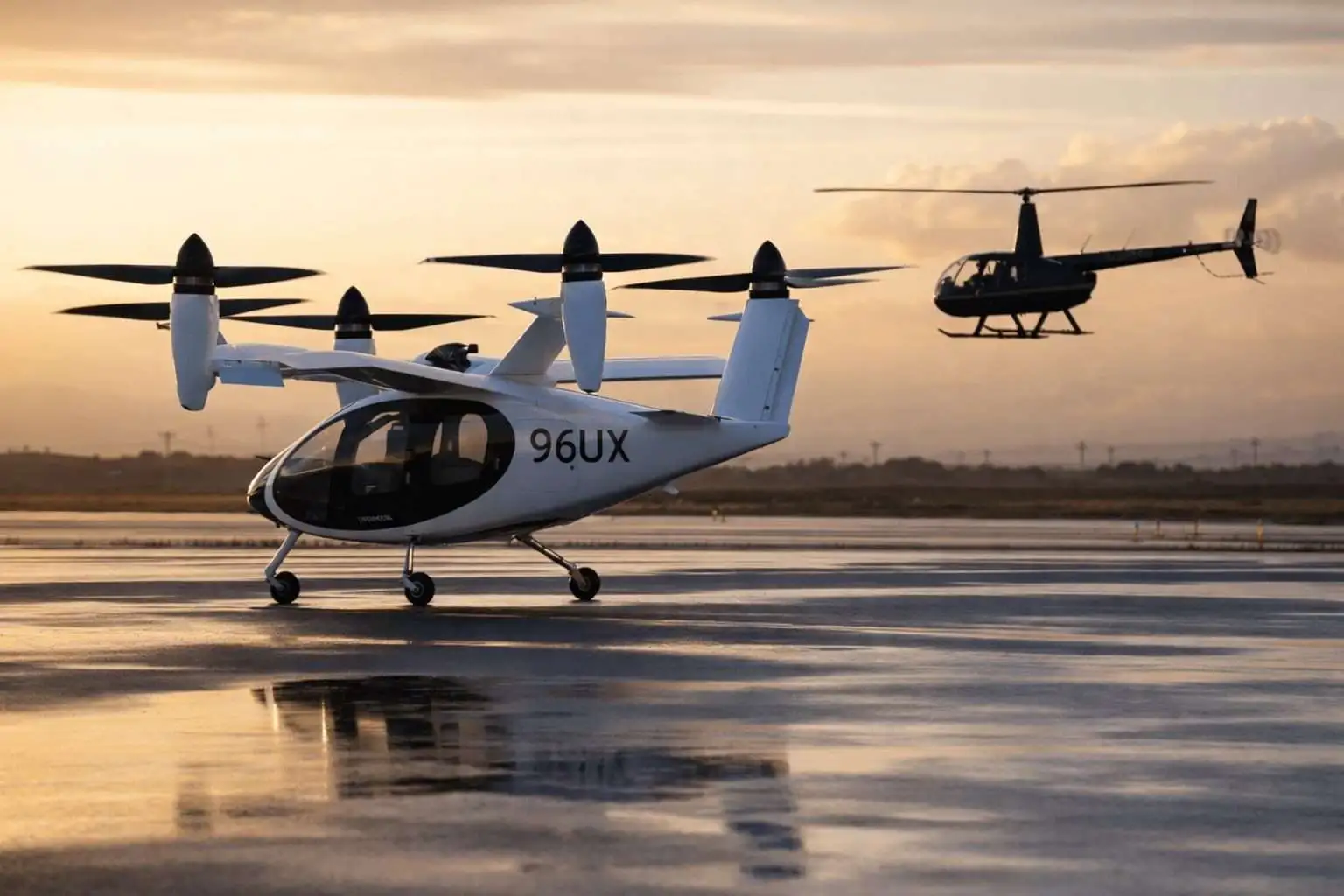
Flying taxi firms are inching toward actual service by 2026, and now Dubai and a new U.S. test project look set to become the first real-world testing grounds. On Feb. 25, Joby Aviation said it plans to fly its first passengers in Dubai later in 2026; that lines up with Dubai’s Roads and Transport Authority, which wants commercial flights to start before the year’s end. Reuters reports Joby has locked in exclusive aerial taxi rights in Dubai for six years.
Timing’s key here: the U.S. Transportation Department and Federal Aviation Administration announced on March 9 that their eVTOL Integration Pilot Program is set to launch by summer 2026, spanning 26 states. Developers get a window to collect operating data and put local infrastructure in place, even as certification efforts move forward.
eVTOL, short for electric vertical takeoff and landing aircraft, are designed to lift straight up like a helicopter and shift to airplane-style flight once airborne. The pitch from companies: swap out 60-90 minutes on the road for a much quicker flight—though that hinges on regulators, operators, and cities all coordinating aircraft, pilots, and landing pads together.
On March 11, Joby put out word that it’s begun flight tests on its first FAA-conforming aircraft, marking progress toward the crucial Type Inspection Authorization. According to Reuters, these Marina, California, runs set the stage for FAA pilot checks expected in 2026. Joby also noted that, once commercial service launches in Dubai, travelers will be able to book flights via the Uber app.
Archer is taking its own route. Partners in Texas, Florida, and New York have been tapped for the White House pilot program, the company said, raising the possibility of Midnight operations starting as soon as the back half of 2026. Archer also flagged that piloted VTOL flights in the UAE remain on their timeline for later in 2026, with first passenger trips expected sometime that year. According to Archer, the FAA has now accepted all of Midnight’s Means of Compliance—every method the company will use to demonstrate the aircraft can meet airworthiness standards.
The field’s getting more crowded, not less. DOT mentioned that chosen U.S. projects feature BETA, Electra, and Wisk. There’s also a Florida initiative noted by Axios with Archer, Joby, BETA, and Electra in the mix. Vertical Aerospace, meanwhile, has its own Miami-area launch goals for 2028.
Money on the table isn’t small. Allied Market Research, in a release pushed out March 20 via OpenPR, put the potential size of the urban air mobility market at $30.7 billion by 2031. That projection highlights just how much backers are betting on air-taxi services scaling beyond their pilot phases.
The real holdup might actually be at ground level, not overhead. “Without vertiports, there is no Advanced Air Mobility,” said Skyports Infrastructure CEO Duncan Walker, who pointed out the system doesn’t work if travelers have to spend 30 minutes just reaching a landing spot. The FAA, for its part, defines vertiports as purpose-built zones for powered-lift craft to take off and land. Benzinga
That caution isn’t theoretical. Sergio Cecutta, founder and partner at SMG Consulting, told Live Science full-scale services probably won’t arrive until the “middle of the next decade”—not anytime soon. The sector, he noted, has already missed previous targets, including ambitious timelines once linked to the Paris Olympics. Live Science
But officials and companies alike are drawing a line in 2026—prototypes will need to make the jump to real operations. FAA Deputy Administrator Chris Rocheleau described the fresh U.S. program as a chance to gain “valuable operational experience” that will help set safety rules. Archer CEO Adam Goldstein, for his part, called this the strongest indication yet that regulators are zeroing in on air taxis. After years spent circling in the world of test flights and concept art, the industry faces its first true test in 2026. Department of Transportation