
SANTA CLARA, California, April 9, 2026, 05:13 PDT
- AMD is pricing the Ryzen 9 9950X3D2 at $899, with sales kicking off April 22.
- The 16-core chip comes stacked with 208MB of total cache and a 200W thermal design power, plus compatibility with current AM5 motherboards.
- The price tag sits $200 higher than the Ryzen 9 9950X3D’s launch MSRP, and it’s also well above Intel’s current $599 recommendation for the Core Ultra 9 285K.
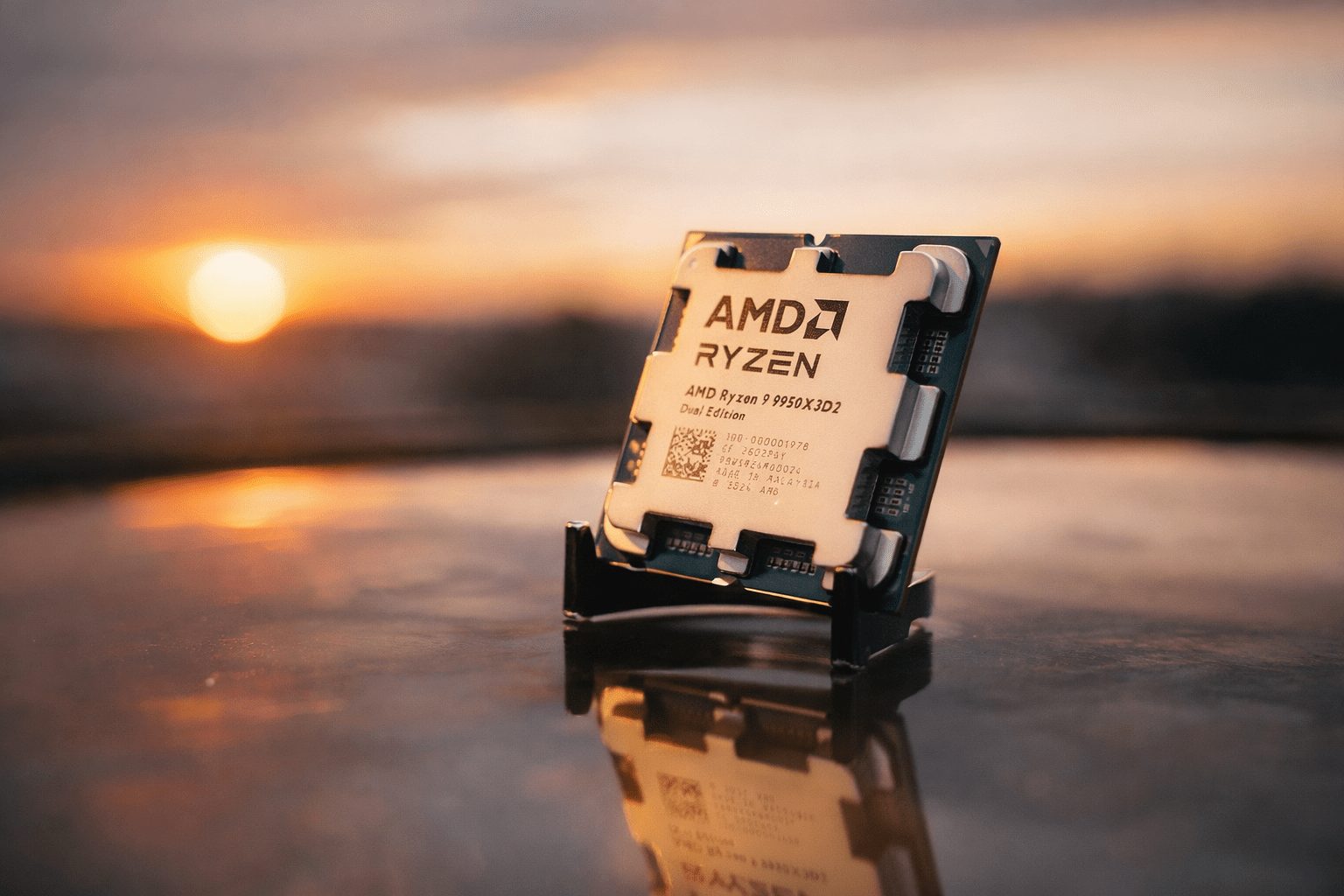
AMD slapped a price of $899 on its Ryzen 9 9950X3D2—marking the debut of 3D V-Cache packaging across both compute chiplets. Sales kick off April 22. That’s notably below the nearly $1,000 price that retailer listings had suggested earlier.
The figure stands out because AMD’s gains come even as top-tier desktops remain pricey. For instance, Dell’s Alienware Area-51 rig—outfitted with a Ryzen 9 9950X3D plus an Nvidia RTX 5090—shows up at $5,999.99. There’s also the Alienware 18 laptop, also featuring an RTX 5090, listed at $5,549.99.
AMD’s 9950X3D2 keeps the familiar 16 cores and 32 threads found in the 9950X3D, but the company says both eight-core chiplets now get stacked cache. That translates into extra fast on-chip memory—helpful for tasks that demand a lot of data close to the cores. The chip can hit 5.6 GHz, features 192MB of L3 cache and 16MB of L2, comes with a 200W TDP, and slots into the AM5 socket.
David McAfee, who oversees Ryzen CPU and Radeon graphics at AMD, told reporters the chip lands April 22, touting “workstation-class performance” on the AM5 platform—and stressed there’s “no new motherboard or memory required.” He positioned the part squarely for developers and content creators, expanding AMD’s pitch beyond the gaming crowd. X (formerly Twitter)
AMD has stuck with touting its performance in heavy workloads, skipping the usual gaming benchmarks. The company pointed to the new chip running 5% to 10% quicker than the 9950X3D in software like DaVinci Resolve and Blender. Tom’s Hardware, citing AMD’s own numbers, mentioned data-science gains reaching 13% in SPECworkstation 4, a pro-focused benchmark suite.
The comparison with AMD’s top-end chip is inevitable here. AMD’s Ryzen 9 9950X3D hit shelves March 12, 2025, carrying a $699 price tag, 5.7 GHz boost, 128MB L3 cache, and a 170W TDP. Now, with the new release, AMD is charging $200 extra for a second stacked cache tile and pitches it harder to creators.
At $599, Intel’s boxed Core Ultra 9 285K comes in well below AMD’s latest pricing. The Core Ultra 9 tops out at 5.7 GHz, supports 24 threads, and carries 36MB of Smart Cache—numbers that highlight AMD’s move to carve out this chip as a step above the usual high-end desktop CPUs, at least on price.
One catch: AMD still hasn’t put out any gaming benchmarks. Previous dual-chiplet X3D CPUs held the stacked cache to just a single chiplet, trying to dodge latency hits when workloads shifted between chiplets. Now the 9950X3D2 comes in with a slightly lower boost than the 9950X3D and pulls more power, which could have some buyers holding off until third-party results come in.
AMD says the processor is now listed globally and works with the AM5 platform. For current Ryzen owners, that means a simple upgrade once the chip hits retailers on April 22. The real test: reviews will soon weigh in on whether the added cache is worth paying extra for.