
Chicago, April 14, 2026, 09:13 CDT
Motorola is rolling out the Razr Fold, its debut book-style foldable, across more international markets, bringing launch deals to Europe. The tablet-sized phone opens like a book. Meanwhile, leak reports point to the upcoming Razr 70 Ultra flip phone, which may see only minor tweaks. That timing has Motorola’s latest high-end foldable hitting shelves just as buzz starts building for the next Razr.
This shift is key: Motorola’s foldable ambitions now extend well past its Razr lineup. In 2025, North America’s foldable market expanded by 28%, according to Counterpoint, and Motorola captured a 44% slice. Samsung’s share landed at 51%, Google’s at 5%. No longer a one-company game, the sector is getting more crowded.
Lenovo reported on May 22, 2025 that its smartphone revenue surged 27% for the year, marking the strongest figures since the Motorola Mobility deal. Foldables are picking up pace, too. No surprise then—Motorola is steering the Razr line toward higher-end territory, moving away from the budget flip segment.
Motorola took the wraps off the Razr Fold at Mobile World Congress on March 2, positioning the device for productivity with its 8.1-inch internal display, 6.6-inch outer screen, stylus compatibility, Snapdragon 8 Gen 5 chipset from Qualcomm, and a hefty 6,000 mAh battery. According to the company, the initial rollout hits Europe, starting at 1,999 euros and including the Moto Pen Ultra in the box.
Motorola’s UK site is pitching a £220 discount at checkout, and it’s tossing in a Moto Watch plus Moto Buds Loop for free. Over in Spain, the deal puts the phone at 1,748.99 euros, with bundled freebies said to be worth 299 euros. Both approaches underscore how Motorola is leaning on bundles and straight price reductions to get the effective starting cost of its premium device down.
Cameras are front and center for the company. Leonard Gao, Motorola’s executive director for software and camera, pointed out that the Razr Fold setup is “built from consumer insights.” According to Motorola, camera testing outfit DXOMARK handed the device a score of 164 and gave it a Gold Label for imaging performance. Global Blog
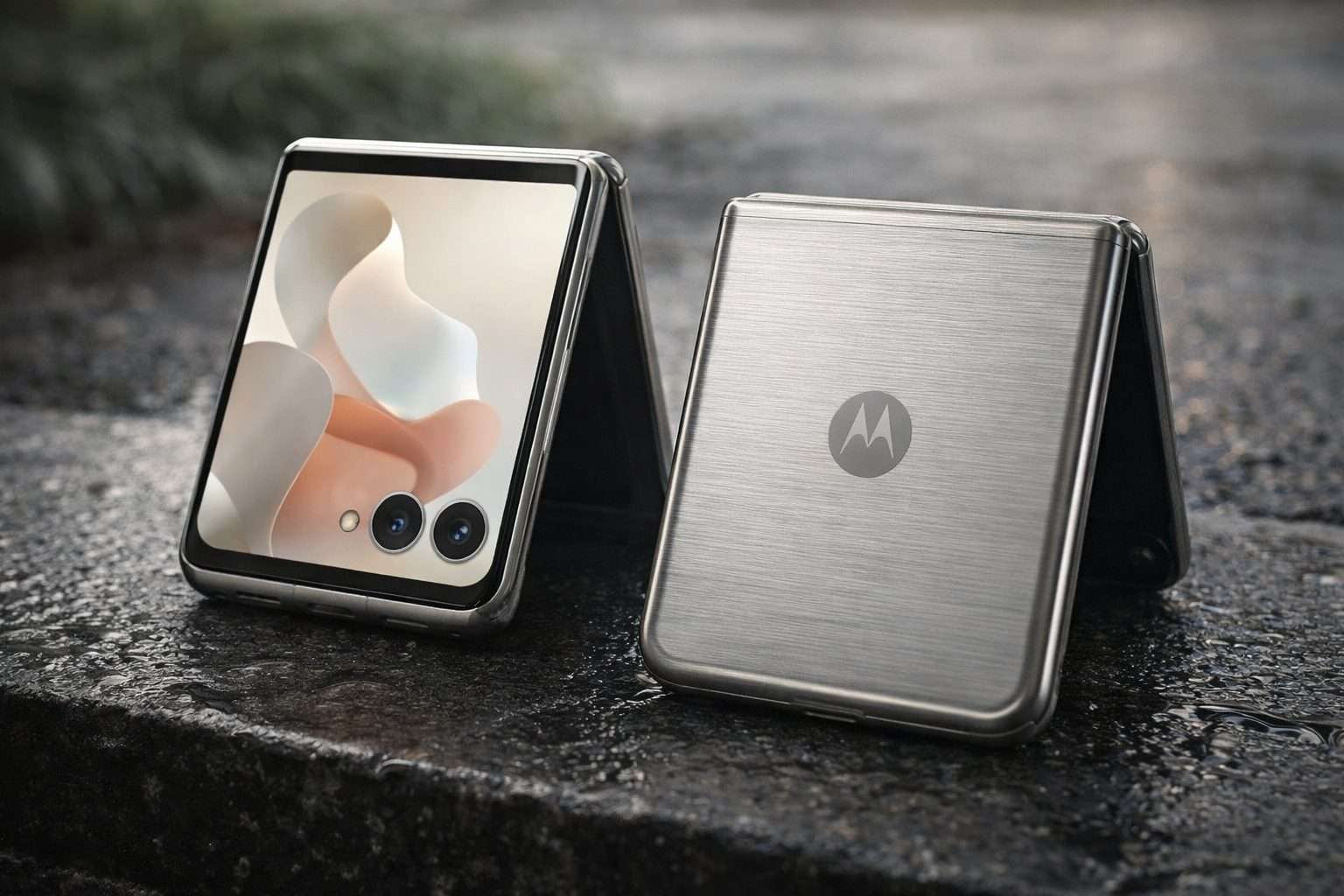
Android Headlines, as cited in multiple reports, point to the yet-to-be-announced Razr 70 Ultra sticking with a 7-inch main display and a 4-inch cover screen. Specs in circulation mention 16GB RAM, 512GB storage, triple 50MP cameras, and 68W wired charging. But a 5,000 mAh battery stands out—a 6% bump over the 4,700 mAh cell inside the current Razr Ultra.
On April 14, new leak reports surfaced showing the standard Razr 70 in four different colors and textures—a hint that Motorola could be prioritizing materials and finish over major hardware tweaks this time. The Verge noted that well-known leaker Evan Blass revealed images of the device in four finishes, while 91mobiles listed green, dark grey, pink, and a marble-style white-and-silver as the options.
Motorola faces the possibility that minor design changes and a bump in battery size won’t do much to entice current users back for another round. Liz Lee at Counterpoint flagged Motorola’s pricing choices and carrier deals as crucial in growing the foldable market in North America, so if the next Ultra doesn’t offer much more, the company might have to stick with discounts to keep buyers interested.
Competition remains fierce. Gerrit Schneemann at Counterpoint noted North America’s shift from a “single-player dominated market.” In an April 13 note, the firm projected Apple’s share of the region’s foldables market could hit 46% by 2026—setting a higher bar for Motorola, Samsung, and Google. Communications Today