
SEOUL, April 21, 2026, 01:35 KST
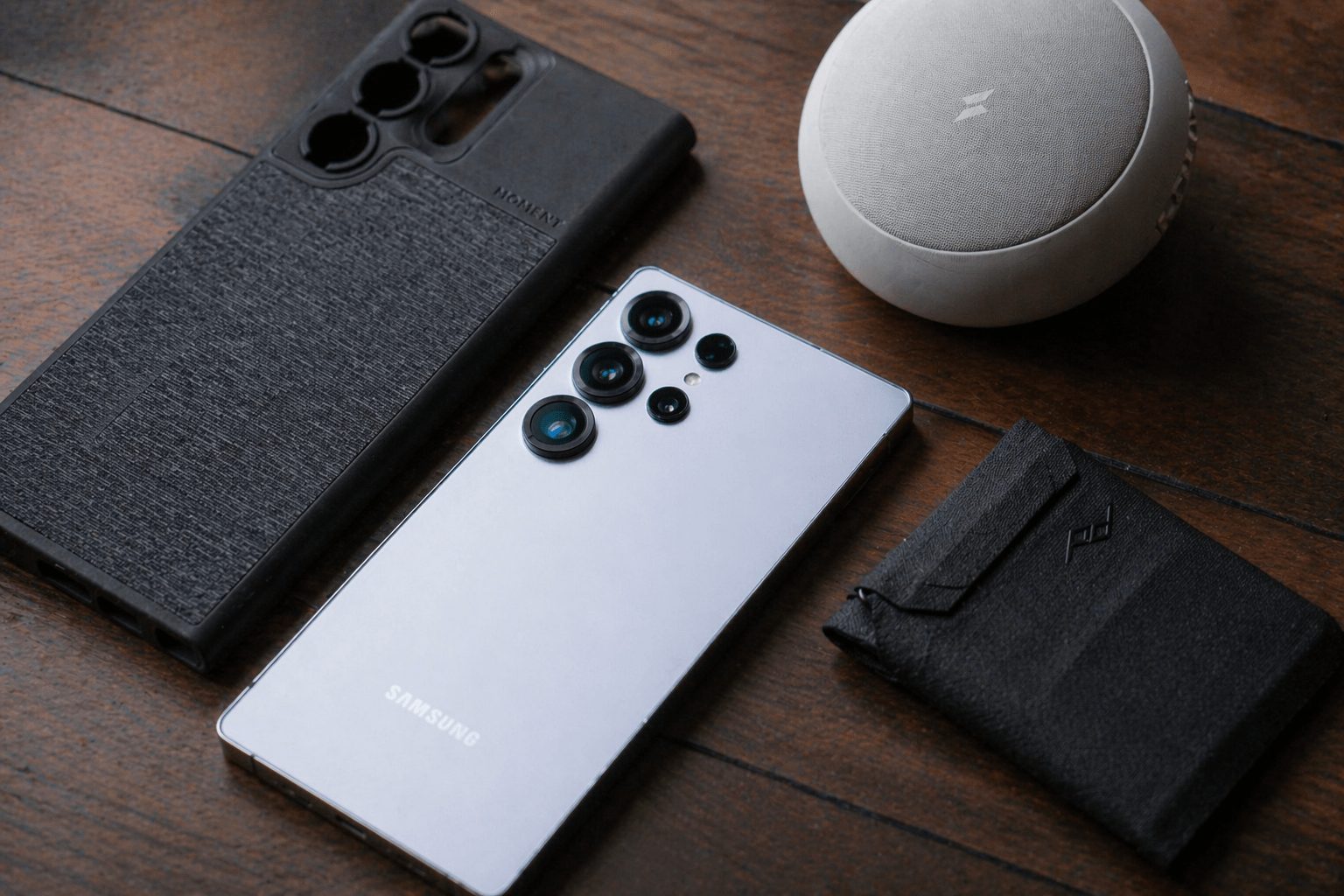
Battery rumors have resurfaced around Samsung Electronics’ upcoming Ultra flagship, with recent leaks from Samsung SDI’s test documentation suggesting the Galaxy S27 Ultra could become the first Galaxy S model to feature a silicon-carbon battery. Samsung hasn’t said anything yet about the S27 Ultra’s battery specs or capacity.
Timing’s crucial here: Samsung’s Galaxy S26 Ultra is still sticking with a 5,000 mAh battery, a spec that’s been drawing flak from shoppers sizing it up against Chinese Android competitors, who are pushing out models with higher-density batteries. According to Samsung’s official product page, the S26 Ultra comes in at 5,000 mAh and offers 31 hours of video playback.
Silicon-carbon batteries incorporate silicon into the anode—the negative electrode—blending it with carbon to pack in more lithium ions per unit of space. For phone manufacturers, that translates to squeezing extra battery life into devices without adding bulk. But there’s a hitch: this chemistry is linked to issues like swelling and reduced durability.
Reports swirling this day stem from tipster Schrödinger, who pointed to internal Samsung SDI documents detailing tests on 12,000 mAh, 18,000 mAh, and 20,000 mAh silicon-carbon cells. That same post describes a 12,000 mAh dual-cell setup, combining a 6,800 mAh cell with a 5,200 mAh one. Prototypes, however, have been breaking down after about 960 charge cycles—well short of the 1,500-cycle benchmark Samsung is targeting for commercial release.
Those figures aren’t the Galaxy S27 Ultra’s specs. According to Notebookcheck, squeezing a 12,000 mAh stack into a phone would result in a thickness of roughly 9.3 mm—far too chunky for a typical flagship. A scaled-down module, though, might still slot into a high-end device and push battery capacity past Samsung’s usual 5,000 mAh threshold.
Samsung engineers are now focused on smaller-capacity silicon-carbon batteries, Wccftech reported, after an earlier 20,000 mAh dual-cell prototype didn’t meet cycle-life goals. According to the report, teams are tweaking separator materials, stacking design, and updating battery-management firmware in a bid to extend lifespan.
Publicly, Samsung is treading carefully. Ahead of Galaxy Unpacked 2026, Sung-Hoon Moon, executive vice president and head of smartphone R&D, conceded the company had been “a bit un-innovative” when it comes to batteries. He noted that silicon-carbon cells still face “very rigorous validation standards.” His take: “We are getting it ready.” TechRadar
According to a SamMobile report covering the Galaxy S26 briefing, Samsung isn’t moving forward with silicon-carbon batteries until they finish internal testing and demonstrate a real boost for users. That puts a bit more weight behind this rumor compared to usual Galaxy leaks. Still, the actual release timing remains up in the air.
Samsung SDI’s experience with silicon-carbon isn’t limited to mobile devices. Back in December, the battery division announced its 46-series cylindrical EV cells—developed with KG Mobility—feature proprietary Silicon Carbon Nanocomposite anodes. The aim: cut swelling, boost lifespan. It’s not a sign that a Galaxy handset battery is imminent, but clearly, Samsung isn’t entering new territory here.
Competitive heat is intensifying. OnePlus and Xiaomi, according to TechRadar, have already rolled out silicon-carbon batteries in select devices. Samsung, Apple, and Google are sticking with a more conservative approach. For Samsung, though, the challenge is pronounced at the Ultra level—buyers in that segment want tangible hardware upgrades, not only tweaks to cameras or AI.
The real risk is in the battery, not the rumor mill. Silicon-carbon cells, according to TechRadar, degrade quicker and tend to swell more than standard lithium-ion tech—something Samsung has every reason to watch closely after the Galaxy Note 7 incident back in 2016. If that 1,500-cycle goal isn’t achieved, Samsung might have to put off the new chemistry, stick with a standard dual-cell design, or just hold battery capacity steady for another round.
At this stage, the Galaxy S27 Ultra’s battery looks more like a signpost than a destination. Samsung seems to be experimenting with higher-density tech, and the Ultra variant makes sense as the initial testing ground. The company has openly pointed out the existing shortfall. What’s left? Samsung wants evidence that this battery can actually handle day-to-day use by millions, not just lab tests.