
CUPERTINO, California, April 20, 2026, 10:32 PDT
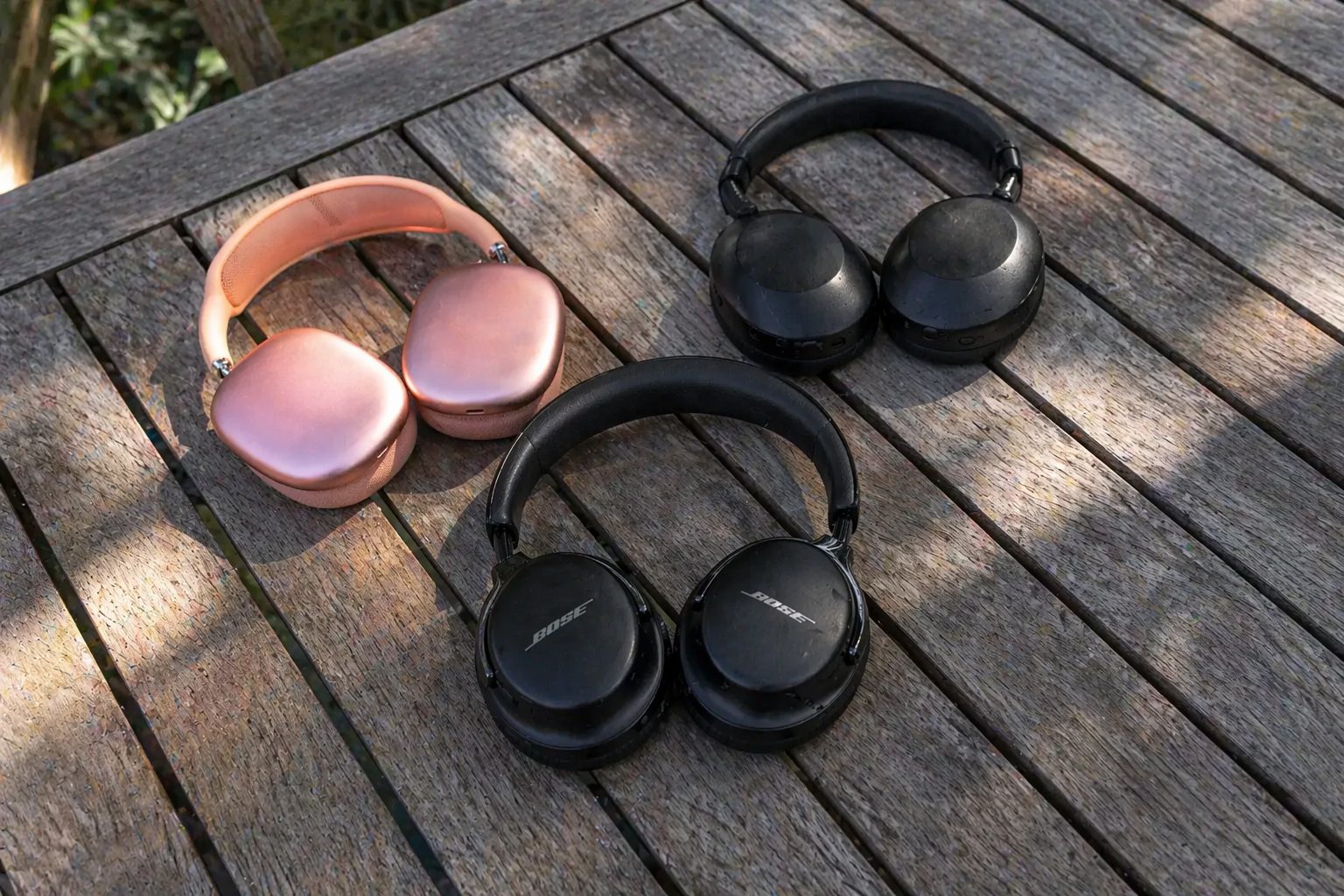
- Apple’s $549 AirPods Max 2 is up against Sony’s WH-1000XM6 and Bose’s QuietComfort Ultra in the latest round of premium headphone comparisons.
- Reviewers have shifted attention away from Apple’s launch claims, zeroing in instead on active noise cancellation, battery life, weight, and sound controls.
- Apple’s iPhone user base remains a strong advantage, though Sony and Bose are turning up the pressure with lower prices, longer battery life, and more options for customization.
Apple’s $549 AirPods Max 2, which generated early buzz at launch, is now facing tougher scrutiny as PCMag, CNET, and GSMArena stack the headphones up against Sony and Bose in the premium noise-canceling space. The debate’s moved beyond just audio performance. Apple is betting its ecosystem can counterbalance the AirPods Max 2’s heavier build, shorter battery life, and limited tuning options.
Timing is key here: buyers finally have actual comparisons, now that retail sales started in April. Apple rolled out AirPods Max 2 back in March, ending a gap of over five years since the original AirPods Max. This update brought the H2 chip, improved active noise cancellation—ANC, which cuts outside noise—and new functions like Adaptive Audio, Conversation Awareness, and Live Translation.
There’s more at stake, too—the premium headphone market has gotten tighter since 2020. When Apple rolled out its latest, Reuters pointed out that Sony Group, Bose, and Sennheiser still rule that space. For Apple, nudging prices up on what’s seen as a minor refresh leaves little margin for error, and even less for avoiding pushback.
Apple is pricing the AirPods Max 2 at $549 for U.S. buyers, touting active noise cancellation that’s up to 1.5 times more effective versus the previous version. “The sound quality is remarkably clean, rich, and acoustically detailed,” said Eric Treski, director of Audio Product Marketing, in the launch statement. Personalized Spatial Audio aims to push the listening experience deeper, Apple said. Apple
Apple faces a tricky comparison when it comes to battery life. The company puts its AirPods Max at a maximum of 20 hours of listening with both ANC and Spatial Audio switched on. Sony, on the other hand, touts up to 30 hours with noise canceling active for its WH-1000XM6 headphones, stretching out to 40 hours if you turn noise canceling off. Bose’s second-generation QuietComfort Ultra Headphones are advertised at 30 hours.
Price cuts are widening the divide. Over at Sony’s U.S. store, the WH-1000XM6 is marked down to $429.99—undercutting Apple’s entry tag. Bose is right in the mix too: its QuietComfort Ultra Headphones target the same high-end shoppers, packing USB-C audio, a bundled 3.5 mm-to-2.5 mm cable, and app-driven tweaks.
Customization is fast emerging as a key flashpoint in reviews. In a recent AirPods Max 2 story, Tom’s Guide pointed out Apple’s headphones offer less flexibility than rivals like Sony and Bose. Sony’s 10-band equalizer — which lets users tweak bass, mids, and treble — got a nod, as did Bose’s mix of presets and sliders.
Sony is doubling down on what sets it apart. Jon Stapley at Creative Bloq called out “stiff competition” from Bose and Sennheiser, but pointed to the WH-1000XM6’s 10-band EQ and robust ANC as real highlights. Still, he flagged the default sound for emphasizing bass and treble, sometimes at the expense of midrange details. Creative Bloq
Apple’s pitch hasn’t changed: iPhone owners chasing fast pairing, instant device switching, Spatial Audio, Live Translation, and those software extras only Apple delivers might just bite on the price. Tom’s Guide’s rundown? AirPods Max 2 clearly targets the Apple crowd; Sony wins out if you’re juggling platforms; Bose, though, takes the crown for folks who care most about comfort and serious noise canceling.
The risk here isn’t hard to spot. For buyers chasing battery life, hands-on controls, or long-range connectivity, it’s easy to see reviews nudging them toward Sony or Bose—long before Apple’s software perks even get a hearing. Apple’s $549 AirPods Max stick with the same design, and that price tag doesn’t leave much room to maneuver when competitors pack in longer battery life and more tuning options for less.
Not much of a reaction in the market. Apple was last seen at $272.56, up $2.33 on the session. Sony’s U.S.-listed stock edged down 21 cents to $21.49, market data showed.