
Newark, New Jersey, April 21, 2026, 14:32 EDT
- Panasonic set the Lumix S 40mm F2 at $399.99, with shipments slated to begin in early June.
- Weighing in at 144 grams, the full-frame L-Mount lens targets compact models like the Lumix S9.
- Panasonic added a pair of lenses to its roadmap: one, a compact wide prime; the other, a large-aperture telephoto zoom.
Panasonic on Tuesday announced plans to launch the Lumix S 40mm F2, a compact full-frame L-Mount prime lens, priced at $399.99. Customer deliveries are slated for early June. The fixed-focal-length lens—classified as a prime due to its lack of zoom—is targeted at users shooting both stills and video with smaller Lumix S models.
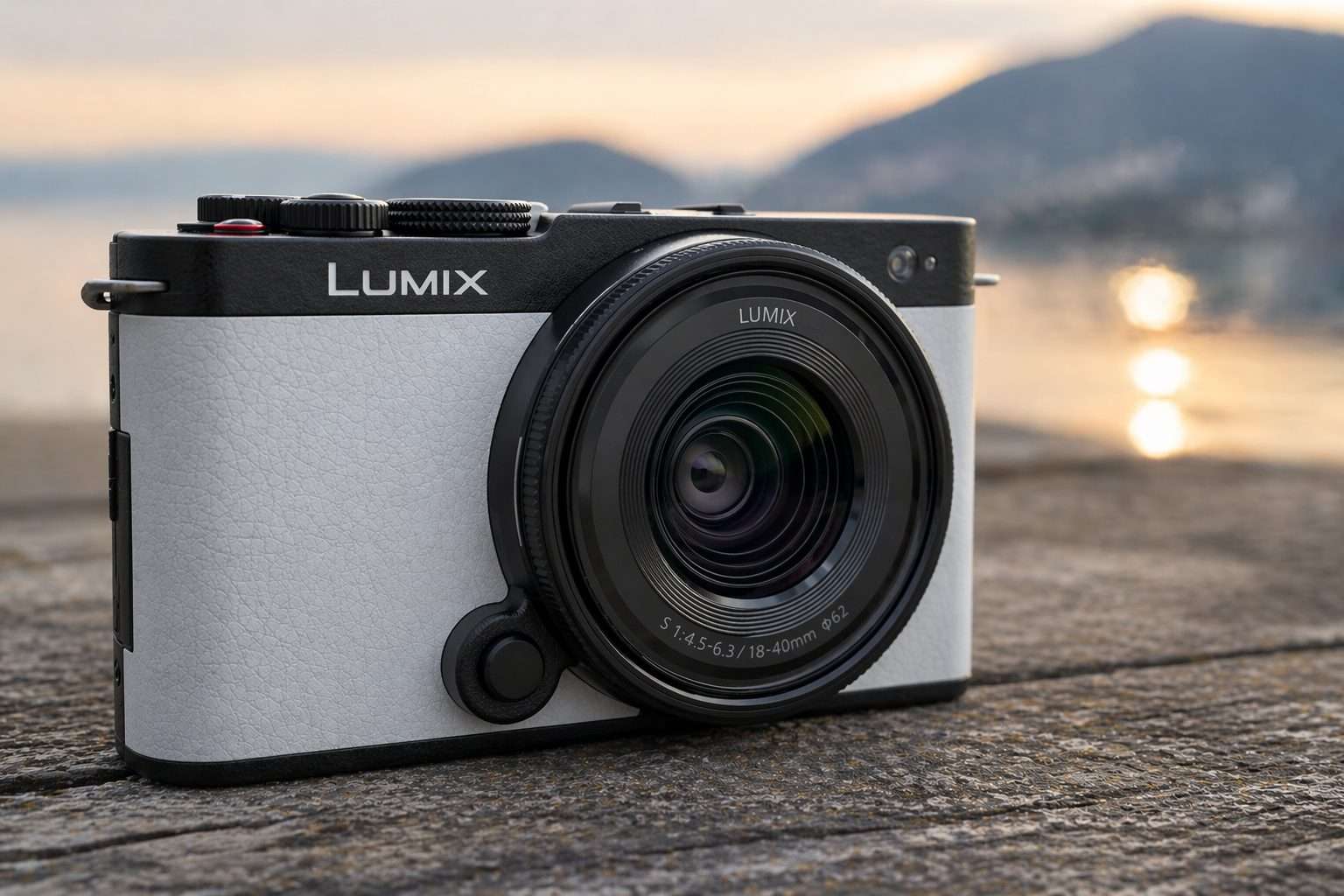
Timing plays a role here: Panasonic’s full-frame Lumix S9 really depends on small lenses to justify its reputation as a go-anywhere shooter. The 40mm enters at 40.9 mm in length and tips the scale at just 144 grams. That makes it both brighter and lighter than Panasonic’s own compact 18-40mm F4.5-6.3 kit zoom, and it gives the lineup a sharper everyday prime.
With its F2 aperture, the lens takes in more light and softens background detail, expanding its utility for street shots, travel, or portraits. Panasonic points to the 40mm focal length as offering a field of view that’s nearly eye-like—matching how scenes look naturally—and says it’s a good fit for the Lumix S9 body.
It’s a seven-element, six-group optical formula, with three of those elements aspherical. The diaphragm has seven blades. Minimum focus comes in at 0.3 meters, allowing for 0.17x magnification—handy for tighter framing, but not enough for genuine macro.
Panasonic left a handful of control features on the compact barrel—there’s still a focus ring, plus an AF/MF switch and a focus button. According to the company, the lens gets dust- and splash-resistant construction, a fluorine coating up front to keep off dirt and oil, and uses a 62mm filter, matching the Lumix S 18-40mm kit lens.
Panasonic says its new lens tackles focus breathing—so framing stays steady as focus shifts—and adds micro-step aperture control to deliver smoother exposure transitions for video work. B&H is now taking preorders in both black and silver.
Panasonic has refreshed its lens roadmap alongside the launch. The company is working on a compact wide-angle prime for the Lumix S9, plus a large-aperture telephoto zoom, but specifics on release timing are still under wraps. Digital Camera World points out the new wide prime should slot between Panasonic’s 18mm and 24mm offerings, and puts the upcoming telephoto in the 50-200mm range.
Initial feedback leaned positive, though reviewers flagged a few points. TechRadar Cameras Editor Timothy Coleman, after putting the lens through its paces, called the “optical quality… impressive”—highlighting the sharpness considering the compact build. Still, Coleman pointed out that the straightforward design doesn’t quite match the Lumix S9’s trendier look, even if the size does fit. TechRadar
Chris Niccolls at PetaPixel described the 40mm as “worth a try” if you’ve got an S9 or you’re after a straightforward, compact prime. Still, he flagged some issues: longitudinal chromatic aberration—color fringing in blurred backgrounds—showed up as “pretty bad” in several photos, even with the aperture stopped down. PetaPixel
Pricing is likely to be the battleground here. Inside the L-Mount lineup, TechRadar flagged the TTArtisan 40mm f/2 as the affordable option on size, while Sigma’s Contemporary 45mm F2.8 DG DN sits higher in price—plus, it’s bulkier and loses out on aperture speed. The broader L-Mount ecosystem still operates on a unified platform backed by founding brands Leica, Sigma, and Panasonic, with additional makers continuing to roll out new bodies and glass.
Alongside its lens announcement, Panasonic rolled out a Black Titanium version of the Lumix S9 for Europe, Digital Camera World reported. No word yet on whether that edition is heading outside Europe. For now, the U.S. angle stays firmly on the lens release—and on Panasonic’s ongoing challenge: convincing buyers that its compact full-frame system isn’t just a chassis waiting for better optics.
There’s a catch: the 40mm might not be the fix-all for the S9 lens headache. No regular hood mount here, and Panasonic isn’t saying when those two roadmap lenses will actually show up. Early reviews have already called out fringing and flare issues in tough lighting. The $399.99 price tag undercuts most first-party full-frame primes, but Panasonic faces pressure from lower-priced third-party and Sigma options—missteps could cost.