
London, May 1, 2026, 12:24 (BST)
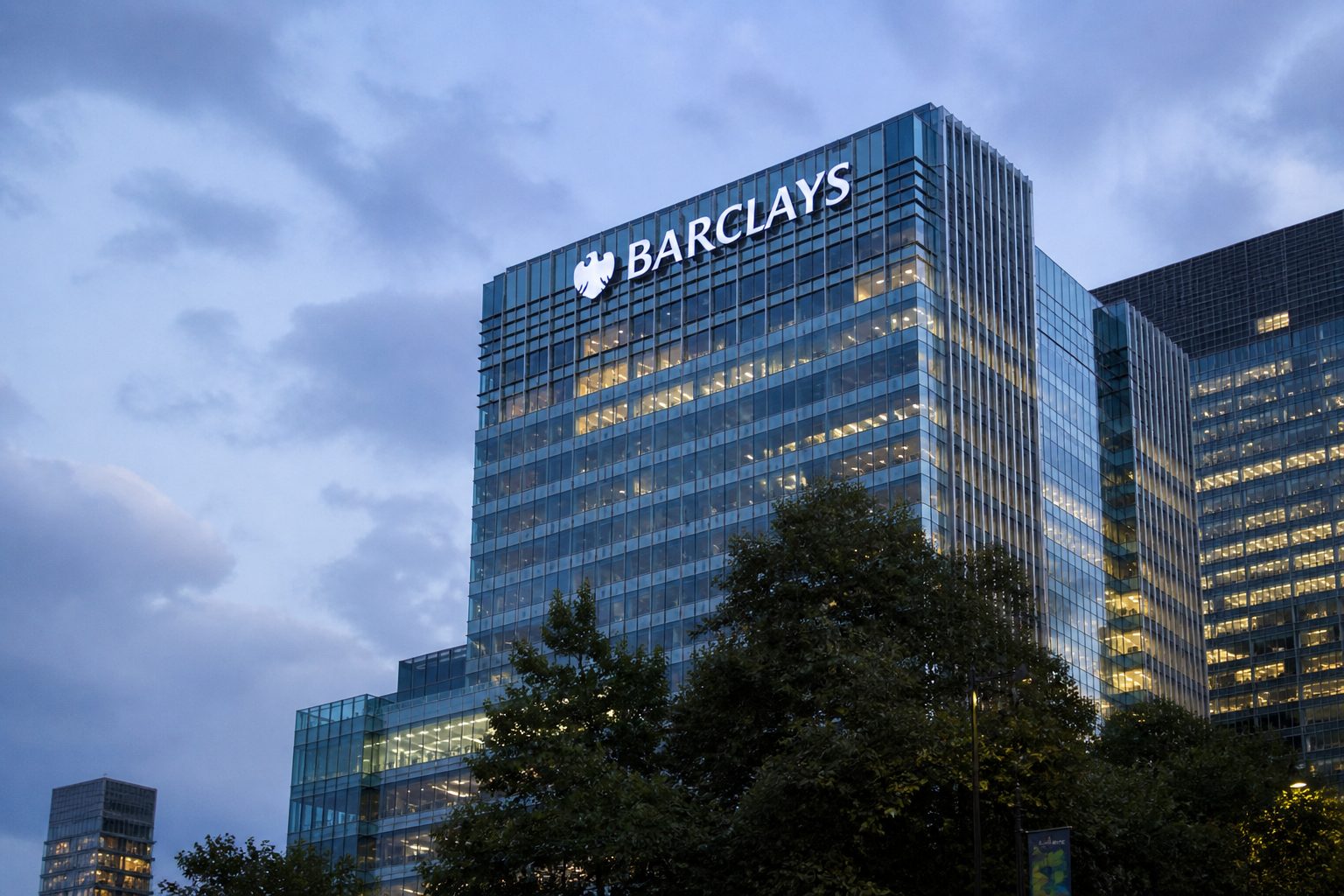
- Barclays put 5,670,419 more ordinary shares on the London market, bringing its total voting shares in issue to 13,634,354,256 as of April 30.
- Barclays is set to launch a £500 million buyback once its ongoing £1.0 billion repurchase wraps up, sticking with its focus on capital returns after Q1 numbers.
- First-quarter income came in at £8.2 billion, up 6%, though credit impairment charges jumped to £823 million. That figure includes a £228 million single-name charge in the investment bank.
Barclays PLC’s pending £500 million share buyback is now front and center in its capital narrative, following Friday’s filing of updated share counts in London. This comes just days after an uptick in bad-loan charges undercut what was otherwise a stronger first quarter on the income side. The bank confirmed that the new ordinary shares have been admitted to trading on the London Stock Exchange’s main market and are fully fungible with the existing shares.
Here’s why this is front and center: Barclays is pushing investors to focus on its reliable income and consistent capital returns instead of those isolated credit hits. Buybacks trim the share count once the bank cancels the repurchased stock. On the flip side, issuing new shares bumps the count up, though the effect can be marginal.
The UK banks are feeling it too. NatWest posted a 12% jump in first-quarter profit on Friday, though it set aside £283 million for impairments. Earlier in the week, Lloyds showed a 33% profit lift but flagged a £151 million charge linked to Iran-war exposures. Barclays falls into a similar pattern: stronger lending is coming through, but there’s a notable uptick in caution around the economic outlook.
Barclays posted a Q1 pre-tax profit of £2.814 billion, a 3% bump from last year. Return on tangible equity landed at 13.5%—that’s after adjusting for items like goodwill. The bank’s common equity tier 1 ratio hit 14.1%; it drops to 13.9% once the new buyback is factored in.
Barclays CEO C.S. Venkatakrishnan called it another “solid” quarter, pointing to the “breadth and quality of our businesses” as reasons for confidence in hitting the bank’s targets. Barclays kept its return on tangible equity goals unchanged—still aiming for more than 12% by 2026 and greater than 14% by 2028. Stock Titan
Finance Director Anna Cross told analysts that group net interest income, excluding the investment bank and head office, notched its eighth consecutive quarterly gain. Net interest income, the spread between loan earnings and deposit costs, kept climbing. Cross added that Barclays has secured £18.3 billion in gross structural hedge income lined up for 2026 through 2028; banks use a structural hedge to steady income amid shifting rates.
Credit is the sticking point. In the first quarter, Barclays’ loan-loss rate climbed to 74 basis points—nudging the bank’s forecast for the year toward the upper end of its long-term 50-60 basis-point range. A £228 million charge tied to a single name hit the securitised products business. CEO Venkatakrishnan said the bank will pull back lending to some structured-finance counterparties if controls fail the test, arguing that in these cases, the risk “far outweighs any reward.” MarketBeat
That distinction has caught investors’ attention, as non-bank, or so-called shadow banking, channels grow—where funds and finance companies, not banks, extend credit. Barclays, according to Bloomberg, revealed £66 billion in structured-finance exposure to non-banks by the end of Q1. Out of that, roughly £15 billion is linked to private credit funds.
Market Financial Solutions’ loss followed on the heels of worries linked to Tricolor, the U.S. subprime auto lender. According to The Guardian, Barclays pushed its credit impairment charges up to £823 million, compared with £643 million a year ago, and set aside £430 million for its UK motor finance redress provision.
The debate among analysts isn’t about Barclays’ earning power—it’s about how straightforward the path looks. RBC Capital’s Benjamin Toms upped his price target to 575 pence from 550 pence and stuck with a Buy, according to TipRanks data. Citi’s Andrew Coombs played it cautiously, leaving his Hold in place and nudging his target up just a touch, to 455 pence.
Now comes execution. Barclays plans to kick off the £500 million buyback once its ongoing £1.0 billion program wraps up, targeting completion by Oct. 24 if regulators sign off. Contained credit losses keep the focus on payouts. But if fraud or macro charges start to creep higher, this buyback could look anything but ordinary.