
SYDNEY, May 5, 2026, 08:02 AEST
- Before the Reserve Bank’s decision on Tuesday, CBA finished down at A$172.21.
- NAB and Westpac came in short of profit forecasts, pulling attention back to Big Four bank results.
- Bank margins could get a lift from higher rates, but the real wild cards: bad debts and pressure on borrowers.
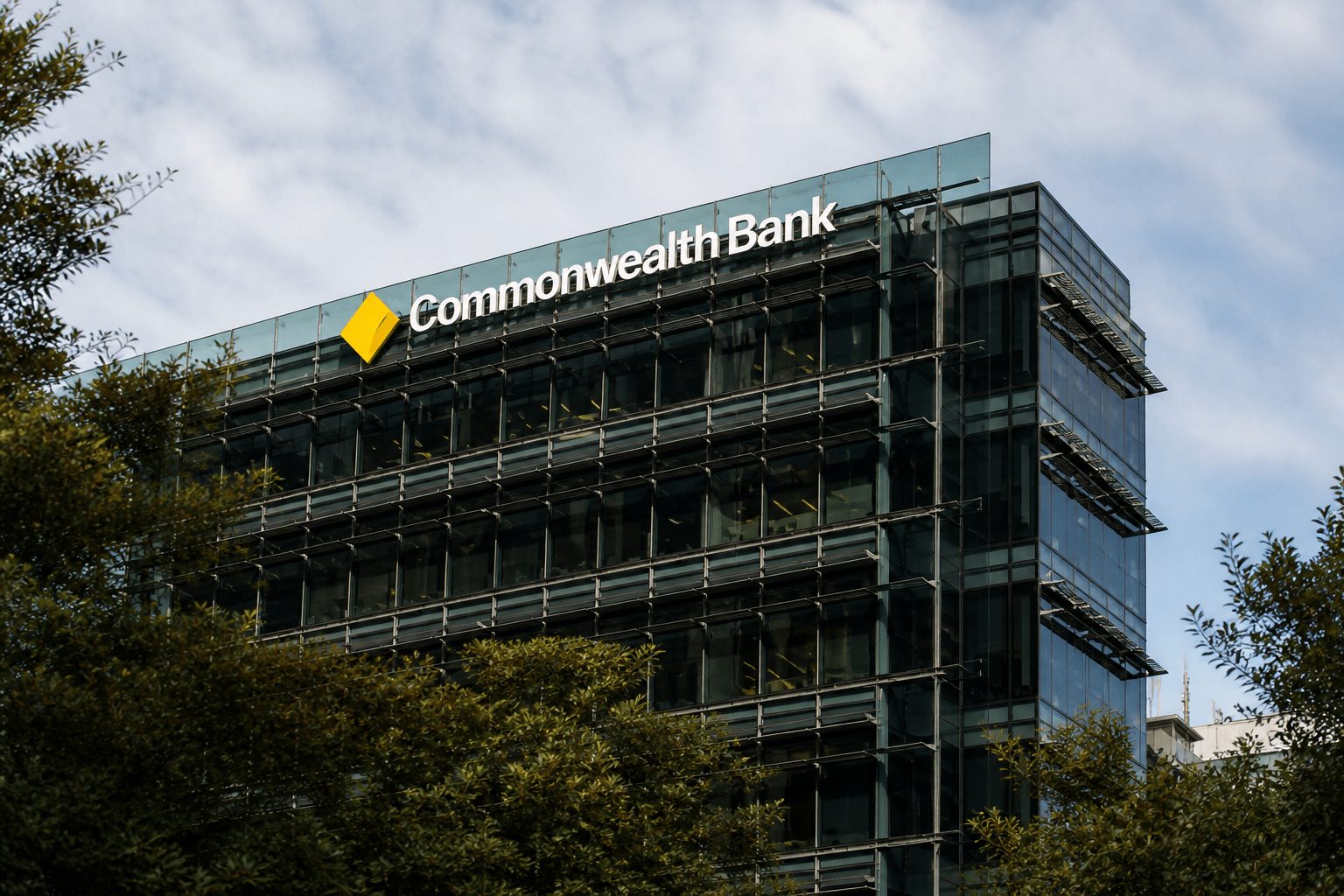
Commonwealth Bank of Australia starts Tuesday facing renewed pressure, as two other Big Four banks came up short on profits and RBA rate hike fears swirl. Shares finished the previous session at A$172.21, off 0.48%, just ahead of the market’s reopening.
Here’s the key: CBA has long traded at a premium as the cleanest of Australia’s big banks. With rates, margins, and bad debts snapping back into focus this week, that reputation meets its first real challenge.
Westpac posted a 2.9% jump in first-half net profit to A$3.41 billion for the six months ended March 31, but that still fell short of the A$3.47 billion consensus from Visible Alpha. The update comes after National Australia Bank’s soft showing on Monday, narrowing the outlook for CBA ahead of the RBA call.
NAB posted cash earnings of A$2.64 billion—falling short of the A$2.93 billion estimate from Visible Alpha—hit by a A$949 million post-tax software write-down and increased provisions for potential bad debts. “It’s very hard to forecast in these times,” said Chief Executive Andrew Irvine, explaining the bank’s cautious approach. Reuters
CBA is coming off a tough-to-beat benchmark this time around. Back in February, the bank posted a first-half cash net profit after tax of A$5.445 billion, a 6% rise on the previous year, and set an interim dividend at A$2.35 per share, fully franked. Net interest margin slipped, down 4 basis points to 2.04%.
The margin line could become even more significant if the RBA pushes rates higher. According to a Reuters poll, 30 out of 33 economists see the central bank increasing the cash rate by 25 basis points to 4.35% come May 5. ANZ, CBA, and NAB all project rates topping out at 4.35%, but Westpac is betting on 4.85%.
CBA’s economists are also highlighting this tension. “The inflation problem has not yet been solved,” said senior economist Trent Saunders. The bank added that the May decision would probably be a close call, with inflation still uncomfortably high—even as higher rates and Middle East conflict weigh on growth prospects. CommBank
CBA’s size offers a buffer. Following its February update, Reuters noted a 3.7% lift in home-lending, 6% expansion in business loans, and a 7.5% jump in household deposits. That kept its home-loan market share at 25.4%. Michael Haynes of Atlas Funds Management flagged business banking growth and what he called “operational excellence across mortgages” as the standouts. Reuters
The risk column is anything but minor. Higher rates may boost bank revenue initially, but they can just as easily choke off credit growth, pressure households, and push up loan losses. NAB’s A$706 million credit impairment charge was a sharp reminder: when the macro backdrop gets messy, investors snap their attention back to defense.
CBA shares held up on Monday, avoiding the worst of the drop, but the broader market didn’t find much traction. The S&P/ASX 200 finished down 0.38% at 8,697.1. Financials gave up 0.15%. NAB tumbled out of the gate and clawed back some ground, while ANZ pushed higher after analysts lifted their ratings in the wake of its results.
CBA investors face a key question: does the bank’s lending growth and robust capital position still warrant its premium if the RBA signals deeper inflation concerns? Tuesday’s rate decision probably won’t deliver a firm answer, but it will shift the baseline.