
Munich, May 12, 2026, 10:22 CEST
- Munich Re posted a first-quarter net profit of €1.714 billion, up 57%, with fewer large losses boosting the bottom line.
- The reinsurer slashed April renewal business by 18.5%, with risk-adjusted prices down 3.1%.
- In Frankfurt, shares slid during the morning session, with investors zeroing in on softer revenue and heightened pricing pressure.
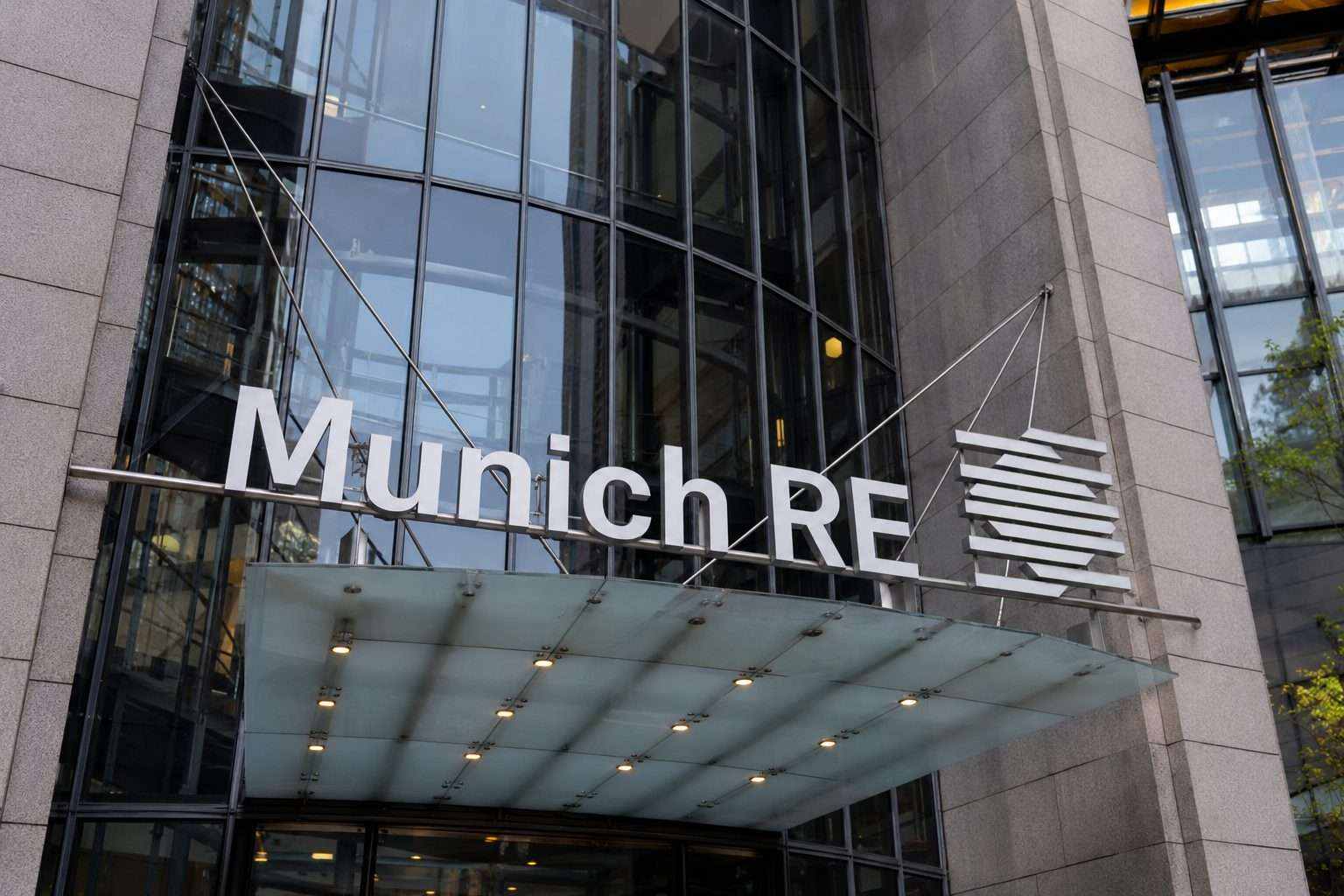
Shares in Munich Re slipped Tuesday, even as the German reinsurer posted a jump in first-quarter profit. Net profit climbed to €1.714 billion—up from €1.094 billion the year before—matching what analysts had projected. The company stuck with its full-year outlook, but has scaled back new business activity amid a less favorable reinsurance market.
Investors weren’t worried about the quarter itself. Instead, the focus was on what April renewals revealed about reinsurers’ grip on pricing, following several years of strong gains driven by heavy catastrophe losses and tight capacity. Munich Re reported that business written in April dropped to €2.0 billion, an 18.5% slide, and said risk-adjusted prices—which factor in shifts in loss risk and inflation—fell 3.1%.
Munich Re shares slid more than 5%, reaching €473.70 before trimming losses to around 4% in Frankfurt, according to finanzen.net—marking the insurer’s lowest point since November 2024. This drop came despite Barclays sticking with its “Overweight” rating and setting a price target at €606, signaling expectations for the stock to beat the market. Finanzen
Munich Re saw profits rise on the back of sharply reduced large-loss claims. Its property-casualty reinsurance combined ratio—where anything under 100% signals an underwriting gain—narrowed to 66.8%, a marked improvement from last year’s 83.9%. Major-losses in that business fell off a cliff, dropping to €130 million from €1.008 billion, as the 2025 quarter had absorbed claims from the Los Angeles wildfires.
Munich Re’s CFO Andrew Buchanan called it “an excellent start to 2026,” saying the company is “fully on track” for its €6.3 billion profit goal this year. He acknowledged “slightly lower prices” at the April property-casualty reinsurance renewals, but emphasized that the overall outlook hasn’t shifted: prices are still favourable and portfolio quality remains strong. MarketScreener
Revenue proved bumpier. Insurance revenue from contracts issued slipped to €15.018 billion from €15.811 billion, hit mainly by currency translation. Operating result, though, jumped, climbing to €2.230 billion compared with €1.465 billion. Munich Re’s solvency ratio landed at 292%—still comfortably ahead of its Solvency II threshold of more than 200%. Solvency II is the European capital framework for gauging an insurer’s loss-absorbing capacity.
Barclays’ Ivan Bokhmat flagged solid performance from Munich Re on key measures like the combined ratio, but pointed out that revenue came in noticeably softer than forecast—a detail likely to raise eyebrows. While the 3.1% decline in renewal prices landed at the more favorable end of his range, Bokhmat described the 18.5% plunge in business volume as “far steeper” than anticipated. Finanzen
The peer check didn’t help. Hannover Re, which trails Munich Re in size among German reinsurers, reported on Monday that first-quarter net income jumped 47.9% to €710.6 million. Premiums from April renewals climbed 18.8%, though risk-adjusted prices slipped 3.6%. CEO Clemens Jungsthöfel acknowledged that “the upper hand” still belonged to pricing pressure in property-casualty reinsurance, but said Hannover Re moved in where returns made sense. Hannover Re
Munich Re has pulled back from renewing or writing policies that didn’t match its pricing, terms, or conditions, pointing to lower prices as a key reason for the reduced volume. The April renewals—mainly focused on Japan and India—made up roughly 11% of the group’s property-casualty reinsurance book.
The group posted an investment result of €1.682 billion, up from €1.323 billion, as stronger fair-value changes offset choppy capital markets. ERGO, which is Munich Re’s primary insurer, chipped in €235 million toward net profit—just under last year’s €241 million.
Conflict-linked claims cropped up too. Munich Re put the cost from the Iran war at around €90 million—split roughly €60 million via Global Specialty Insurance, and €30 million through property-casualty reinsurance. The impact pales compared to the drop in catastrophe losses, but management is still flagging caveats in its guidance.
The worry is pretty clear: an unusually calm quarter for claims might not be repeated, and pricing doesn’t look set to hold steady. Munich Re has stood by its 2026 goals, though it flagged the usual caveats—geopolitical shocks, macro swings, big losses breaking past typical limits, or any sharp moves in currency, capital markets, tax policy, or one-off items could all throw targets off track.