
London, May 13, 2026, 10:03 BST
- Barclays gained roughly 1.3% in London, clawing back some ground following Tuesday’s bank-stock drop. The rebound had more to do with steadier UK gilts than any new developments from the bank itself.
- Bearish sentiment hasn’t gone away. Political unrest has brought renewed chatter about steeper UK bank taxes, and stubbornly elevated long gilt yields continue to weigh on sentiment.
- Q1 results are doing the heavy lifting for the bull camp: double-digit returns across divisions, a £500 million buyback, plus management sounding sure about hitting those 2026 goals.
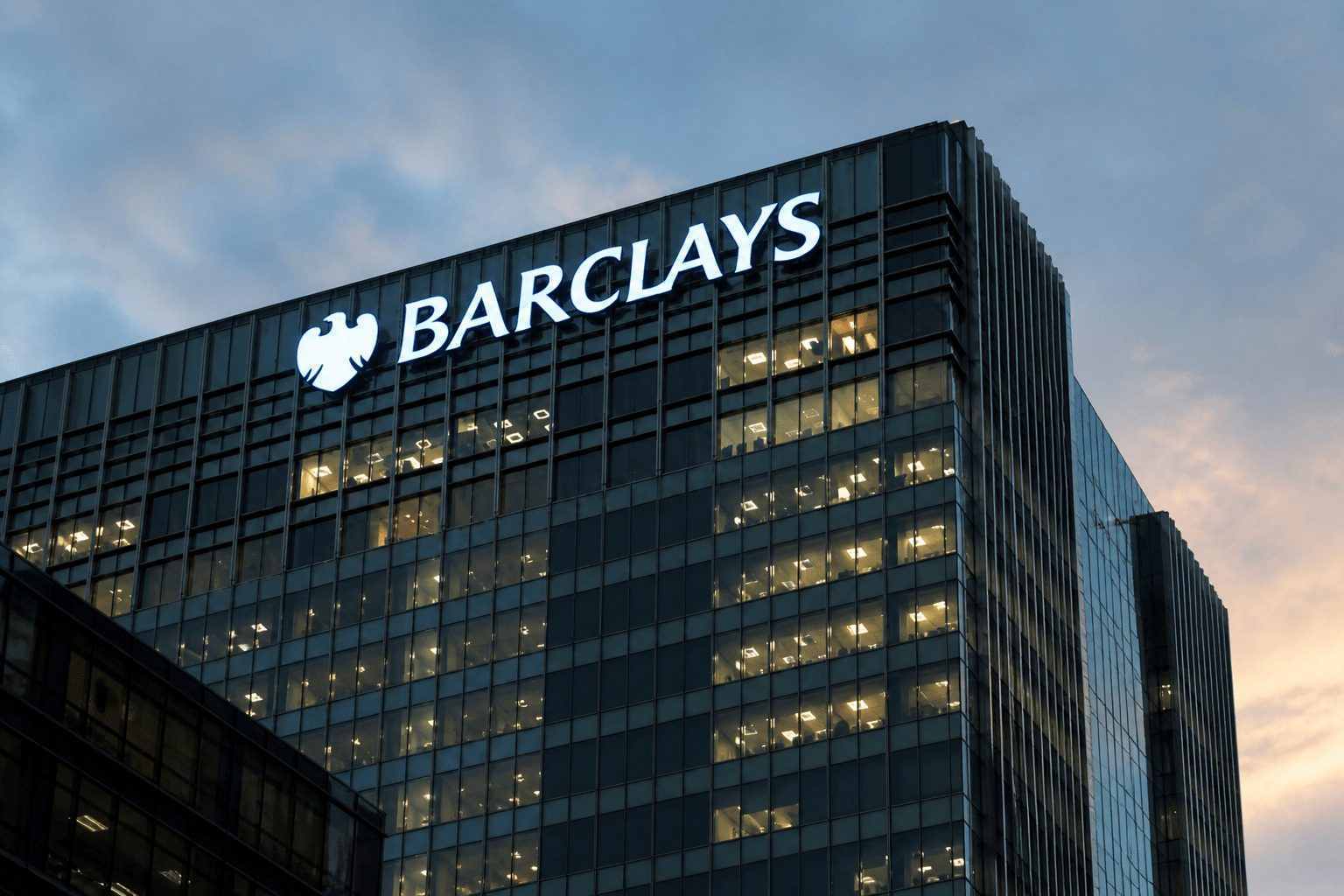
Barclays clawed back a bit early Wednesday, ticking up 1.34% to 420.45p. Still, the bounce lacked conviction—it wasn’t some decisive “risk-on” swing. More like a hesitant rebound from Tuesday, when UK political jitters dragged banks down and gilts took another hit. Google
Barclays is moving in step with UK banks, gilts, and tax risk—simultaneously. On Tuesday, long-dated UK yields surged to highs not seen in nearly 30 years, sterling slid, and shares in Barclays, NatWest, and Lloyds all tumbled over 3%. JPMorgan, meanwhile, is now factoring in a jump in the UK bank surcharge to 5% from 3%, calling it a straight hit to sector profits.
One segment of the shock faded today, sending the chart higher. UK bonds steadied as no direct threat to Prime Minister Keir Starmer materialized. Broader UK stocks kicked off stronger, led in part by the banks—Barclays, Lloyds, NatWest, and Standard Chartered each gaining 1% to 2% in the first stretch, data from Trading Economics show.
The rebound isn’t much to write home about. Yields on the 10-year gilt are parked above 5%, which still weighs on government finances, mortgages, and sentiment in the business world. Kathleen Brooks, research director at XTB, noted in a client note that UK assets have steadied with yields coming off, but flagged the 10-year staying over 5% as “a big problem” for the economy. Xtb
Barclays gets a boost from rising rates—the extra yield on loans and securities over what it pays out for deposits fattens net interest income. Still, high rates come with baggage: default risk ticks up, dealmaking cools, and politicians take notice if bank profits climb too high.
The bulls still have a case here. Barclays posted a 13.5% return on tangible equity for Q1, a metric that hinges on straightforward shareholder capital. Every division hit double digits for returns. CEO C.S. Venkatakrishnan called it “another solid quarter,” citing broad-based income increases, a cost-income ratio sitting at 56%, CET1 capital at 14.1%—the bank’s main cushion for losses—and announced a new £500 million buyback. Investegate
Bears are pointing out that most of the good news is likely priced in. Q1 pre-tax profit came in at £2.8 billion. But the buyback announcement underwhelmed versus analyst forecasts, according to Reuters, and Barclays also set aside a £228 million provision related to MFS, the collapsed lender. That charge has reignited worries about risk management and private-credit bets, right as macro conditions have soured.
Barclays’ management struck a measured note on the latest earnings call—not much hype, but no gloom either. The bank pointed to a 7% uptick in steady income streams and a 12% jump in net interest income outside the investment bank and head office. On top of that, Barclays said it’s secured £18.3 billion in gross structural hedge income for 2026 through 2028. That hedge, essentially, is the bank’s tool for evening out deposit-driven earnings over time.
This is why bulls see the drop as driven by broader macro factors, not just issues at Barclays. The bank still has visible income streams, a buyback in progress, and, even factoring in that repurchase, its capital ratio remains within target. JPMorgan’s latest note stuck with Barclays and NatWest as its top longer-term picks, pointing to Barclays trading close to 6x estimated 2028 earnings with an expected 10% total yield in 2027.
Bears push back, warning that tax hikes and changes to reserve-remuneration could eat into the very thing investors prize: those extra capital returns. JPMorgan figures a 2-point surcharge bump would shave 1.3% off Barclays’ 2027 EPS—less impact than Lloyds or NatWest—but if the reserve-remuneration policy gets tougher, the fallout could be much worse. This isn’t your run-of-the-mill credit-cycle risk; it’s about policy.
Prediction markets aren’t letting go of the political angle just yet. Over on Polymarket, traders put Starmer’s odds of leaving by the end of June at about 50-50, while bets on him stepping down by year-end jumped to 80%, according to Reuters. When it comes to rates, Polymarket’s June Bank of England market priced “no change” at 83%, with only 18% backing a 25-basis-point hike. That’s right in line with the Barclays conversation: rates may still support income, but the idea of a hike isn’t being ruled out anymore. Reuters
Competitive signals remain cloudy. Barclays leans harder on global operations and its investment bank than Lloyds or NatWest, which, according to JPMorgan, lessens the blow from a UK tax. HSBC’s UK profit share is even slimmer. Still, Barclays’ earnings are tied more tightly to market swings, and despite a solid Q1 from its investment bank, it trailed leading U.S. competitors in certain trading and advisory segments.
Barclays’ action today isn’t a full-scale reset. Instead, we’re seeing a rebound, shaped by a different risk environment. Q1 results are solid enough for dip buyers to step in; still, the next phase looks tied less to another profit beat and more to two things: whether UK politics keeps shaking up gilts, and if the threat of a bank tax fizzles out or gets locked in as policy.