
London, May 16, 2026, 21:05 BST
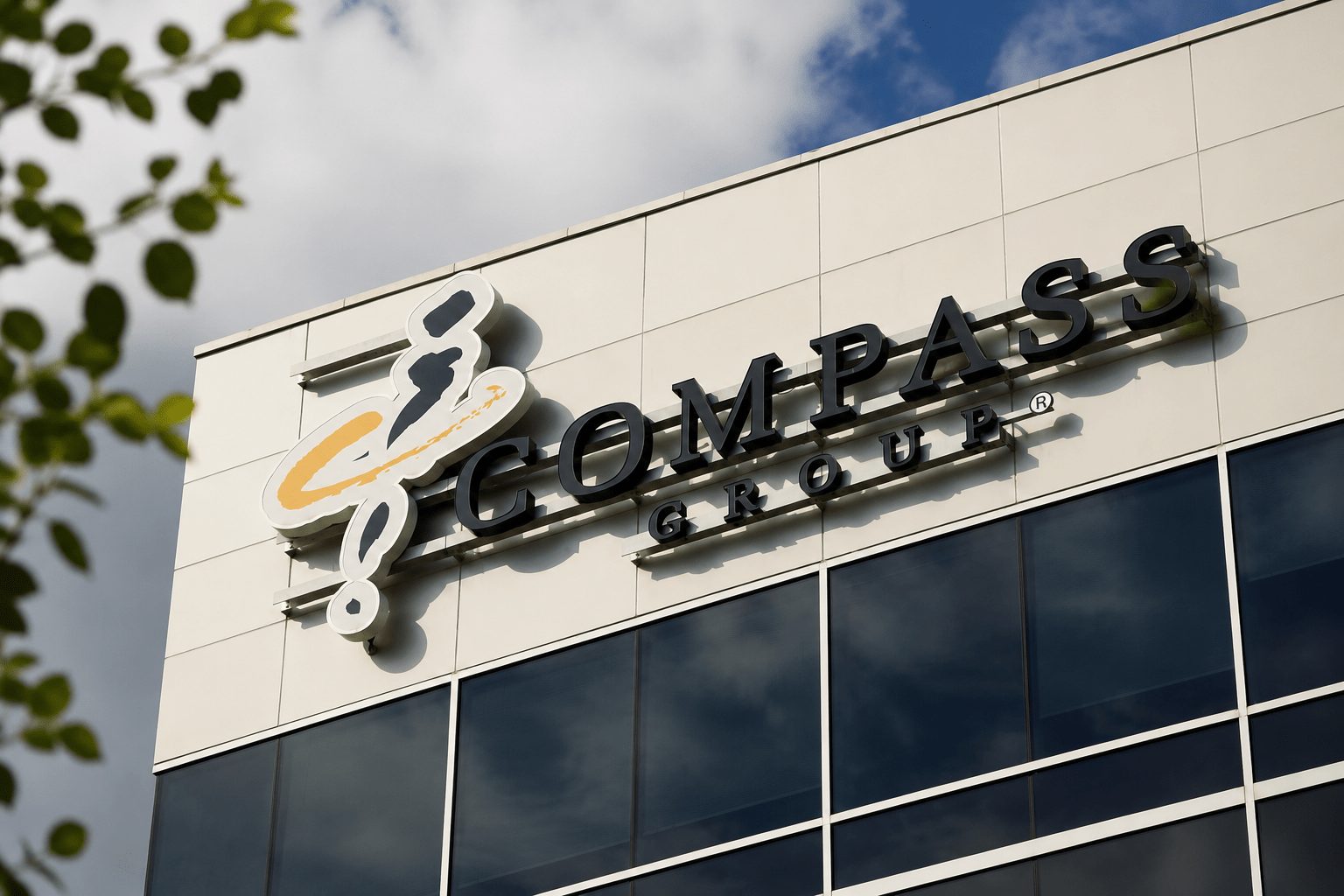
Compass Group stock fell 4.05% to $31.96 on Friday as London shares dropped, but the latest profit upgrade is still on the table going into Monday. Even with Friday’s loss, Compass shares were up about 8% from their May 8 finish at $29.50, according to historical prices.
Compass Group is now quoting its share price in dollars after switching the trading currency for its London-listed ordinary shares from sterling pence to U.S. dollars on April 1. Investors who are used to seeing the catering company’s London share price in pence should watch for the change.
Compass reports next week, but investors may weigh its own results against a weak UK market backdrop. The FTSE 100 dropped 1.7% to 10,195.37 on Friday, its biggest daily decline in more than eight weeks and the fourth consecutive weekly loss, hit by political jitters and higher oil prices feeding inflation worries. “Markets won’t like it,” said Neil Wilson, investor strategist at Saxo UK. Reuters
Compass updated its outlook on Monday, lifting 2026 underlying operating profit growth guidance to above 11%—up from about 10%. First-half revenue hit $25.0 billion while underlying operating profit rose 12% to $1.84 billion. The company said underlying profit cuts out items like acquisition-related costs. Organic revenue, which excludes deal and currency impact, was up 7.2%.
Compass group chief executive Dominic Blakemore said the company was seeing “great momentum across the business,” mentioning new contract wins, high client retention, and better margins. The company posted client retention at 96% and new business wins totaling $4.1 billion, a rise of 14%, with half of that coming from first-time outsourcing as clients shifted catering or support services to an external provider for the first time.
Late in the week, a new U.S. contract appeared. The University of Kentucky said it’s wrapping up a long-term enterprise services deal with Compass to cover dining, concessions, maintenance, grounds, custodial and some healthcare support. Dining and concessions are set to begin July 1. Palmer Brown, CEO of Compass Group North America, said it’s among the most comprehensive deals in education and healthcare.
Compass’s outlook move got a lift from the group. Reuters noted Compass hiked its guidance, while Sodexo in France went the other direction, lowering its full-year sales and profit targets back in April after trouble with execution and contract checks.
But risks are still in play. Compass has been moving into defence, airline lounges and data centres as investors keep asking if artificial intelligence will shrink office jobs, or if weight-loss drugs could change how people eat. About two-thirds of Compass contracts have dynamic pricing—so prices can change instead of staying fixed—or have terms tied to food and labour costs, Reuters reported. The company has pushed through price hikes of almost 3%.
Compass shares dropped 4.05% on Friday, outpacing the FTSE 100’s 1.71% decline, according to AJ Bell data. The group’s market cap stayed near $54.34 billion.
Compass has no financial calendar event set for next week. The group’s next dates are June 18 for the 2026 interim ex-dividend, June 19 for the record date, the third-quarter trading update on July 21, and the full-year figures due Nov. 24.
Monday trade looks open to swings. Compass is showing a better profit outlook and some new contracts, and shares gained last week. Still, the market faces UK political risk, oil prices, and inflation worries.