
LONDON, May 17, 2026, 08:40 BST
UK moves new anti-drone weapon to RAF Typhoons in Middle East
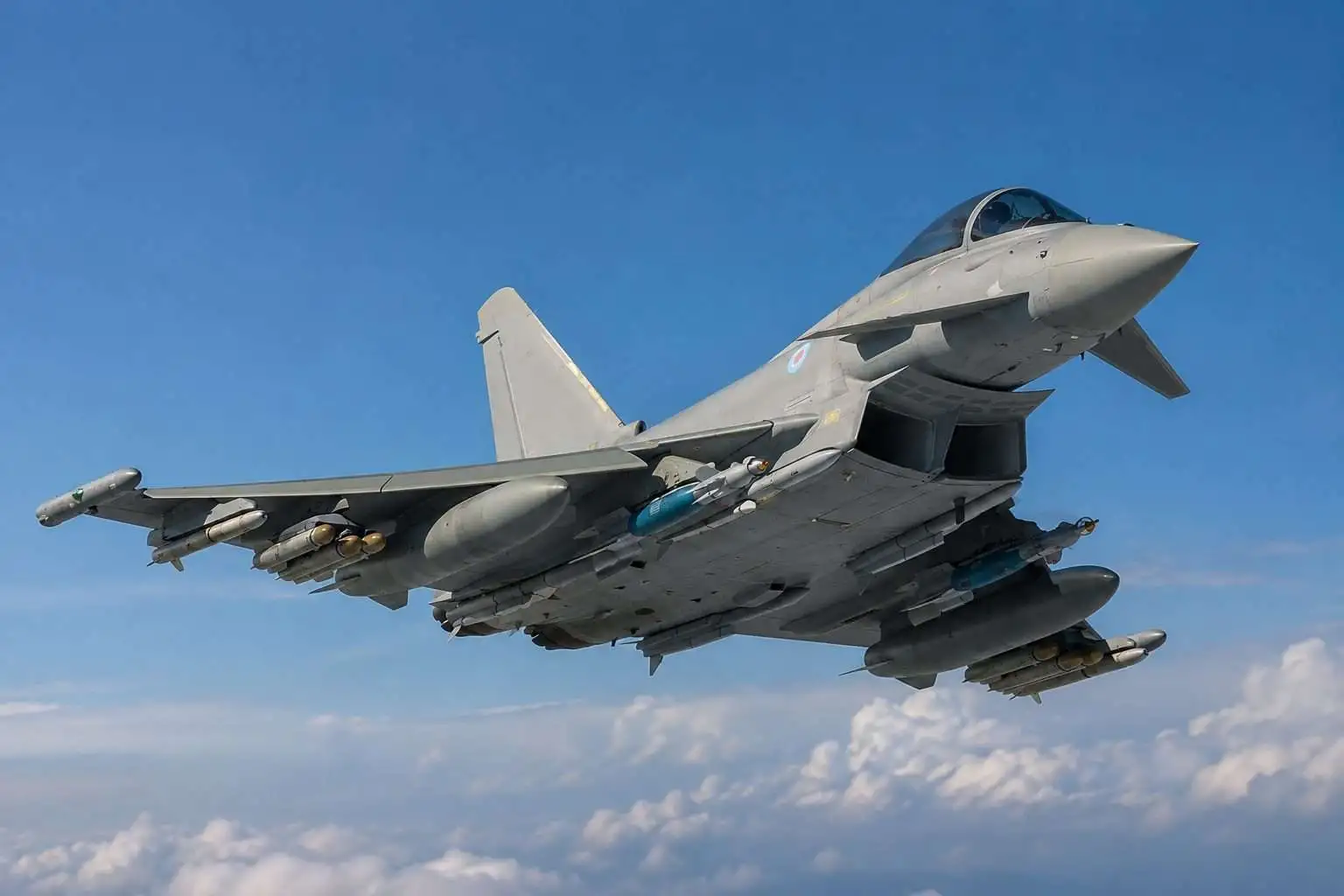
Britain said Sunday it has put a low-cost anti-drone weapon onto Royal Air Force Typhoon fighter jets in the Middle East, shifting the kit from trials to actual missions in under two months. The Advanced Precision Kill Weapon System, or APKWS, gives pilots a cheaper option for shooting down drones compared to the bigger missiles now used for some intercepts.
Small attack drones have made air defence as much a cost issue as a tactical one. Iran has hit Israel and Gulf states where U.S. forces are based after U.S. and Israeli attacks on Iran in late February. This month, Washington approved sales of APKWS to Qatar, Israel and the United Arab Emirates using an emergency process.
Britain is sending more military equipment to the Gulf, saying last week it would add autonomous mine-hunting gear, Typhoon jets, and HMS Dragon to a multinational operation to secure shipping in the Strait of Hormuz, a key route for about 20% of the world’s oil.
APKWS attaches a BAE Systems laser-guidance kit to an unguided 70 mm rocket to make it a precision weapon. The system works by lighting up the target with a laser, then the rocket tracks the reflected signal.
UK’s Ministry of Defence said the system struck a ground target in March. In April, 41 Test and Evaluation Squadron carried out air-to-air firings. Now, 9 Squadron Typhoons have used it during sorties in the Middle East.
Luke Pollard, minister for defence readiness and industry, said the new work should let the RAF shoot down “many more drones at a much lower cost.” Air Commodore Donal McGurk, deputy director of operations for 11 Group, called the system a “valuable addition” to air-defence efforts already in place in the Middle East. Gov
QinetiQ worked on the integration and said the tests were held at the MOD Aberporth range in west Wales, using safety zones and live targets. CEO Steve Wadey said the company is providing “urgent capabilities” to UK and allied troops. ADS Advance
BAE’s Air sector head Simon Barnes said the Typhoon is still “central” for Europe and the Middle East as the security picture shifts. In April, Richard Hamilton, BAE’s managing director for air operations, called the first Typhoon APKWS missile firing a cost-efficient add to the jet’s arsenal. BAE Systems
Typhoon is not the first to get APKWS. BAE says APKWS is already flying on the F-16 and A-10, plus several helicopters. That puts the British fighter in a wider push for lower-cost anti-drone weapons. Typhoon is still carrying Meteor, Storm Shadow and Brimstone for its main air and strike missions.
Questions remain about actual combat use. Janes said there were no details on operational deployment and no word from the MOD on whether the system has fired on hostile drones. The MOD also held back the number of APKWS rounds sent to the region.
UK officials still say the weapon is only one part of their defense. The MOD said ground and helicopter air defence in the Gulf is on high alert with partners. That includes Sky Sabre in Saudi Arabia, Lightweight Multirole Missile in Bahrain, and the Rapid Sentry and ORCUS systems in Kuwait.
BAE and QinetiQ stay in the demand loop as the shift continues in the industry. Reuters said the State Department picked BAE as the main contractor for APKWS sales to Qatar, Israel and the UAE. RTX and Lockheed Martin landed separate air-defence restock agreements in the region, according to the same report.