
WEST DES MOINES, Iowa, May 17, 2026, 04:25 (CDT)
- WTBA finished Friday at $22.76, off 2.15%. The stock dropped around 5.5% this week.
- Nasdaq cash trading stays closed Sunday. Regular trading restarts Monday unless there’s a holiday.
- West Bancorporation is set to pay its quarterly dividend on May 20, which is its next scheduled corporate event.
West Bancorporation, Inc. (WTBA) finished down for the week, not just on Friday’s drop. Nasdaq shares closed at $22.76 on May 15, down 2.15% for the day and about 5.5% from $24.09 the previous week. Trading volume came in at 35,437 shares.
There isn’t a Sunday session on the tape. Nasdaq’s main U.S. stock market hours are Monday to Friday, 9:30 a.m. to 4 p.m. Eastern. The exchange’s 2026 holiday calendar shows the next planned full closure is Memorial Day, May 25.
The focus for holders isn’t really the price today, but what things look like heading into Monday. The board has set a $0.25 per share quarterly dividend, payable May 20 for shareholders on record as of May 6. So next week, it’s a cash pay date, not an earnings event.
The market slump dragged on stocks Friday. Investors saw higher oil push up inflation fears. The S&P 500 slid 1.24%, the Dow dropped 1.07% and the Nasdaq Composite was down 1.54%.
Regional banks lost ground as well. The SPDR S&P Regional Banking ETF dropped 1.14% Friday and ended the week down about 4.1%. Other local lenders traded lower, with QCR Holdings off 1.43% Friday and roughly 3.8% this week. Bank First shed 1.83% Friday and slipped about 3.7% for the week.
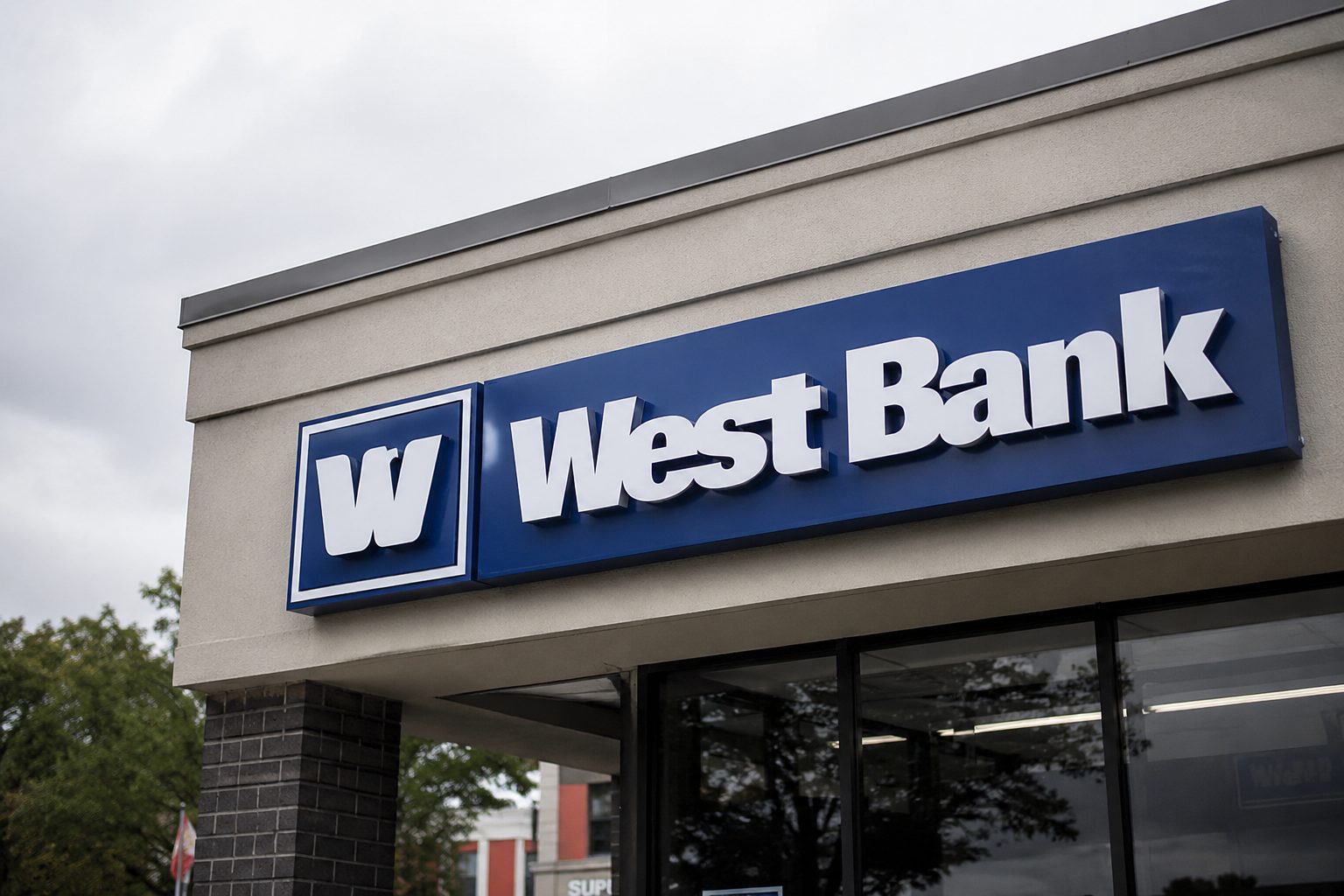
West Bancorporation’s April release put the focus back on its core numbers, which looked stronger than what shares might suggest. The West Bank parent posted Q1 net income of $10.6 million, or $0.61 a share, beating last year’s $7.8 million, or $0.46. President and CEO David Nelson said “net interest margin continues to expand” and described credit quality as “pristine.” SEC
Net interest margin, or the spread banks get between what they earn on loans and investments and what they pay out on deposits, moved up for West Bancorporation. The margin hit 2.59% for Q1, compared to 2.47% last quarter and 2.28% a year ago. Net interest income came in at $24.4 million, up from $20.9 million the prior year.
Chief Financial Officer Jane Funk said on the April earnings call that maturing loans and investments still gave the bank a chance to lift margins if both rates and funding costs held flat. She told Piper Sandler analyst Nathan Race there was “opportunity” but did not share a target. Investing
But the risk is clear. Loans dropped 0.3% in the first quarter and deposits fell 3.8%. The bank pointed to regular customer cash flows as the reason for core deposit swings. If deposit costs go up again, loan demand stays weak, or more customers refinance away, the boost to margin could slow.
Monday will be a test for WTBA after it closed out last week on a weak note, dropping to $22.58 intraday Friday. The bank comes into the new week following a sector slide. Traders now have their eye on whether shares can stay above that low. WTBA has a dividend payout on the calendar for Wednesday. Management keeps pointing to margin recovery, though investors are getting less loan growth than before.