
New York, May 22, 2026, 04:15 (EDT)
Horizon Bancorp shares are set to start Friday’s premarket at their best level since May 8. HBNC closed at $18.42 on Thursday, continuing a two-day climb. The stock picked up 2.29% Wednesday and added 0.49% Thursday, with around 282,440 shares traded.
Small regional-bank stocks are trading on a narrow set of numbers right now: deposits, funding costs, and net interest margin, which tracks the difference between what the bank collects on loans and securities and what it pays for deposits and borrowings. Horizon reported first-quarter total deposits up by $146.9 million since Dec. 31, reaching $5.4 billion. Net interest margin for the quarter came in at 4.29% on a fully taxable equivalent basis.
The last normal U.S. trading session before Memorial Day is Friday. Nasdaq’s schedule has markets closed on May 25. Regular trading runs Friday from 9:30 a.m. to 4:00 p.m. ET. Premarket hours are 4:00 a.m. to 9:30 a.m. ET.
Horizon (Michigan City, Indiana), parent of Horizon Bank, said first-quarter net income came in at $26.2 million, or 51 cents per diluted share. Net interest income was up 19.1% year-over-year at $62.2 million. Commercial loans increased by $34.2 million in the quarter. Net charge-offs ran at 0.05% of average loans, annualized.
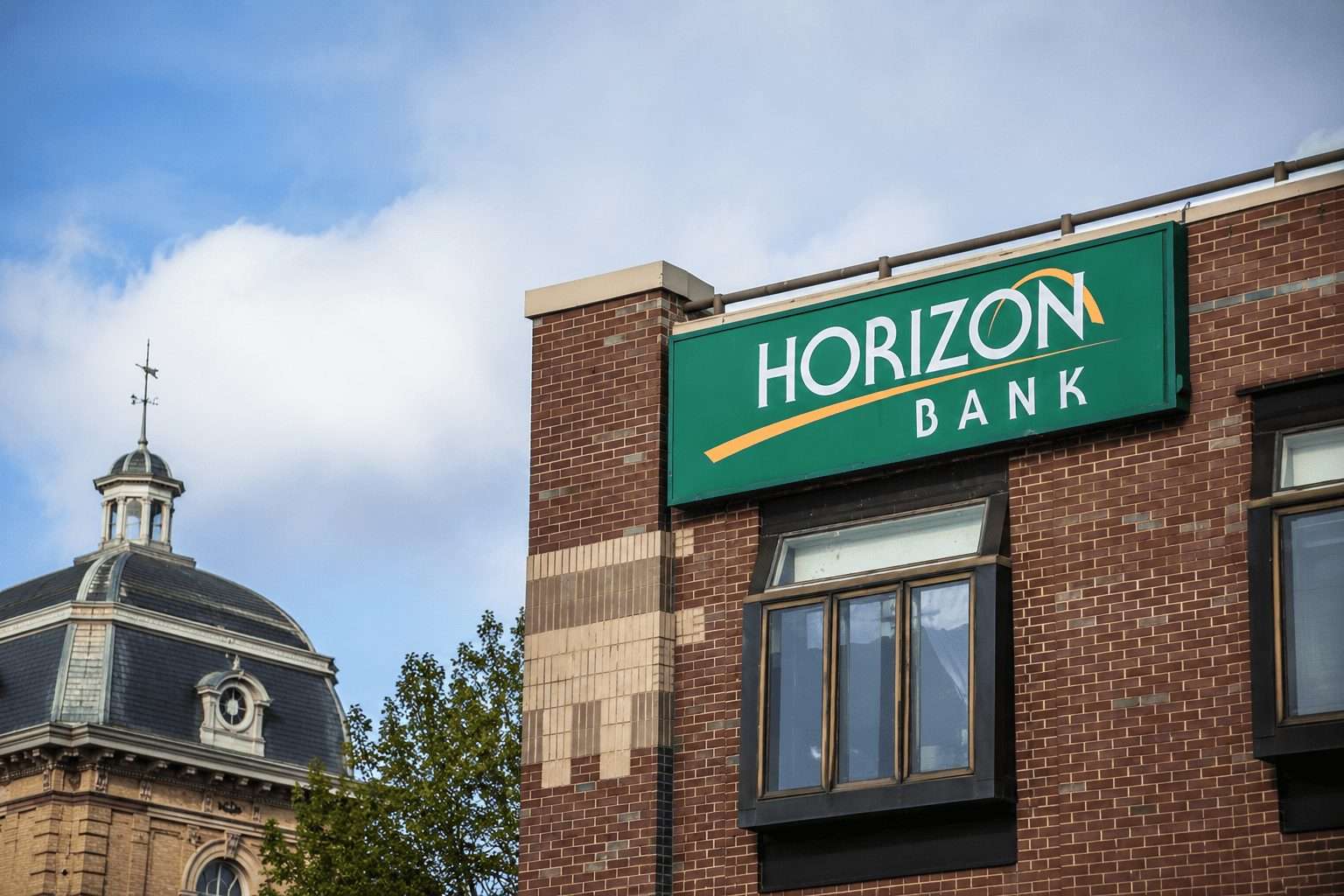
Horizon President and CEO Thomas Prame said the company’s “2026 outlook is unchanged” and called its loan growth “disciplined, high-quality growth.” Prame said credit quality was “excellent” and said expenses were “well managed.” Horizon Bank
Horizon’s May 8 quarterly filing laid out the numbers driving its shares. At March 31, the company had $6.56 billion in assets, $5.42 billion in deposits, and $699.0 million in stockholders’ equity. Horizon also said it had 51.33 million common shares out as of May 6.
Regional bank stocks didn’t move much. The SPDR S&P Regional Banking ETF traded at $69.21, up 0.06%, as of 8 p.m. EDT Thursday. Old National Bancorp last traded at $23.77. First Merchants at $40.23. Horizon’s market cap was about $945 million on Robinhood, much lower than Old National’s $9.2 billion or First Merchants’ $2.53 billion.
Horizon’s margin improvement could stall. Total loans were steady since year-end. Non-interest income fell by $0.2 million from the prior quarter, with weaker mortgage-loan sale gains behind part of the drop. Deposit costs may not keep dropping, and slowing loan demand or rising credit losses could leave the stock’s latest rise unsupported.
For Horizon Bancorp (HBNC), traders are watching two prices. If shares fall below Tuesday’s $17.92 close, most of the recent gains would be gone. Pushing through the May 8 close at $18.49 would put the stock back at the top of its May range.