
NEW YORK, May 25, 2026, 15:02 EDT
- Camden National ended Friday at $49.32, down 0.2% on the day but roughly 4.2% above its May 15 close.
- Nasdaq is closed for Memorial Day and is due to resume normal trading Tuesday.
- The next broad test for bank shares is Thursday’s PCE inflation release, a gauge of prices paid by U.S. consumers.
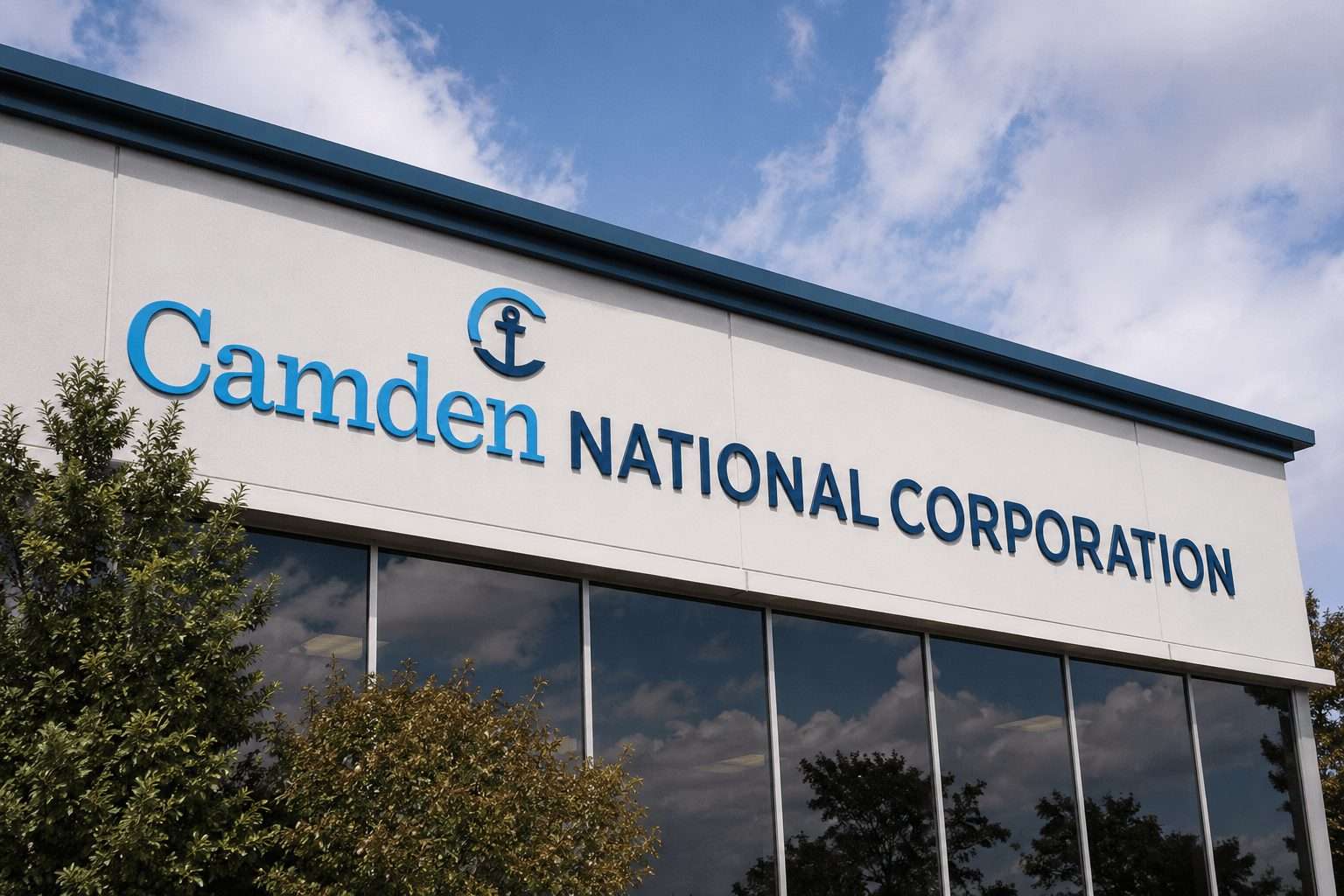
Camden National Corp shares enter a holiday-shortened week with a small rally behind them, as investors weigh the Maine lender’s stronger first-quarter earnings against a still-awkward backdrop for regional banks.
The stock last traded at $49.32 on Friday, down 10 cents, or 0.2%, but it finished about 4.2% above its May 15 close of $47.34. There is no Monday trade: Nasdaq’s 2026 holiday schedule marks May 25 closed for Memorial Day, with regular hours listed as 9:30 a.m. to 4 p.m. Eastern on trading days.
That matters now because the next session brings a clean price check after a quiet governance week and before fresh inflation data. For a bank, inflation and interest rates feed directly into loan demand, deposit costs and net interest margin, the spread between what a bank earns on loans and securities and what it pays to fund them.
Camden National’s latest company-specific filing came on May 21, when it said shareholders at its May 19 annual meeting elected 11 directors, approved executive-pay proposals on an advisory basis and ratified RSM US LLP as auditor for 2026. About 83% of eligible shares were represented, virtually or by proxy, the filing showed.
The real driver remains the first-quarter report from late April. Camden National posted net income of $21.9 million and diluted earnings per share of $1.29; earnings per share, or EPS, is profit divided by the number of shares. The company also reported return on average assets of 1.28% and return on average tangible equity of 18.17%, a profitability measure that strips out some intangible assets.
Chief Executive Simon Griffiths said the quarter reflected the benefits of last year’s Northway Financial acquisition and the bank’s ability to scale the combined business. He also said Camden remained focused on “disciplined execution,” a phrase investors will likely test against expense and deposit-cost trends through the summer. PR Newswire
Camden National said net interest income was $52.4 million in the first quarter, down 3% from the fourth quarter, while net interest margin was 3.24%. A basis point is one-hundredth of a percentage point; the company said its margin contracted by 5 basis points from the prior quarter, though core margin held at 2.92%.
The company is not a large U.S. bank story. It is a Northern New England one. Camden National says it has about $7.0 billion in assets and 72 banking centers in Maine and New Hampshire, and calls itself the region’s largest publicly traded bank.
Nearby community-bank peers were mixed to softer on Friday. Bar Harbor Bankshares ended at $34.67, down about 0.2%, while First Bancorp of Maine closed at $28.58, down about 0.9%. Camden’s Friday slip sat in that same small-bank pattern, though its one-week gain was stronger.
The week’s main macro marker is the U.S. personal consumption expenditures price index, due May 28. The PCE index tracks prices paid for consumer goods and services, and the Bureau of Economic Analysis said the March reading was up 3.5% from a year earlier.
Management has told analysts it expects some margin help in the second quarter. Chief Financial Officer Michael Archer said the bank saw room for 2 to 5 basis points of core margin expansion, helped by seasonal deposit flows and certificates of deposit repricing; certificates of deposit are savings products that usually lock in money for a set term.
But the risk is that the rate and competition picture turns less friendly. Griffiths told analysts Camden had felt “a pickup in competition” over the past three to six months, including some pricing pressure on assets, and higher-for-longer inflation could keep funding costs sticky just as lenders fight for quality loans. Q4 Investor Relations
At Friday’s close, Camden National carried a market value of about $834 million, a 52-week range of $35.00 to $53.51 and a listed quarterly dividend of 42 cents a share. The next move is likely to be less about one holiday-thinned trading session and more about whether investors still buy the margin story after the inflation data lands.