
New York, May 27, 2026, 07:06 (EDT)
- First United was last seen at $38.17, up 2.5% from its last close, ahead of Wednesday’s regular Nasdaq trading.
- The SPDR S&P Regional Banking ETF rose 1.3% as regional bank shares traded stronger.
- First United’s last big update came in April with its first-quarter results, showing higher profit and saying that margin expansion lifted earnings.
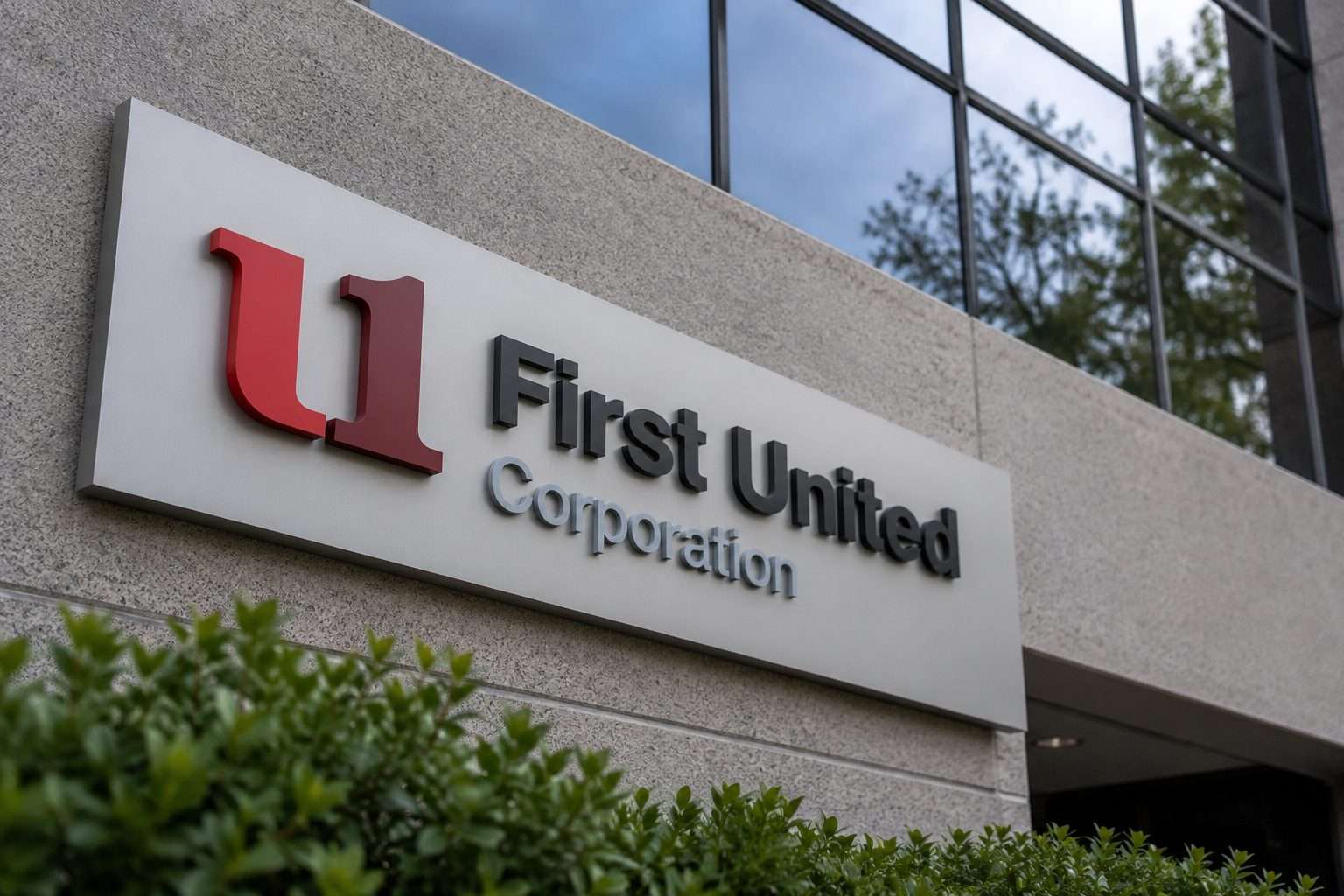
First United Corporation shares traded up ahead of Wednesday’s U.S. open, putting the Maryland bank in a stronger spot after a drawn-out holiday week.
The Nasdaq-listed shares traded at $38.17, up 93 cents, or 2.5% from the prior close, per market data. Regular trading on Nasdaq hadn’t started yet at the dateline; pre-market hours for Nasdaq run 4:00 a.m. to 9:30 a.m. Eastern, then regular hours go from 9:30 a.m. to 4:00 p.m.
Why now: First United sits at about $248 million in market cap, making it vulnerable to even small swings in interest. The U.S. market reopened after the Memorial Day break on Monday, May 25, so traders have less time this week to adjust regional-bank trades.
Sector sentiment gave a lift. The SPDR S&P Regional Banking ETF climbed 1.3%. Among smaller banks, First Mid Bancshares gained 1.6%, Eagle Bancorp Montana was up 0.8%. First Community dipped 0.3%.
No clear new catalyst for the company over the last day. The most recent significant update is still First United’s April 20 Q1 results, reporting GAAP net income of $6.7 million, or $1.03 per diluted share, compared to $5.8 million, or 89 cents per share, a year ago.
First United president and CEO Jason Rush said the quarter was powered by “continued margin expansion.” Net interest margin came in at 3.83% on a non-GAAP, fully tax-equivalent basis. That’s the spread the bank gets between loan and securities interest and its cost of funding. PR Newswire
First United reported total assets of $2.0 billion as of March 31, down $48.4 million from the end of last year. Deposits gained $15.5 million, and outstanding loans were up $3.8 million. The stock is quoted at about 1.2 times book value, based on the company’s March 31 figure of $31.84 a share.
Credit quality remains a question mark. The allowance for credit losses at March 31 was $20.0 million, the company said. Net charge-offs dropped to $0.2 million from $0.4 million last year. Still, consumer-loan net charge-offs were up at 1.23%, compared with 0.65%. Non-accrual loans stood at $4.7 million after a commercial loan shifted into that group.
First United shares are changing hands after a leadership change. The company had earlier announced Carissa L. Rodeheaver would step down following the May 7 annual meeting, with Rush set to become president and CEO starting Jan. 1. Rodeheaver called her time at First United the “honor of my 33+ year career” when announcing her planned retirement. MyBank Investors
Shareholders at the May 7 meeting voted in 10 directors to serve through the 2027 annual meeting, and passed a charter change to lower the bar for certain shareholder actions, the company said in an 8-K filing. Governance was on the agenda, but Wednesday’s stock move looked like it was more about price action than any new company developments.
First United’s risk is clear. Loan payoffs are capping growth, and if consumer credit trends get worse, margin gains may not be enough for investors. Buyers seem to like the stronger first-quarter earnings, better trading in regional bank stocks, and the finished leadership change for now.