
NEW YORK, May 28, 2026, 15:02 EDT
- Churchill Downs shares rose nearly 3% late Thursday, ahead of most gaming peers.
- Stifel’s Jeffrey Stantial flagged possible value in the company’s gaming assets, while saying he had no knowledge of formal M&A talks.
- The move comes after a first quarter that showed record revenue but also familiar risks: regulation, consumer spending and debt costs.
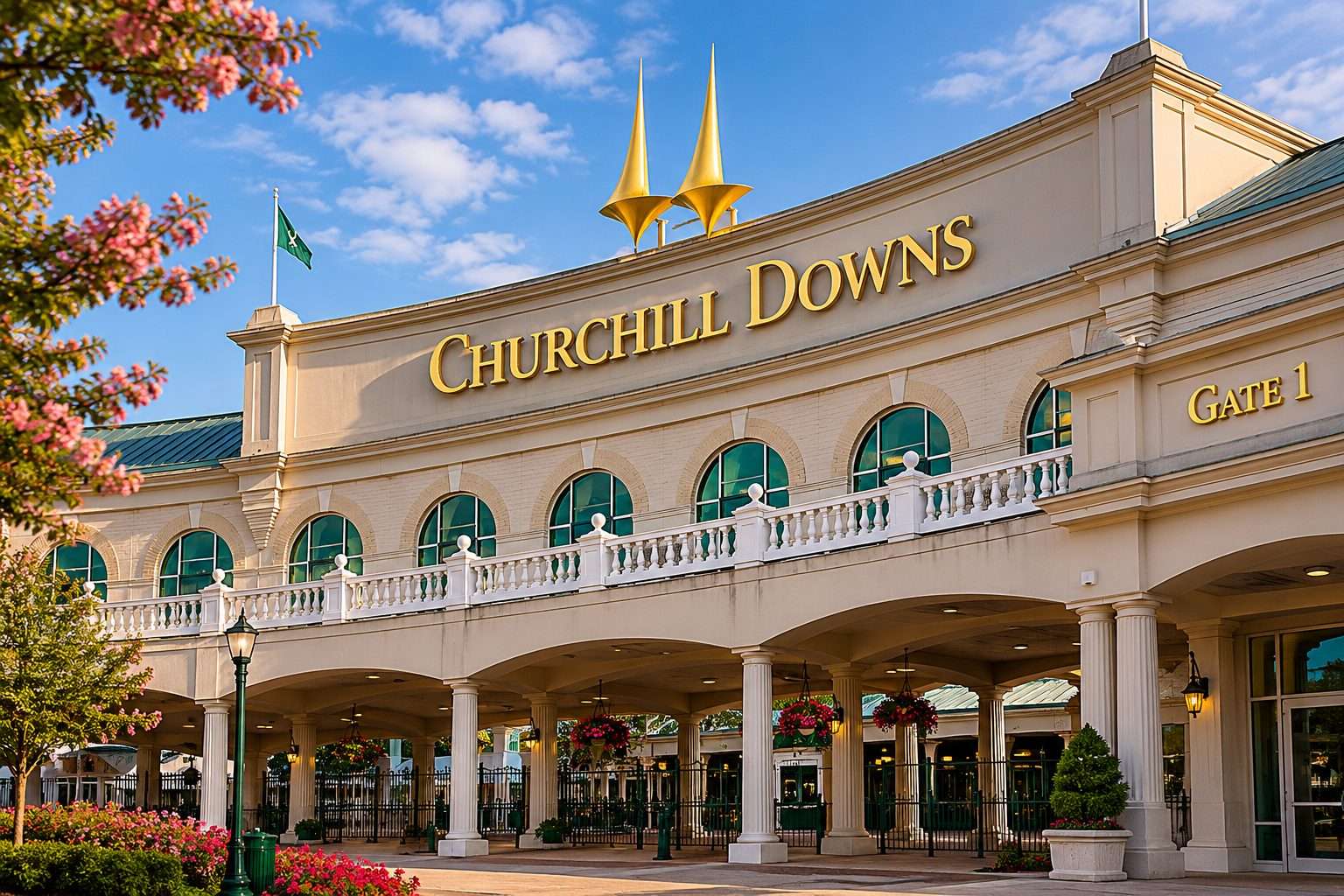
Churchill Downs shares climbed in late New York trading on Thursday, outpacing most gaming peers, as investors weighed fresh analyst attention on whether the Kentucky Derby owner could unlock value from its regional casino business.
The stock traded at $89.44 at 3:01 p.m. EDT, up 2.95%, after touching an intraday high of $90.08. It remained well below its 52-week high of $118.46, a gap that helps explain why talk about asset value has found an audience.
The timing matters. Stifel analyst Jeffrey Stantial said Churchill Downs had “compelling” sum-of-the-parts appeal — a valuation approach that prices a company’s main units separately — but he also said the firm had no knowledge of Churchill holding formal merger or consolidation talks. Stantial rated the stock “buy” with a $139 target, Casino.org reported this week. Casino
The debate is not just about horse racing. Churchill Downs also owns regional casinos, TwinSpires online wagering and historical racing venues. Historical racing machines are terminals that let customers wager on previously run races, often in a slot-like format.
In the first quarter, the company reported record net revenue of $663 million, net income attributable to Churchill Downs of $83 million and adjusted EBITDA of $257 million. Adjusted EBITDA means earnings before interest, tax, depreciation and amortization, with some items stripped out; investors use it as an operating-profit gauge, though it is not the same as net income. The gaming segment generated $262 million of revenue, close to the $301 million from live and historical racing.
That mix is what has drawn attention. Stantial said an outright sale, not a spin-off, could be the cleaner route if Churchill ever moved on gaming assets, and cited “broader optionality to unlock value.” Boyd Gaming has been discussed by investors as a possible strategic fit, but Stantial said there was no confirmation of any talks.
The peer tape was mixed. Boyd rose 0.9% and Penn Entertainment gained 1.9%, while DraftKings slipped 0.8%. The broader market also helped: the QQQ ETF, a proxy for the Nasdaq 100, rose 0.8%, and the SPDR S&P 500 ETF added 0.5%.
Churchill has also been adding to its racing franchise. In April, it agreed to buy the intellectual property rights to the Preakness Stakes and Black-Eyed Susan Stakes for $85 million, a deal that would put the first two legs of the U.S. Triple Crown under one corporate roof. Chief Executive Bill Carstanjen called the Preakness “one of the most iconic brands in American sports.” Reuters
The risk is that the market is paying up for an option, not a deal. No formal process has been reported, and gaming is a real earnings contributor, not a side asset. A sale could lift cash or reduce complexity, but it could also leave Churchill more exposed to race calendars, weather, wagering volumes and consumer spending.
Churchill’s latest quarterly filing listed risks including heavier regulation of gambling, stronger competition, weaker consumer confidence, higher interest rates and trouble completing or integrating acquisitions and divestitures. The company also said a one-percentage-point rise in SOFR, a benchmark short-term interest rate, would reduce net income and operating cash flow by $14 million if its variable-rate debt balance stayed constant.
For now, Thursday’s move was a mark-up in optionality. The hard news is still thinner: a stock bounce, an analyst’s value-unlock argument, and a company with prized racing brands but a complicated gaming footprint.