
New York, June 1, 2026, 16:03 (EDT)
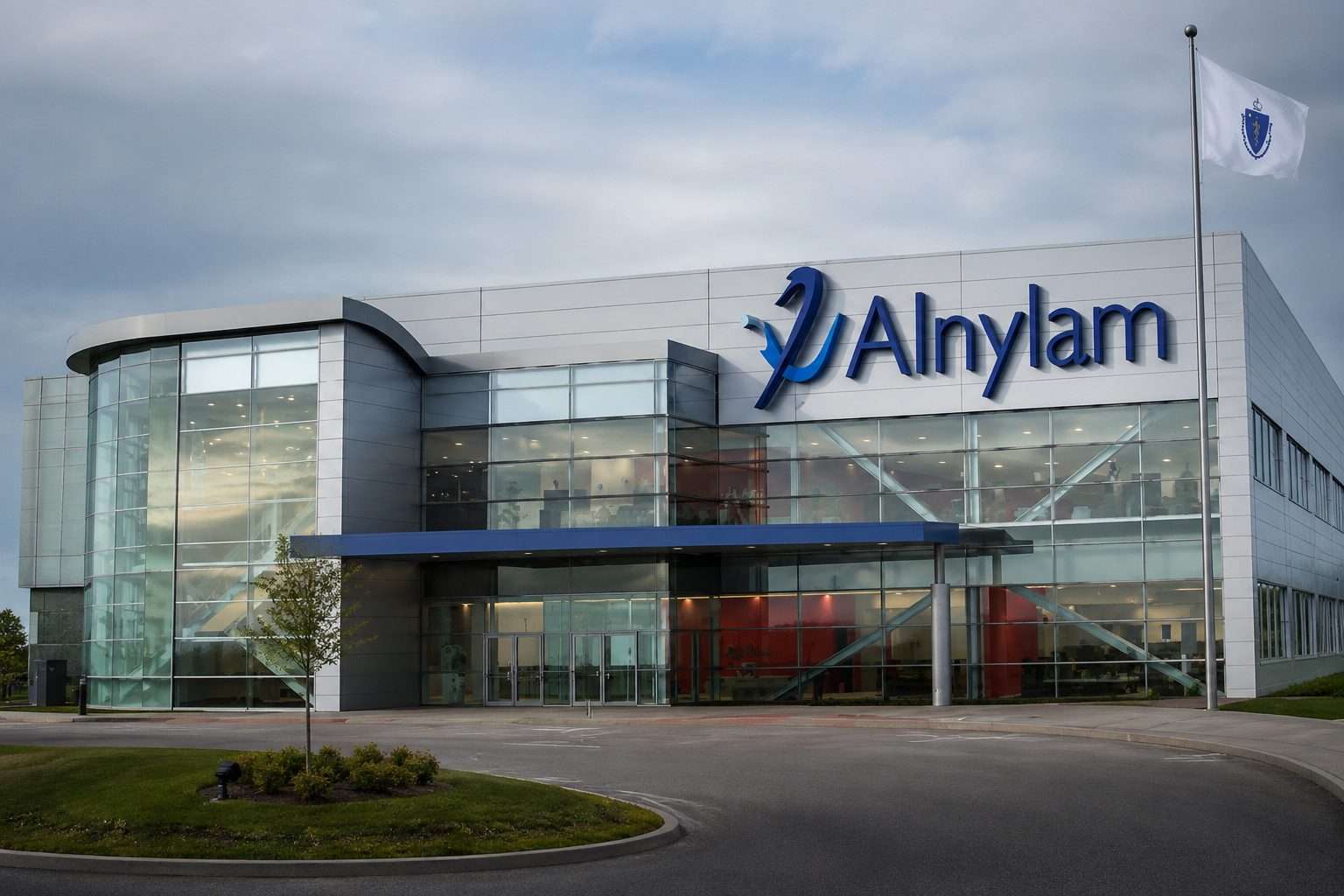
Alnylam Pharmaceuticals dropped 2.16% to finish Monday at $295.47, and was just above that level in after-hours action. The Cambridge, Massachusetts biotech is sitting about 4% above its 52-week low, down about 40% from an October high. Shares moved in a $295.14 to $303.98 range for the day.
The market lost ground on that news. U.S. stocks were mostly higher, with Reuters saying the S&P 500 was up 0.43% and the Nasdaq up 0.69% as tech names gained. Only technology and energy were in the green out of the 11 S&P sectors. Alnylam’s story is different, though—a heart-drug stock that’s still stuck at the low end of its one-year range.
Options traders had been keeping an eye out for a possible swing. A Zacks note posted by Nasdaq on May 30 said the Alnylam July 17, 2026 $210 call was showing some of the day’s highest implied volatility among equity options. Implied volatility tells the options market how much a stock could move, but not direction.
Alnylam’s newest SEC filing was about board changes, not pipeline news. The company said it now has 11 directors after naming Benjamin F. Cravatt, Ph.D., to its board. Cravatt’s term runs until the 2028 annual meeting, starting June 1. He’ll sit on the Science and Technology Committee.
Amvuttra is still the main driver for Alnylam. The company posted first-quarter global net product revenue of $1.04 billion, a 121% increase from last year. That was powered by $910 million in total TTR revenue from Amvuttra and Onpattro. CEO Yvonne Greenstreet said it was “over $1 billion in quarterly product revenues for the first time.” Alnylam kept its 2026 total net product revenue outlook at $4.9 billion to $5.3 billion. Alnylam Investor Relations
Amvuttra, or vutrisiran, got FDA approval in 2025 for ATTR-CM, a rare heart condition where abnormal transthyretin protein collects in the heart and can cause failure. “It’s going to help us get to profitability,” Chief Medical Officer Pushkal Garg told Reuters before the approval. Reuters
Alnylam isn’t just about one drug. Reuters calls it a commercial-stage biopharma group focused on RNA interference, or RNAi, which is a gene-silencing approach designed to cut disease-linked proteins. The company sells Amvuttra, Onpattro, Givlaari and Oxlumo. Leqvio is also in the lineup, though Novartis handles its commercialization.
But execution is the risk here. In ATTR-CM, Alnylam’s vutrisiran has to compete with Pfizer’s tafamidis, marketed as Vyndaqel and Vyndamax, and BridgeBio’s acoramidis, branded as Attruby. If uptake slows, if pricing faces resistance, or if rivals come in with better data or the pipeline misses, the stock trading at the low end might not just be noise, but a warning sign.
Alnylam’s board move brings more scientific experience, but investors are focused elsewhere. The main issue is whether the company can keep turning Amvuttra’s launch into steady revenue growth as the stock trades near last year’s lows. The stock’s finish Monday left that in doubt and pushed the concern further into view.