
London, June 8, 2026, 10:06 BST
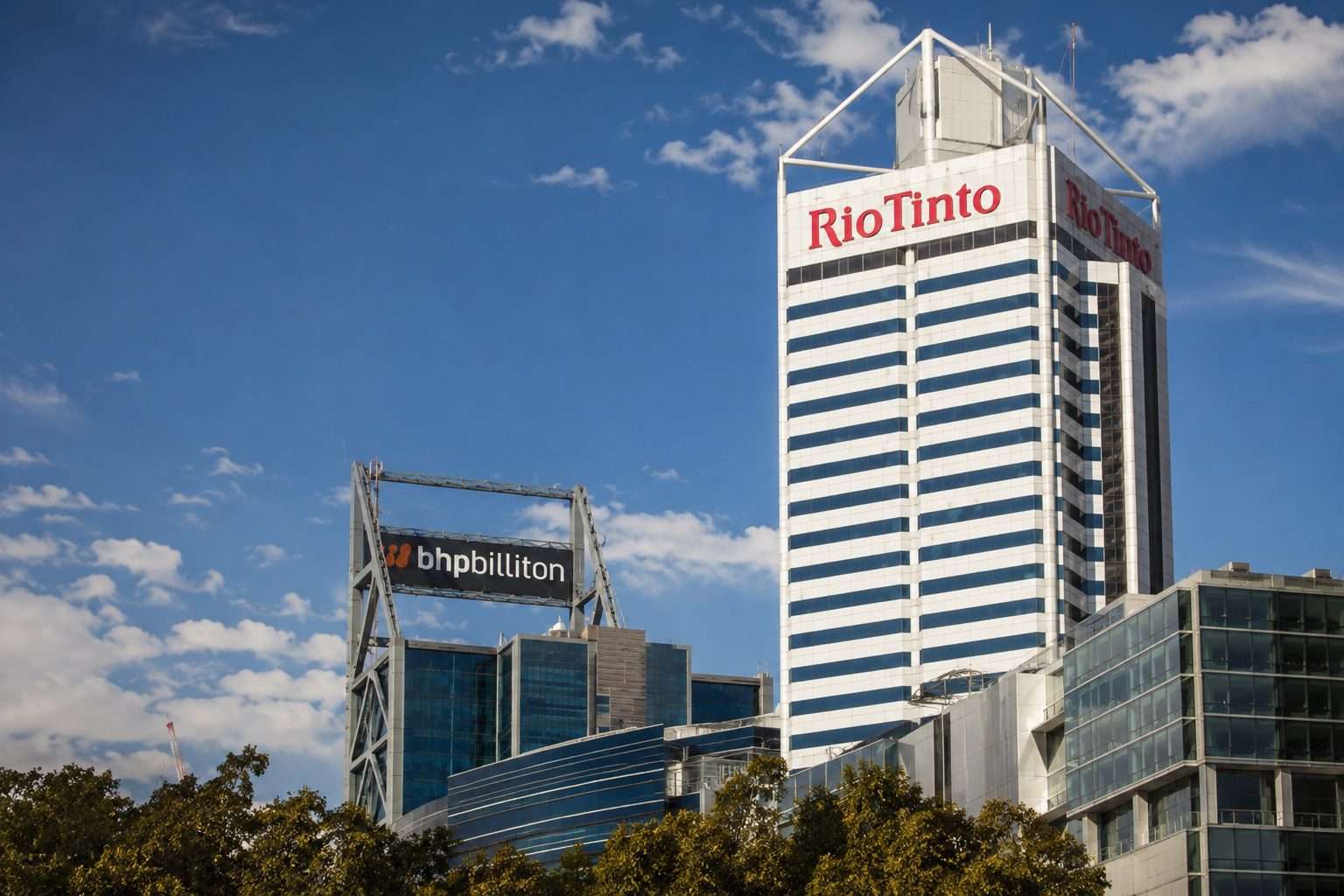
Rio Tinto plc shares eased in London morning trade on Monday, extending Friday’s pullback, as investors marked down miners in a wider sell-off driven by Middle East tension and weaker appetite for stocks.
Delayed UK quote feeds put Rio around 7,570-7,574 pence, down roughly 0.4%, after a previous close of 7,604p. The shares had already lost 3.10% on Friday, while the FTSE 100 — the index of the largest London-listed shares — edged up 0.07% that day, showing Rio underperformed the wider market.
The London market was open under normal hours. The London Stock Exchange operates Monday to Friday from 8:00 a.m. to 4:30 p.m. in British Summer Time, and June 8 is not listed as a 2026 full-holiday closure.
Why it matters now: Rio’s stock is still sitting well below its 9,117p year high, even after a strong run in miners through parts of 2026. That leaves investors quick to sell when commodity demand, energy prices or China-linked risk look less certain.
The pressure was not just Rio’s. Broader markets fell as Brent crude moved toward $98 a barrel and European stocks weakened after fresh Middle East strikes and a technology sell-off. Kyle Rodda, senior financial market analyst at Capital.com, said “things could get a bit hairier today” as geopolitical risk rose. The Guardian
Peers also traded defensively. A Google Finance snapshot showed Glencore, Anglo American and Antofagasta lower in London alongside Rio, tying the move more to the mining tape than to one company-specific shock.
There was one fresh Rio-specific development. Energy Resources of Australia said on June 5 that a court had approved Rio’s compulsory acquisition — a legal process that lets a dominant shareholder force out the remaining holders — of the ERA shares it did not already own.
North, a Rio Tinto subsidiary, held 98.43% of ERA and had sought approval to acquire the remaining 1.57% for A$0.002 a share after enough minority holders objected to require court approval, Australasian Lawyer reported.
The ruling clears up a small ownership dispute but does not change the larger issue around Ranger. Rio says ERA’s Ranger uranium mine in Australia’s Northern Territory stopped mining and processing in January 2021 and that the company’s focus is rehabilitation of the site.
For the stock, iron ore still does most of the heavy lifting. AJ Bell describes Rio as a diversified miner whose main commodity is iron ore, with copper and aluminium smaller contributors; market data tracking benchmark iron ore put the price near $102 a tonne after an almost 8% monthly fall.
Copper gives the bull case some cover. Copper was around $6.28 a pound on Monday and remained more than 28% above year-earlier levels, a backdrop that helps Rio’s longer-term shift toward metals used in power grids, electrification and industrial equipment.
Rio has also been pushing aluminium growth. In a May 29 release, the company said it had started commissioning its $1.5 billion AP60 smelter expansion in Quebec; Aluminium and Lithium Chief Executive Jérôme Pécresse called AP60 “one of the most advanced smelting technologies operating at commercial scale.” Rio Tinto
But the risk case is plain. If China demand fades, iron ore stays weak, or higher oil prices feed into costs and bond yields — the return investors demand to hold government debt — Rio’s valuation could face another test. A Reuters poll showed China’s May exports were expected to stay strong, but economists warned that front-loaded orders could fade if buyers stop building inventories.