
Sydney, June 9, 2026, 02:06 AEST
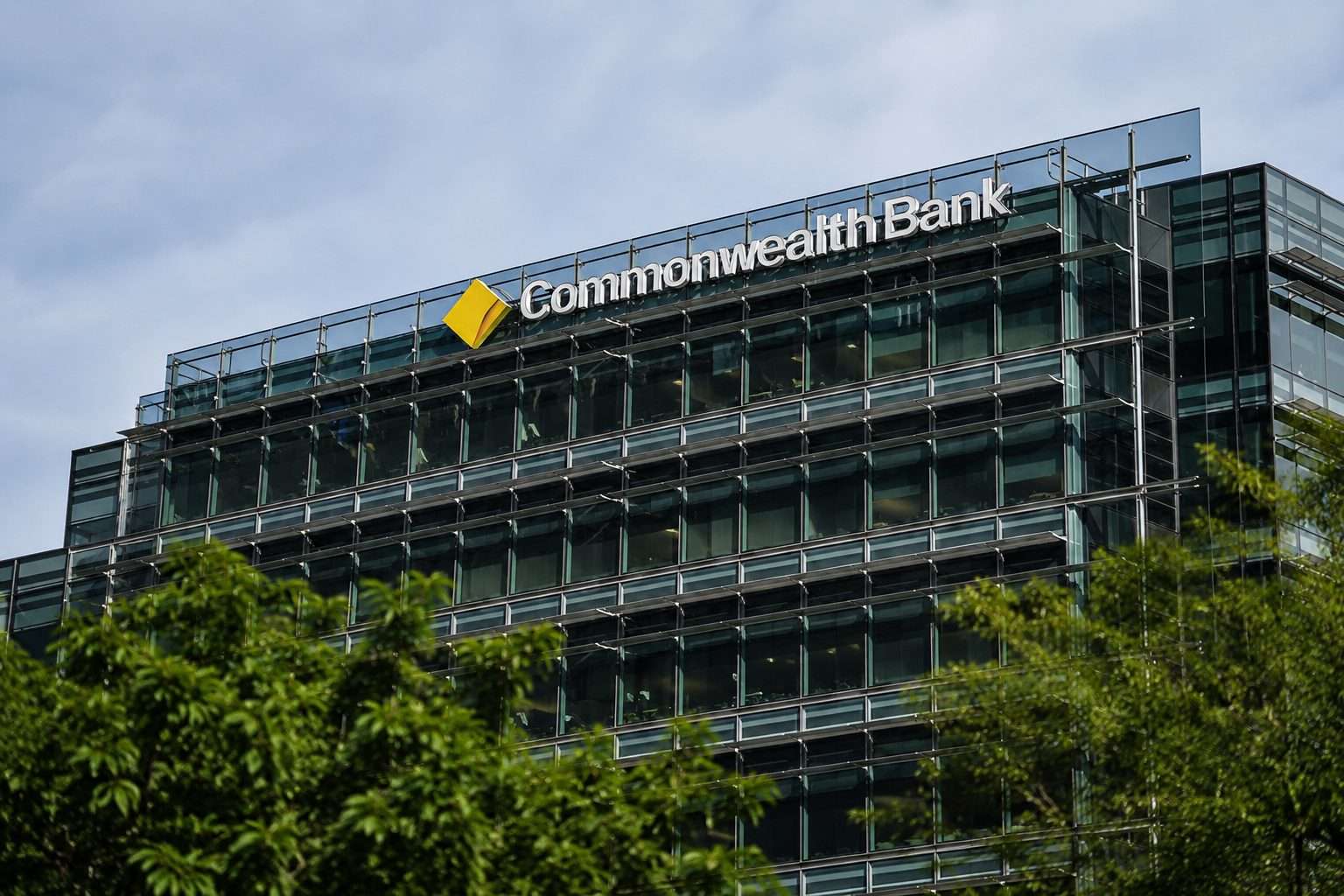
Commonwealth Bank of Australia will return to trading on Tuesday after closing at A$160.90 on Friday, off 1.73%. The ASX cash market was shut Monday for the King’s Birthday. The stock is still a key gauge for local banks with trading back on.
The timing is key. CBA is the biggest bank in Australia and a leading stock for local investors, so a weak move in the bank’s shares can drag down the wider market. That’s especially the case when rates are up, housing looks shaky and credit growth is cooling.
S&P/ASX 200 drops as banks, miners weigh The S&P/ASX 200 slipped 61 points, or 0.70%, to 8,625.10 on Friday. Banks and miners were the main drag. CBA was down 1.73%. Westpac lost 1.22%. National Australia Bank ended 1.13% lower. ANZ fell 1.04%.
CBA dropped around 2.5% over the week ended June 5, sliding from A$165.02 on May 29. The S&P/ASX 200 slipped about 1.2% from the previous Friday’s close. Not a rout for CBA, but the move keeps some pressure on the stock, which still trades above most local banking peers.
Housing is driving the trade again. Commonwealth Bank economists Trent Saunders and Ashwin Clarke last week dropped their 2026 national dwelling-price forecast to flat, down from 3% at budget time and 5% in March. “The tax changes have accelerated a slowdown” that was already happening, they said. Negative gearing and planned capital gains tax shifts are swinging mortgage demand now, with both tax settings a factor for property investors. CommBank
Weekend property numbers didn’t offer much relief. Sydney and Melbourne auction clearance rates were stuck in the low 50% range, with the combined capitals at 51.1%. That’s the weakest level since early COVID, as higher rates, more stock, and softening confidence cut into seller results.
RBA faces another policy call this week. The central bank’s cash rate sits at 4.35%. April inflation showed 4.2%. The next rate decision comes June 16. The RBA will also release a bulletin Tuesday covering geopolitical risk and financial stability.
RBA Governor Michele Bullock told lawmakers last week that policy tightening is starting to have an impact, with some effect on housing prices. But Bullock also flagged higher fuel costs, saying those might be getting passed on to other goods and services. That’s a tricky setup for banks. Higher rates help net interest margins—the gap between loan returns and deposit costs—yet they can cool lending and push up bad loans.
Consumer credit isn’t something traders can brush off. Banks issued a record A$5.1 billion in new personal loans for the first quarter. Commonwealth Bank reported over A$16 billion of consumer loans outstanding. Andrew Grant, finance professor at the University of Sydney, said rising personal loans are often a sign households are under strain.
CBA’s cost picture is driven by more than just funding. CEO Matt Comyn said last week that corporate spending on artificial intelligence could climb in ways that are hard to predict as more complex work is handed to the systems. He said companies would keep a close eye on AI costs through 2026. Comyn also took aim at low-value output from AI, which he called “work slop.” Reuters
CBA stock is still clouded by the May trading update. The bank reported quarterly cash profit of around A$2.7 billion, which removes some accounting volatility, and boosted collective provisions by A$200 million. That day, CBA shares fell 10.43%, the biggest drop since listing.
But the risk runs both ways. If the RBA signals it’s less hawkish, markets might focus on CBA’s strong deposit base and steady capital. Still, if inflation stays high, housing slides faster, or investors think the bank’s valuation doesn’t offer enough cushion, Friday’s fall could end up being more than just a pause and turn into another drop.