
London, June 10, 2026, 10:01 BST
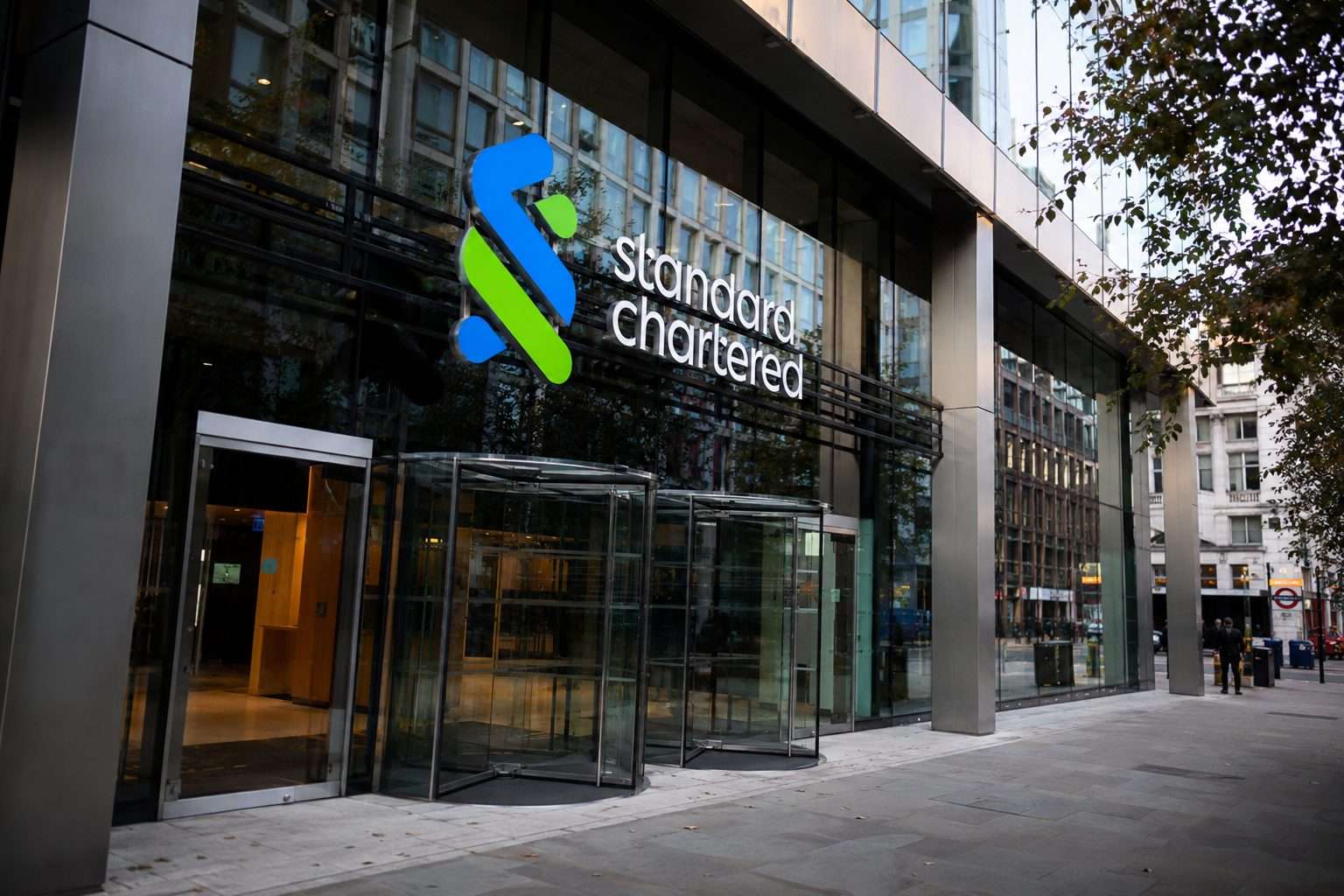
- Standard Chartered was down again early in London after sinking sharply on Tuesday.
- Pressure comes as investors worry about China’s capital controls and Hong Kong wealth management channels.
- Buybacks and solid Q1 numbers are still helping, but investors are putting the bank’s Asia growth story to the test.
Standard Chartered shares were lower again on Wednesday, with the Asia-focused lender extending its recent slide. The stock slipped 0.8% as of 0752 GMT. HSBC shed 1.9%. The UK bank sector fell 1%. Both the FTSE 100 and FTSE 250 picked up 0.2%.
Standard Chartered shares fell 6.3% and HSBC slipped 4.4% on Tuesday, sending the FTSE 100 to its lowest close since the middle of May. The declines came after JPMorgan analysts warned that China’s new outbound direct investment rules might hit UK, Asian and Swiss banks harder than thought. The rules affect money moving from China into foreign assets or businesses.
Shares dropped after worries about stricter rules for mainland Chinese opening or funding offshore accounts in Hong Kong. Last week, Reuters said Standard Chartered, HSBC and Prudential slipped in London trading, following a South China Morning Post story about increased controls at big Hong Kong banks. HSBC, Prudential and Standard Chartered could not be reached for comment.
Standard Chartered’s shares have kept falling even as its buyback program runs on. On Tuesday, the bank disclosed it bought 773,200 shares on June 8, paying a volume-weighted average of 1,940.6131 pence. By June 5, the buyback spend stood at about $1.30 billion, according to a regulatory filing.
No fresh earnings updates from the bank this week. Last time out, first-quarter operating income climbed to $5.9 billion. Profit before tax added 17% to hit $2.45 billion. Return on tangible equity reached 17.4%. That quarter also saw a $190 million precautionary overlay due to Middle East uncertainty.
Standard Chartered CEO Bill Winters said the bank saw “a record first quarter performance” in the April update, pointing to strong double-digit gains in Wealth Solutions and Global Banking. Winters said geopolitical risks and economic uncertainty were still a factor. Standard Chartered Bank
Standard Chartered is working to turn the investor focus from turnaround to growth. At its May investor event, the bank set a goal for return on tangible equity above 15% by 2028 and near 18% in 2030. It also forecast high-teens compound annual growth for earnings per share. Winters said investment in new capabilities would help build on its competitive edge and improve returns.
China is a sensitive spot for Standard Chartered. The bank counts on wealth and affluent clients for bigger returns, and sees Hong Kong as a main entry point. But if new account rules or checks on where money comes from start to slow transfers from the mainland, the market could ask how much of Standard Chartered’s growth plan ties back to that.
Analysts had doubts about whether the new targets are realistic. “In a world full of uncertainty, performance may prove more challenging further out,” Ed Firth, analyst at Keefe, Bruyette & Woods, told Reuters last month. He pointed to the recent help the bank got from higher interest rates and wealth flows. Reuters
China’s securities regulator says its crackdown on “illegal” cross-border investment won’t trigger forced asset liquidation or close offshore accounts, a move that could ease some nerves if more details come out. Still, if tighter enforcement does slow new money into Hong Kong wealth products, Standard Chartered’s buybacks and earnings might not be enough to keep valuations steady. Reuters
Right now, traders are using Standard Chartered as a proxy for China capital flows instead of just seeing it as a UK bank. HSBC is the main peer in focus. Prudential is also moving with this same Asia-exposed trade.