
London, June 10, 2026, 16:02 BST
- BAE Systems shares climbed in London, bouncing back from Tuesday’s loss. The broader UK market held steady.
- Investors are looking at Middle East risk, the recent downgrade on European defence stocks and BAE’s guidance for growth in 2026, which is still in place.
- BAE’s first-half results, set for July 30, are the next big company catalyst.
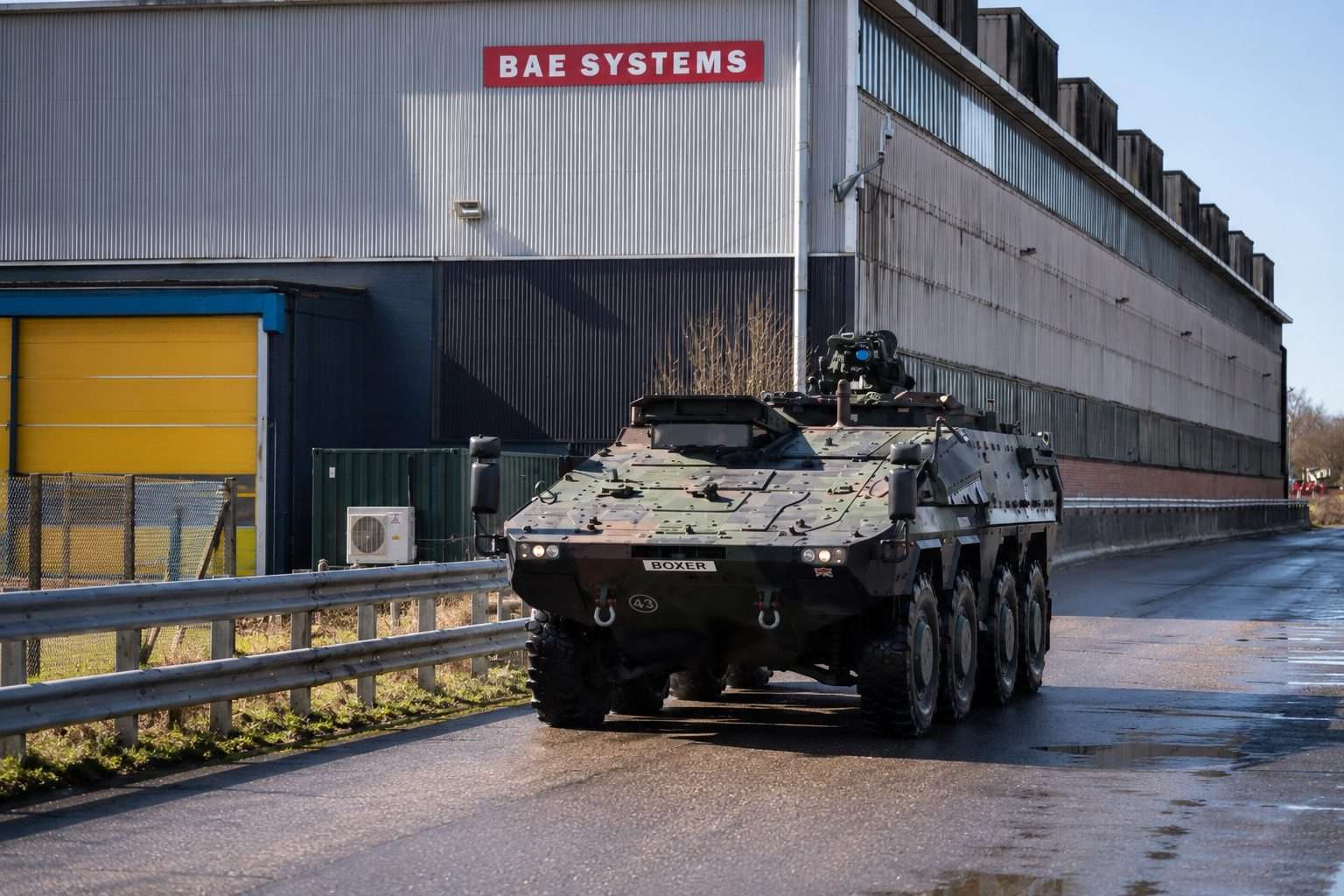
BAE Systems shares moved up Wednesday as buyers came back to the UK defence contractor after a weaker Tuesday. Geopolitical tension is keeping attention on military spend, even while London’s wider market stayed quiet. BAE’s investor site listed shares at 1,955p at 14:44 BST using LSE data delayed by at least 15 minutes. AJ Bell had a 1,952p buy price, up 18p, or 0.93%, from the last close at 1,933.5p.
BAE’s action puts it back in the camp of names reacting to defence spending, not trading like the usual industrials. Reuters said early Wednesday saw the FTSE 100 and FTSE 250 touch near three-week lows as investors looked to a shaky ceasefire in the Middle East. European stocks were little moved, with oil staying close to $90 a barrel after fresh U.S.-Iran tensions.
BAE shares dropped on Tuesday, but didn’t fall as far as the market. Performance numbers from AJ Bell put BAE’s one-day total return down 1.02% on June 9, while the FTSE 100 lost 1.41%. The data show BAE tracked the wider selloff but outperformed the benchmark.
BAE shares moved Wednesday, but there was no new contract news out. The real shift was in market mood. Investors took another look at defence stocks after Reuters said European defence names dropped 0.7% Tuesday. That came after Morgan Stanley cut its view on the sector to equal-weight, with analysts flagging earnings downgrades.
BAE’s latest numbers offer bulls more than just geopolitical themes. In a May 7 trading update, the company said it had a “strong start to 2026” and left its full-year forecast steady. BAE kept its targets for sales growth at 7% to 9% and underlying EBIT up 9% to 11%. The company also expects underlying EPS to rise 9% to 11% and free cash flow to beat £1.3 billion.
Chief executive Charles Woodburn said then, “We’ve delivered a strong start to 2026, underpinning our full-year guidance.” The company said more defence spending in its main markets is driving demand for missile and air defence, drones, electronic warfare, combat aircraft, frigates and submarines.
BAE said its 2025 results showed demand is strong. Sales rose 10% to £30.66 billion on a constant-currency basis. Underlying EBIT was £3.32 billion, up 12%. Order backlog hit a record £83.6 billion. That covers contracted work not yet counted as revenue.
Capital returns are in play too. BAE’s latest weekly buyback notice, dated June 8, shows it bought 591,002 ordinary shares for cancellation from June 1 to June 5 under its repurchase programme. A buyback cuts the number of shares out there and can push up earnings per share if profits hold steady.
BAE kept buying back its stock. In May, the company said it had spent £166 million on share repurchases so far in 2026, and had finished £930 million out of a planned £1.5 billion buyback over three years. The company’s 2025 final dividend of 22.8p per share was set for a June 4 payout, pending shareholder approval. The wider programme is still seen as meaningful.
Reuters on Tuesday said Leonardo’s CEO sees Germany as a strong potential partner for the Global Combat Air Programme. The program, aiming for a new fighter by 2035, brings in BAE, Italy’s Leonardo and Japan Aircraft Industrial Enhancement. A wider group of partners might change funding, workload and what investors expect from BAE’s air unit.
Much of the good news may already be priced in. Google Finance had BAE’s 52-week range from 1,588p to a high of 2,360p, and AJ Bell put the price-to-earnings ratio at 28.43. That leaves the stock less protected if orders fall, programme costs go up or if the mood on defence stocks sours.
Currency swings matter, too. BAE said its 2026 guidance assumes a GBP/USD rate of 1.32. The company estimated that every 5-cent change in the exchange rate would hit sales by about £500 million, underlying EBIT by around £70 million and underlying EPS by 1.4p. Sterling-dollar shifts have a clear impact for shareholders.
BAE has set July 30 for its results covering the first half of the year through June 30. Investors will get a read then on whether this year’s hopes for higher defence spending are actually hitting revenue, margins and cash.