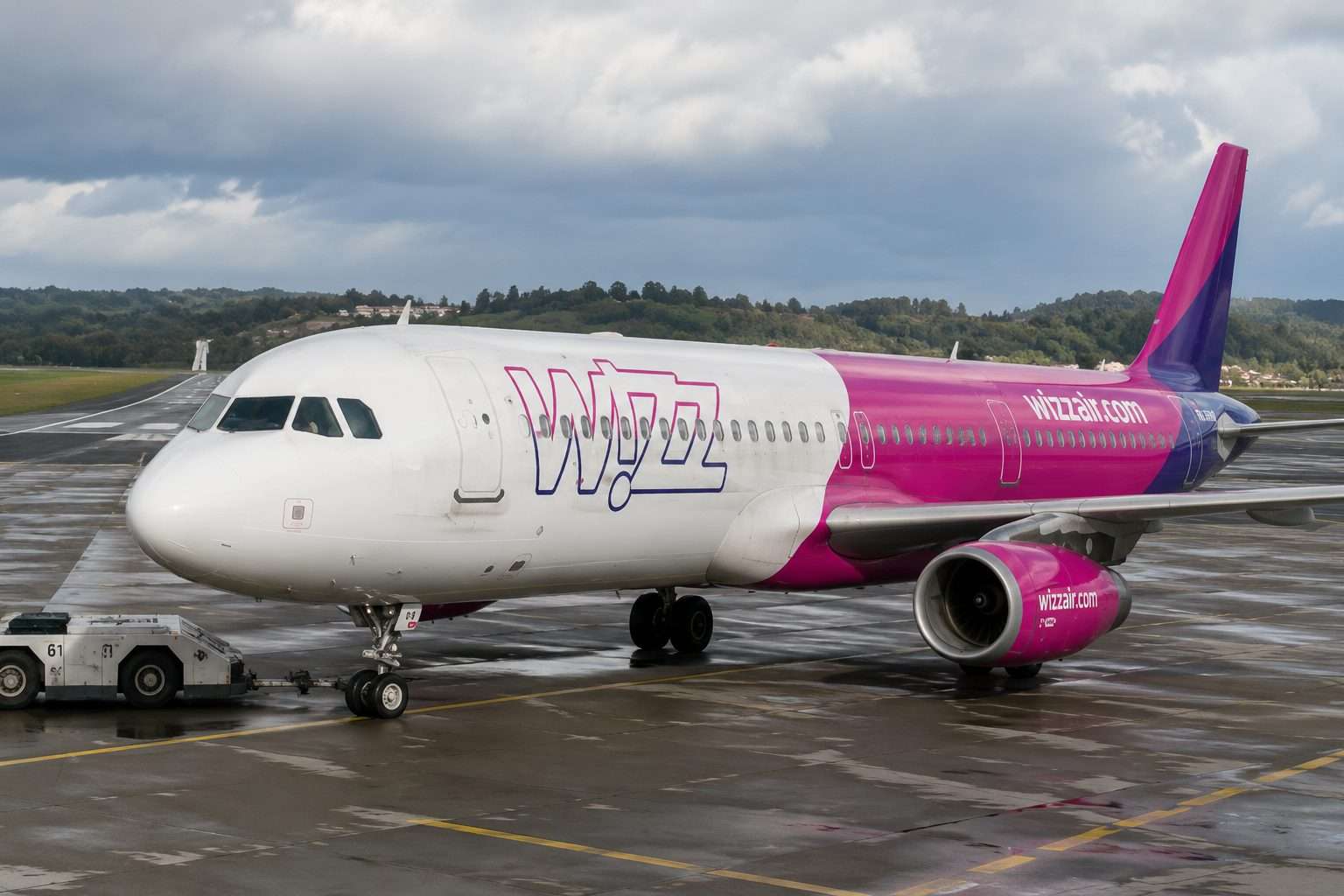

London, June 12, 2026, 13:05 (BST).
- Wizz Air shares jumped about 7% on Friday. European travel stocks moved higher with oil down, and investors took in a profit number that beat expectations.
- Wizz Air posted record passenger numbers and revenue for the year to March 31. Still, net profit dropped hard, landing at €1.3 million.
- Investors are watching for the next big event: Wizz Air’s Q1 F27 results on August 6. The focus is on whether summer demand, pricing and engine supply are picking up.
Wizz Air Holdings Plc shares jumped as much as 7% in London on Friday, tracking a broad rally in airline and travel stocks after oil prices slid. Brent crude dropped more than 4% as hopes for movement on a U.S.-Iran deal hit the market, Reuters said. The travel and leisure sector in Europe touched its highest in five months, with Wizz Air among the top movers, up 7.1%. Data from Investing.com put Wizz Air at 1,099p, above its last close of 1,025p. The stock remains inside a 52-week band of 832p to 1,453p.
Wizz Air shares jumped after its annual results landed on Thursday, coming in mixed but topping fears. The London-listed airline posted revenue of €5.69 billion for the year ended March 31, 2026, up 8%. Passenger numbers hit a record 69.7 million, a rise of 10%. Operating profit dropped 16.6% to €139.7 million, with net profit diving to €1.3 million from €213.9 million last year. But operating profit beat the €88.51 million average forecast from LSEG analysts, according to Reuters.
Wizz Air shares moved as investors had feared steeper fallout from the Iran conflict, engine groundings and higher costs. The airline reported RASK down 0.4% in F26. Ex-fuel CASK rose 5.8% on increased depreciation, maintenance, navigation and crew expenses. So even with more passengers, profit per seat barely improved.
Wizz Air is holding back on full-year F27 guidance, pointing to low visibility on trading, the Iran conflict and the Strait of Hormuz shutdown. For Q1 F27, Wizz expects RASK to drop by a mid-to-high single-digit percentage year-on-year, but projects it will be about flat in Q2. Wizz said available seat kilometres should grow 15% in Q1 and 20% in Q2. CEO József Váradi said Wizz aims to “restore full fleet utilisation as engine availability improves” and will stay disciplined on expanding capacity and managing costs. Investegate
Wizz Air is seeing relief on some major headwinds. The number of planes on the ground due to Pratt & Whitney GTF engine checks dropped to 30 at March-end, down from 42 last year, and had come down again to 24 by June 5. Total cash now stands at €2.13 billion, up 22.5%. Leverage declined to 3.7 times EBITDA from 4.4 times at the end of F25. On fuel, Wizz has 84% of H1 F27 and 71% of H2 F27 jet fuel hedged as of May 29.
Bears point to weak foundations for the rebound. F26 net profit almost gone, operating margin just 2.5%. Management wants to ramp up capacity, but RASK is seen falling soon. Bernstein is sticking with a “market perform” and a 1,300p target per MarketScreener, saying Wizz’s growth plans are “bold” given the fuel and demand backdrop. UBS is more upbeat, keeping “buy” and 1,430p, noting the balance sheet and engine issues improving. MarketScreener
Wizz Air named Brian H. Franke to its board as a non-independent non-executive director, starting June 16, the company said Friday. Andrew S. Broderick will leave the board a day earlier, ending a seven-year run. Chairman William A. Franke said Brian Franke has “deep industry expertise” and a track record with airlines on growth and operations, which he called relevant as Wizz focuses on reliability and returns. Investegate
Wizz Air shares at 1,099p have run past average analyst targets, with Investing.com putting the 12-month consensus at 1,033p and holding a neutral stance. The stock might still draw investors who want airline exposure on hopes of lower oil prices, a busier summer and more of the fleet flying. But with no F27 guidance, tight margins and ongoing geopolitical risks, Wizz Air is far from a clear value play right now. The Q1 update on August 6 will be key—investors will look to see if the drop in RASK is only short term or if aggressive growth is hurting pricing.