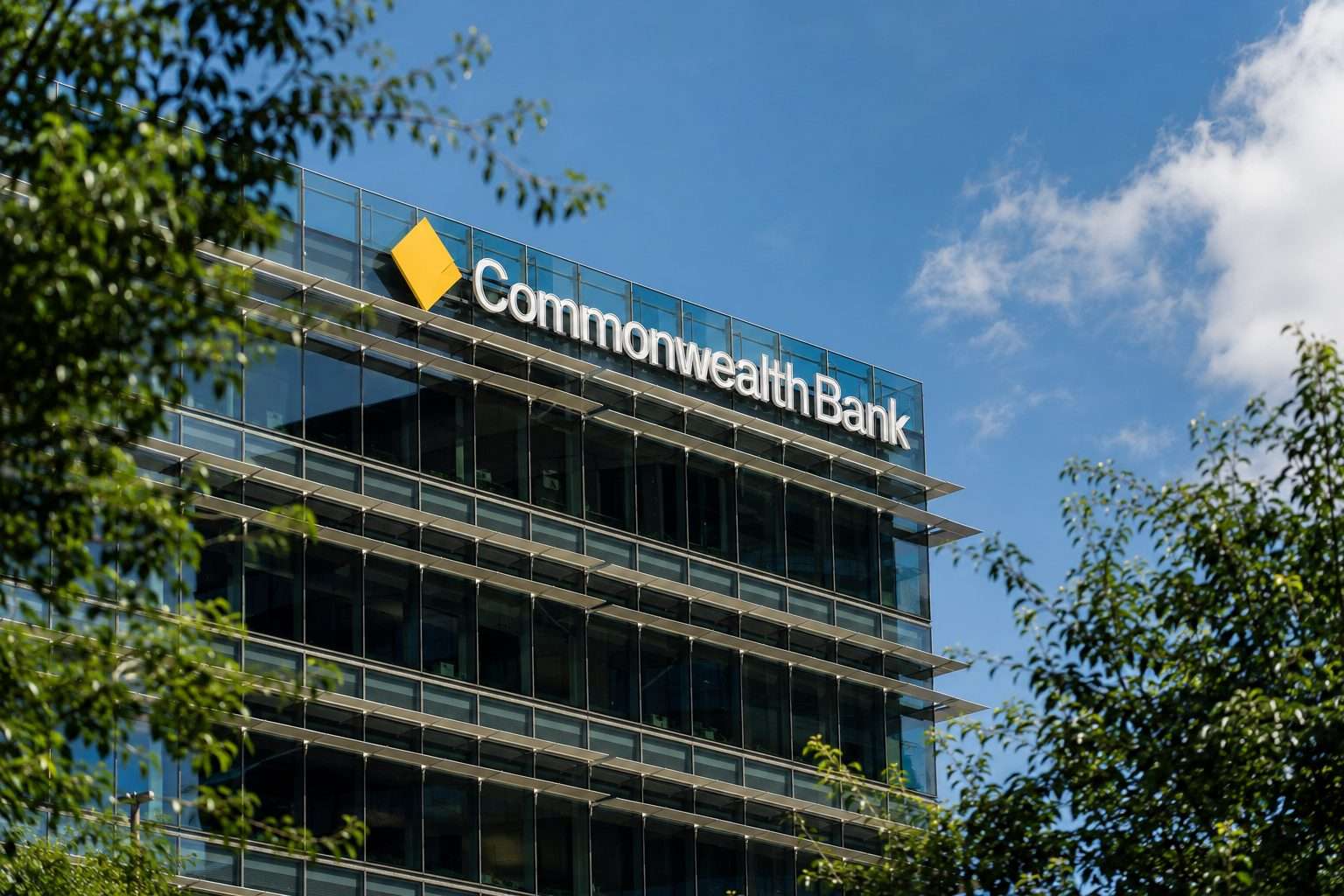

Sydney, June 19, 2026, 02:07 (AEST)
- Commonwealth Bank finished Thursday at A$162.23, slipping 0.9%. The S&P/ASX 200 dropped 0.62%.
- The Reserve Bank of Australia kept its cash rate steady at 4.35% following three hikes this year, but signaled another move is still possible.
- Household spending was up 0.2% in May, according to CBA data, but those with mortgages started to pull back.
Commonwealth Bank of Australia dropped 0.9% Thursday, finishing at A$162.23 as global rate worries pressured Australian banks. The S&P/ASX 200 gave up 55.2 points to close at 8,911.1. Sydney trading was closed at publication.
CBA’s drop is key because the Reserve Bank of Australia pausing rates hasn’t removed investor worries about the stock. Higher borrowing costs could stick around or even go up while households are already showing some pressure. Morningstar’s Nathan Zaia said this week that Australian bank stocks remain “expensive after the share-price correction.” Morningstar
Selling hit more than just CBA. Westpac fell 1.1%, National Australia Bank shed 0.9%. ANZ finished up 0.3%. The moves point to investors cutting risk in rate-sensitive financial stocks, not reacting to new CBA results.
RBA holds rate at 4.35% in first 2026 pause, warns more hikes possible
The Reserve Bank of Australia left the cash rate at 4.35% on Tuesday, pausing after lifting rates by 0.75 percentage point earlier this year. The RBA said inflation is still running above its 2%-3% goal and signalled further hikes might still happen if needed. The bank flagged softer consumer demand, slower growth, and some cooling in the jobs market.
CBA’s Household Spending Insights index ticked up 0.2% in May, coming off a drop in April. Growth in spending by mortgage customers cooled, likely due to higher interest payments each month. “Higher interest rates and inflation are weighing on households,” CBA Australian economics head Belinda Allen said. The bank’s economists see the RBA keeping rates steady right into 2026 and penciling in two cuts for 2027. CommBank
CBA’s outlook is mixed. Weaker spending might cool inflation and lower the chance of a rate hike, but that can weigh on demand for mortgages, credit cards and other CBA products. The bank posted first-half cash profit of A$5.45 billion, up 6%. Net interest margin dropped to 2.04% as mortgage competition cut into some of the gain from volume.
CBA’s valuation remains high. Shares finished Thursday at around 26.3 times trailing earnings, while NAB traded at 18.6 times and Westpac at 17.3 times. The premium comes from CBA’s size, deposit base and record profit. But at this level, there’s less cushion if loan growth slows or losses rise.
CBA said Thursday it will issue 25.6 billion yen in subordinated notes. These notes sit below senior creditors in a bank failure. The ASX marked the funding update as non-price-sensitive. Trading across the sector showed a broader move behind the drop in CBA shares.
But risks on the downside are still significant. Another RBA hike or a bigger drop in household spending might slow mortgage growth and drive up arrears. CBA put another A$200 million into collective provisions in May. Quarterly loan impairment charges were at A$316 million, up from A$223 million the year before. Changes to housing tax could also hit demand for investor loans. CEO Matt Comyn said the Middle East conflict “disrupting critical supply chains and contributing to global uncertainty.” Reuters
CBA is expected to stay sensitive to bond moves and market bets on the RBA when trading starts again Friday. The yen debt deal isn’t likely to be the focus. The next big update will be CBA’s full-year result on August 12. Until then, credit data and macro numbers will probably drive the trade.