
London, June 19, 2026, 11:15 BST
- BAE Systems gained 0.4% to 1,847.5 pence in late-morning trading, after moving between 1,841.5p and 1,868.5p.
- A $535 million U.S. Army artillery award supports the group’s land-systems pipeline, though it did not trigger a change to financial guidance.
- Half-year results on July 30 will be the next scheduled test of sales growth, margins and cash conversion.
BAE Systems shares edged higher on Friday as investors continued to assess a new U.S. Army order against a more unsettled geopolitical backdrop. The gain was modest. It did not amount to a broad re-rating of the stock.
That matters because the market is increasingly distinguishing between contract announcements and earnings upgrades. The $535 million award improves revenue visibility in BAE’s U.S. land business, but it is not transformative beside the group’s £83.6 billion backlog — contracted work that has yet to be delivered. BAE has forecast 2026 sales growth of 7% to 9% and operating-profit growth of 9% to 11%. Chief Executive Charles Woodburn has described the spending backdrop as a “new era of defence spending.” Reuters
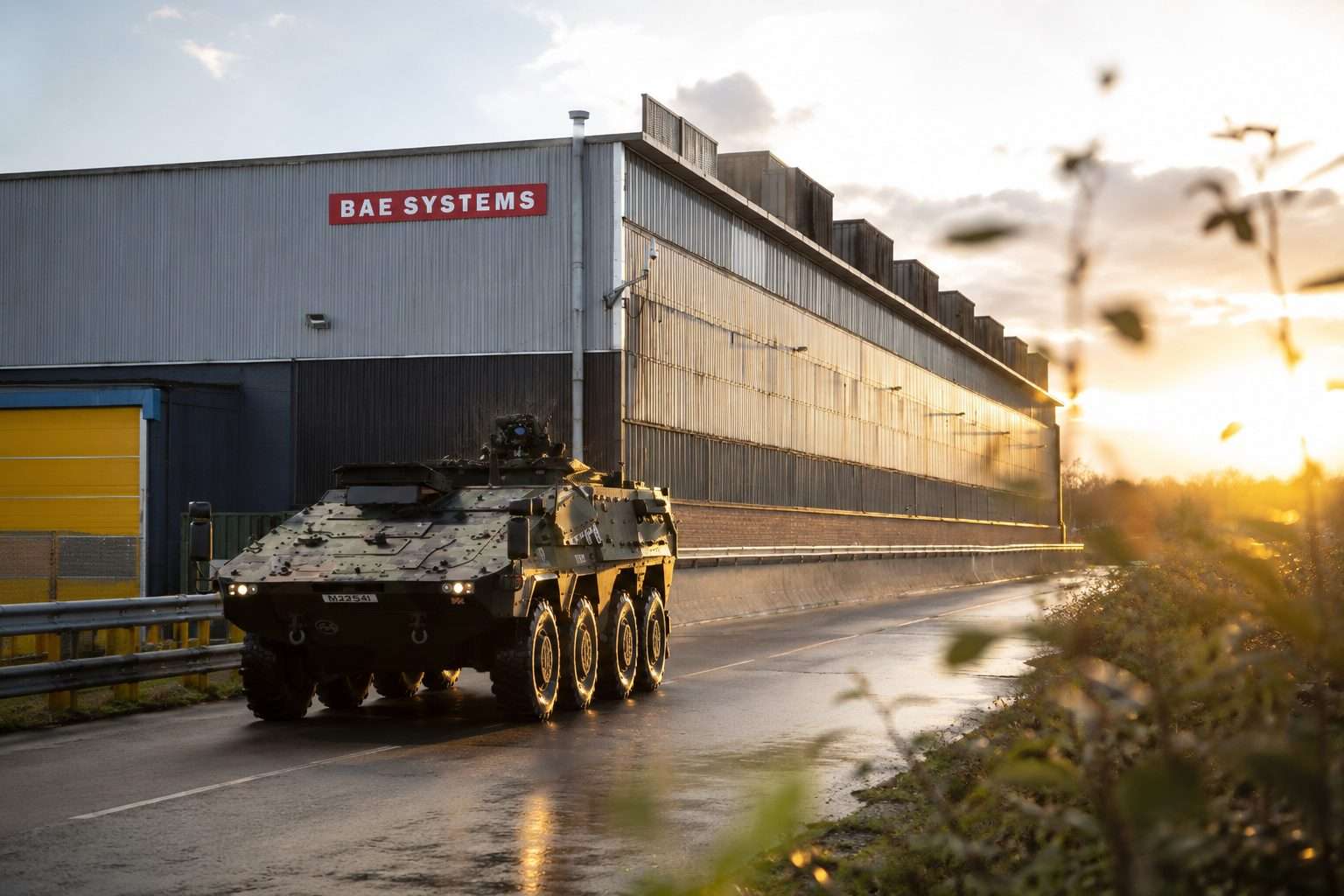
The latest order covers additional M109A7 Paladin self-propelled howitzers, heavy artillery guns mounted on tracked vehicles, and M992A3 ammunition carriers. Dan Furber, vice president of BAE’s artillery programmes, called Paladin a “battle-proven platform” and highlighted the manufacturing base behind it. The company did not disclose unit numbers or a delivery schedule. BAE Systems
BAE rose 2.2% on Tuesday, when the FTSE aerospace and defence sector gained 2.4%. Rolls-Royce advanced 2.5% in the same session. Friday’s smaller move suggests investors view the Army award as supportive rather than an immediate reason to lift group earnings forecasts.
The wider market signal was mixed. European shares added 0.2% on Friday after planned U.S.-Iran negotiations were called off, raising doubts over the durability of the recent truce. Renewed geopolitical caution may be lending some support to defence shares, but BAE disclosed no new price-sensitive company development on Friday.
Away from the large weapons programmes, BAE has committed €50 million to venture-capital funds backing European defence-technology start-ups. Venture capital is financing provided to young, higher-risk businesses. Dave Ewing, BAE’s head of technology commercialisation, said the investment showed the company was “serious about supporting” early-stage founders. The move broadens BAE’s access to outside technology, though any near-term earnings effect should be small beside its aircraft, submarine, missile and combat-vehicle operations. BAE Systems
The underlying demand case remains intact. BAE reaffirmed its annual forecasts in May after reporting a strong start to 2026, with orders expected across missiles, space systems, drones and counter-drone equipment. Still, Britain’s detailed defence investment plan has faced delays. Demand is visible; the timing of government funding is less certain.
But the risks sit in execution and conversion. Large defence awards can run over several years, and the Paladin release gave no indication of how much revenue will fall into 2026. Further budget delays, production bottlenecks or a durable easing of geopolitical tensions could limit near-term upside. The shares also remain well below their March high, showing that defence stocks are not immune to profit-taking.
Attention now shifts to the July results. Investors will look for evidence that the backlog is turning into sales and free cash flow without pressure on margins. Until then, the Army contract strengthens BAE’s order pipeline, but does not by itself reset the earnings case.