
LONDON, June 27, 2026, 17:03 BST
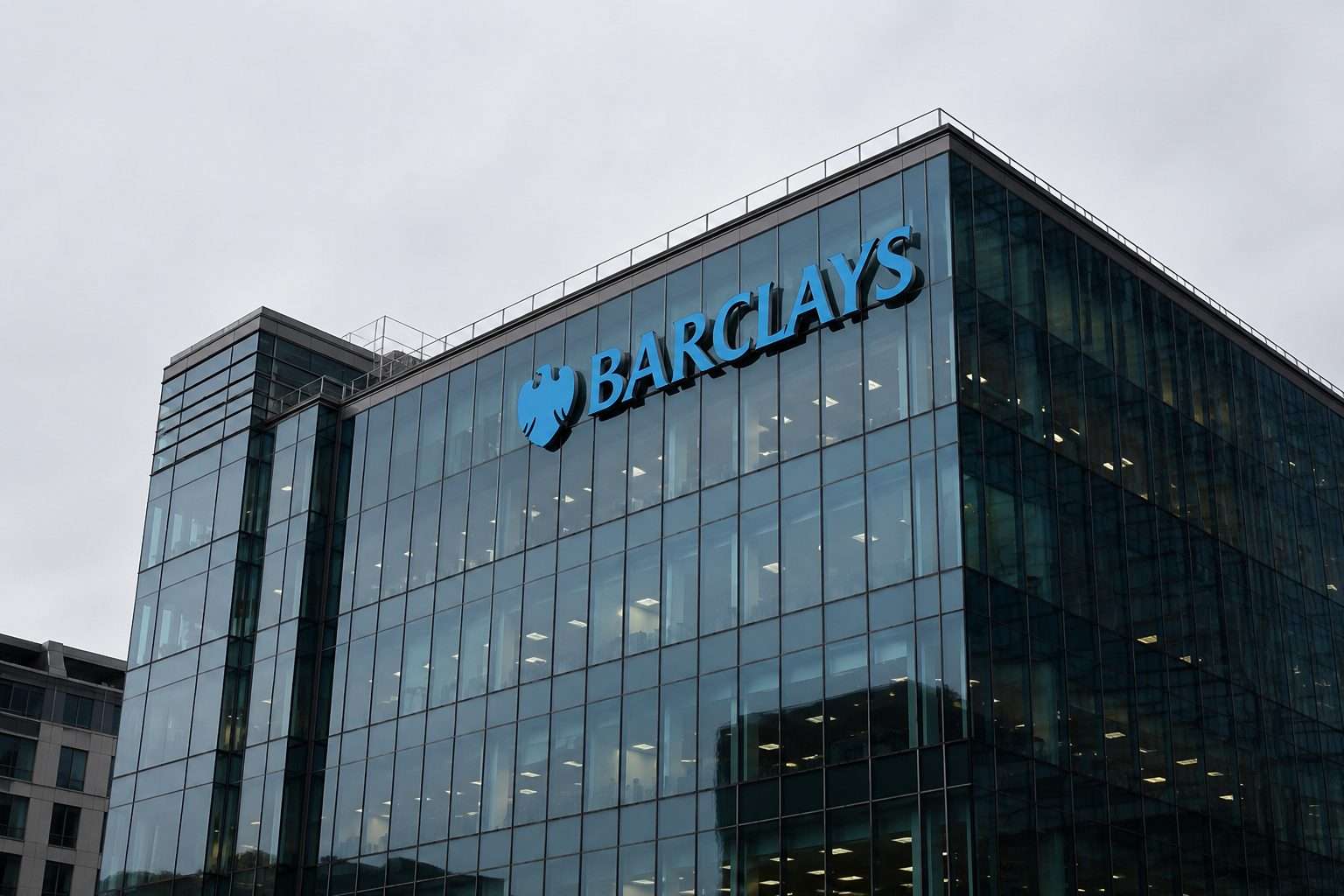
- London markets were closed for the weekend. Barclays PLC (LON:BARC) finished Friday at 510.70p, falling 2.03%. The FTSE 100 (INDEXFTSE:UKX) slipped 0.21%.
- The stock finished up 2.9% compared to the June 19 close at 496.45p, but Friday’s volume was light at 24.46 million shares, about half the recent average on Google Finance.
- Barclays wrapped up a £500 million buyback, paying an average 454.2957p per share. Shares finished Friday 12.4% higher than that buyback price.
- Barclays US LLC’s projected minimum CET1 ratio came in at 12.3% in the Fed stress test, 1.1 points over the 32-bank aggregate.
Barclays PLC (LON:BARC) slipped Friday. But for investors, the week’s numbers stood out: shares closed the week 12.4% higher than the average price Barclays paid in its recent £500 million buyback.
Barclays said it completed its buyback on June 25, retiring 110.1 million ordinary shares at an average price of 454.2957p per share. The lender will have 13.51 billion ordinary shares left with voting rights. Barclays has no shares held in treasury, so the programme cut about 0.8% off the new outstanding total.
Barclays isn’t repurchasing shares at a steep discount to book anymore. The stock ended Friday at 510.70p, or roughly 1.26 times its Q1 tangible net asset value of 405p per share. Buybacks might still help per-share figures, but driving the stock higher will need more on earnings now, not just gains from a balance-sheet discount.
Barclays US LLC’s latest stress test numbers out of Washington show its common equity tier 1 ratio lowest at 12.3% under the Federal Reserve’s severely adverse scenario, clearing the 32-bank projected floor of 11.2%. According to the Fed’s appendix, Barclays US posted $3.2 billion projected net income before taxes through the test period.
Fed data puts most of Barclays’ projected U.S. loan losses—$5.9 billion—in cards, with $5.7 billion tied to the credit card book. That’s over 96% of modeled losses, a number investors may watch as the parent’s U.S. Consumer Bank card portfolio grows.
Fed stays put on stress capital buffers. Reuters said the central bank won’t adjust the buffers based on this year’s stress test, and the next change is set for after the 2027 exam. That means banks can’t expect to unlock new capital right now—this is more about feeling solid on capital positions than freeing up cash.
Barclays’ strategy still depends on capital. Back in April, the bank announced it aims to return over £15 billion to shareholders for 2026 through 2028, if it gets board and regulatory sign-off, delivers on financial results and sticks to its 13%-14% CET1 target. For Q1, Barclays posted a 14.1% CET1 ratio, dropping to 13.9% with the £500 million buyback included.
Barclays CEO C.S. Venkatakrishnan said in April the bank delivered “double-digit returns in all our businesses,” as the investment bank reported quarterly income above £4 billion for the first time. Barclays is sticking with its RoTE targets of over 12% in 2026 and over 14% in 2028. Investegate
Credit risk is still in question for the bull case. AJ Bell investment director Russ Mould said after Q1 investors were looking at “higher loan losses,” citing losses from Market Financial Solutions and Tricolor. Barclays put its Q1 loan-loss rate at 74 basis points and guided for full-year 2026 to come in at the top of its 50-60 bps through-cycle range. Ajbell
The street is asking the same thing. Investors Chronicle shows a median 12-month target of 570p from 15 analysts, about 11.6% above where it closed Friday. Lowest was 455p. That’s close to the 454.2957p average Barclays paid in its completed buyback.
Barclays does not have an earnings release slated for next week. Its next scheduled report is H1 2026 results set for July 28, with Q3 results to follow on Oct. 22.