
BEIJING, July 9, 2026, 00:03 (China Standard Time)
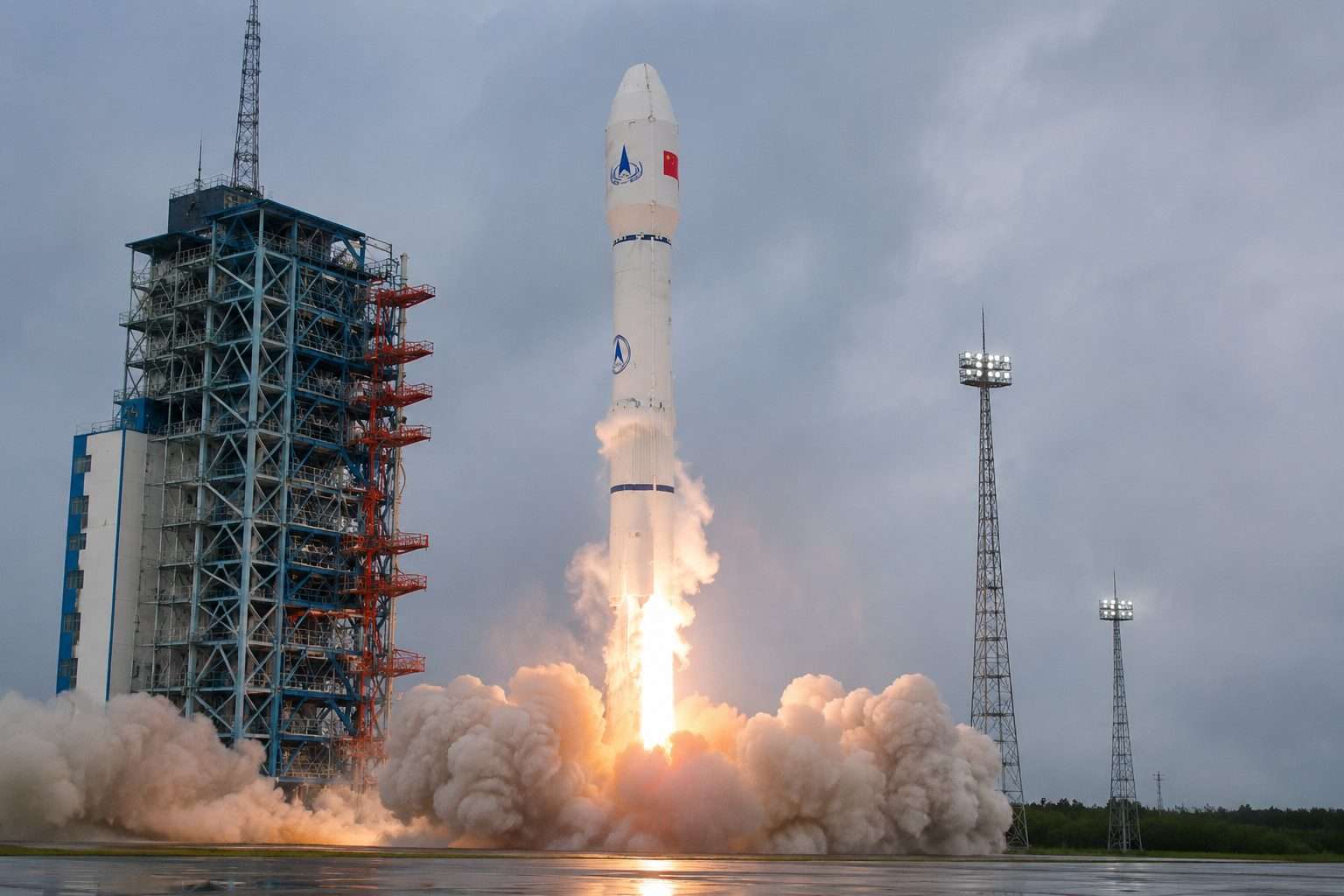
- Tianwen-2 took images of asteroid 2016 HO3, also called Kamoʻoalewa, from about 20 km away on July 2. The probe arrived after traveling some 400 days and about 1 billion km.
- The signal for investors is mostly in navigation, sampling, and return tech—not in near-term sales or any named public company deal yet.
- Mainland China shares fell on July 8. The Shanghai Composite eased 0.49% while the CSI 300 dropped 0.77%. The mission didn’t bring a broad move into equities.
China’s first detailed look at Kamoʻoalewa puts the spotlight on the Tianwen-2 mission, but the harder part begins now. For investors, China’s space program is moving out of the PR phase and into tougher engineering. The space agency said the probe is now about 20 km from the asteroid, has started science work, and used optical navigation to shrink the position error from several hundred km to around a km.
That counts more than just having a photo. A sharp image shows the probe got close. It doesn’t show sampling, anchoring, releasing the return capsule or flying a fast re-entry. These next steps are what would shift Tianwen-2 from a local science achievement to proof China can repeat big deep-space missions in the future.
| Mission signal | Confirmed fact | Investor read |
|---|---|---|
| Close approach | Now about 20 km out from 2016 HO3 | Lower nav risk now, but surface ops still uncertain |
| Optical navigation | Position error dropped from hundreds of km to just a few km | Guidance and autonomy matter more than images here |
| Sampling design | Can touch, hover, or anchor | China is opting for lots of engineering backups |
| Science payload | Set includes cameras, spectrometers, radar, a magnetometer, particle instruments | Good for slow procurement cycles, doesn’t push near-term revenue |
| Return leg | Expected sample delivery in late 2027 | First true market read isn’t coming for at least another year |
The Planetary Society’s Andrew Jones says Tianwen-2 is “very much an engineering-led mission” and thinks it matters for China’s follow-up Mars sample-return plan, since it would test returns at higher atmospheric entry speeds. The Planetary Society That’s a more straightforward investment storyline. It’s more a play on China trying to prove it can pull off guidance, autonomous approach, sampling, and return as a reusable process, not just one trip to a tiny rock.
Kamoʻoalewa keeps driving interest for researchers. The asteroid is a quasi-satellite, moving around the Sun so it looks like it travels along with Earth. It could be debris from the Moon, or just another near-Earth asteroid out of the main belt. JWST data from June 2026 showed its colors fit S-, V-, or E-type silicate asteroids more than old lunar-like calls, and another 2026 study said main-belt models handle Kamoʻoalewa-like objects better than the Giordano Bruno crater idea.
For markets, the science risk works in both directions. If the sample turns out to be lunar, China gets a big win with the Earth-Moon link. If the sample isn’t lunar, it still helps test how to work with small bodies. Investors shouldn’t play the origin theory. The key is whether the spacecraft manages the challenges of a weak-gravity, fast-spinning target.
| Asteroid sample-return mission | Country/agency | Target | Return status |
|---|---|---|---|
| Hayabusa | Japan/JAXA | Itokawa | Samples came back in 2010 |
| Hayabusa2 | Japan/JAXA | Ryugu | Samples landed in 2020 |
| OSIRIS-REx | U.S./NASA | Bennu | Samples returned 2023 |
| Tianwen-2 | China/CNSA | Kamoʻoalewa | Expected back late 2027 |
If Tianwen-2 goes as planned, China would join Japan and the United States as the only countries to bring back asteroid samples. Reuters reported at launch that China could get into that group, adding that asteroid sample work is tougher than the lunar sample mission because the asteroid’s gravity is much lower.
The market didn’t move much on the photo by itself. On July 8, China’s main indexes fell as risk appetite faded across Asia. The Shanghai Composite dropped 0.49% to 3,970.88, the CSI 300 lost 0.77% to 4,755.53, and the Shenzhen Component sank 1.87%, according to Trading Economics data.
| Market gauge | July 8 close | Day move | What it says |
|---|---|---|---|
| Shanghai Composite | 3,970.88 | -0.49% | Space headlines weren’t enough to move the main market |
| CSI 300 | 4,755.53 | -0.77% | Large caps stayed out of favor |
| Shenzhen Component | 14,939.7 | -1.87% | Growth names lagged |
The official Tianwen-2 update doesn’t confirm any direct listed-company contracts. So investors are left to trade on the theme, not revenue. The main takeaway is China’s controlled state spending—if the mission progresses, related suppliers in sensors, propulsion, avionics, radar, ground systems, and re-entry hardware could see more policy support. The update stops short of naming them.
Tianwen-2 is a long mission. It will aim to sample Kamoʻoalewa first, then go on to main-belt comet 311P. According to DW, the return module is set to deliver samples back to Earth late 2027, while the main ship is due to head for the comet.
The next market-moving event won’t be a photo. Investors are watching to see if Tianwen-2 maps the surface, picks a safe landing site, grabs a sample and takes off from the asteroid with it before heading back near the end of 2027.