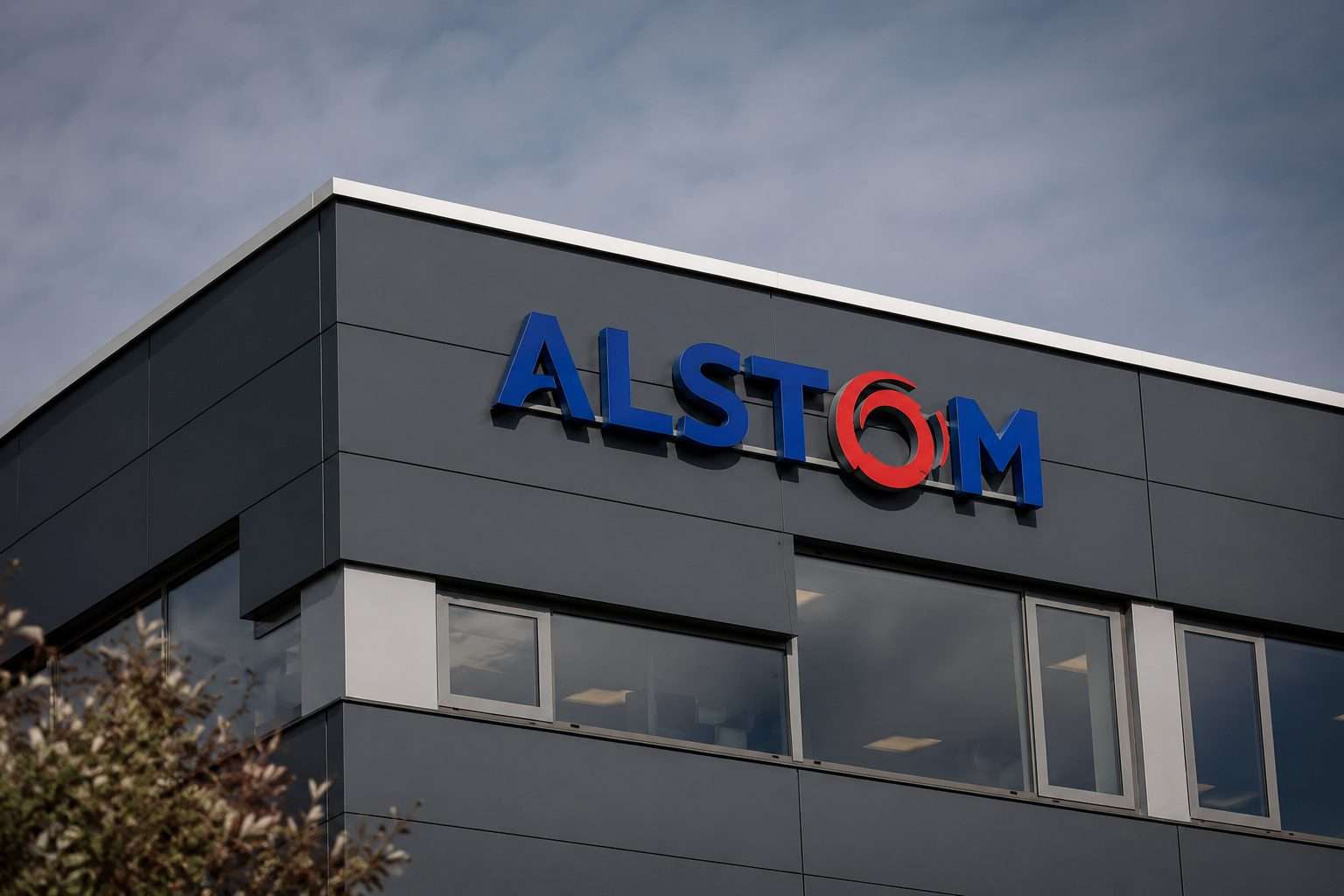

PARIS, May 11, 2026, 18:10 CEST
- Alstom faces its annual results on May 13, with speculation swirling about whether new CEO Martin Sion plans to move past stopgap measures and pursue a larger industrial overhaul.
- The train maker is seeing hefty demand—orders reached a record 27.6 billion euros. Still, margin and cash pressure is building as rolling-stock projects lag.
- Belfort is still in the growth game—the site’s putting together 24 power cars for Velvet’s dozen Avelia Horizon trains, all within that 850 million euro deal.
This week, Alstom steps into a pivotal moment as Martin Sion gets ready to deliver his first set of annual results at the helm. French media are already speculating about the likelihood of bigger industrial shakeups ahead, even as the Belfort plant pushes ahead with train production for Velvet—a fresh private rival to SNCF.
The clock is ticking for Alstom. Demand isn’t the issue here: the company logged a record 27.6 billion euros in orders, with its backlog topping 100 billion euros for the year through March. But execution is biting — missed deadlines on train production, certification, and delivery are piling up, squeezing cash flow as projects lag.
Alstom is set to release its audited 2025/26 results on May 13, posting the figures at 0730 CEST, followed by an analyst call a bit later in the day. Shares in Paris last closed Monday at 17.22 euros, off 0.5%, MarketScreener data showed. The stock has lost over 31% since January.
Fabrice Gliszczynski at Le Monde argued Monday that Alstom’s troubles trace back not so much to weak demand or competition out of China, but to its own industrial inefficiencies—persistent delays, blown budgets, and a hunger for cash. The publication reported that Sion is set to lay out just how much the latest round of production hiccups will cost when he briefs analysts.
Alstom has trimmed expectations. Last month’s preliminary figures showed an adjusted EBIT margin at roughly 6%, missing its prior goal of around 7%. Free cash flow came in at about 330 million euros, down from 502 million euros the previous year.
Sion admitted profitability was “fallen short of expectations,” pointing to delays in major rolling-stock projects as the culprit. Alstom now plans quick measures, with Sion adding that “deeper operational changes” are also coming to get cash generation and profitable growth back on track. Alstom
Alstom shares tanked 30% on April 17 after the group axed its three-year free-cash-flow goal of 1.5 billion euros, Reuters said. Citi called the early outlook even bleaker than forecasts. Analysts at Barclays, according to Reuters, counted at least a dozen projects facing delays stretching over several years.
It’s a sharp split from Belfort. Velvet—touting itself as France’s first independent high-speed rail operator—aims to launch in 2028, connecting Paris with Bordeaux, Nantes, Angers, and Rennes. That means 10 million more seats annually, direct runs, trip times clocking in close to two hours.
Velvet’s launch involved an order for 12 Alstom Avelia Horizon high-speed trains, along with maintenance—an agreement Alstom put at nearly 850 million euros when signed in 2024. According to Alstom, 11 of its 16 French locations will take part: power cars from Belfort, passenger cars and project management from La Rochelle.
Journal du Palais says all 24 Velvet power cars are under construction in Belfort, with close to 1,000 Alstom employees at work, mostly in La Rochelle and Belfort. Velvet president and co-founder Rachel Picard described progress with Alstom as moving ahead “exigence and confidence,” according to the regional outlet. Journal du Palais
That order underscores Alstom’s ongoing significance in Europe’s rail industry. According to Le Monde, the company ranks as the world’s No. 2 maker of trains, trams, and metros—trailing only China’s CRRC. The paper also points back to the European Commission’s 2019 decision to block Alstom’s proposed merger with Siemens Mobility, a move supported by both Paris and Berlin.
A hefty order backlog can turn into a headache if production hiccups drag on. Alstom flagged that free cash flow in the first half of 2026/27 is set for roughly 1.5 billion euros in outflows before any rebound. Reuters reported that traders are dusting off worries about the company’s balance sheet and hinting at fresh credit-rating risk.
Sion faces a tough, focused job on Wednesday: persuade investors the Velvet projects won’t spring more cash shocks, and clarify if the next operational plan simply cleans up execution or signals deeper restructuring. So far, Alstom has stuck to its line—an operational transformation plan plus fresh medium-term targets will come later in the fiscal year.