SAN FRANCISCO, January 19, 2026, 03:39 (PT)
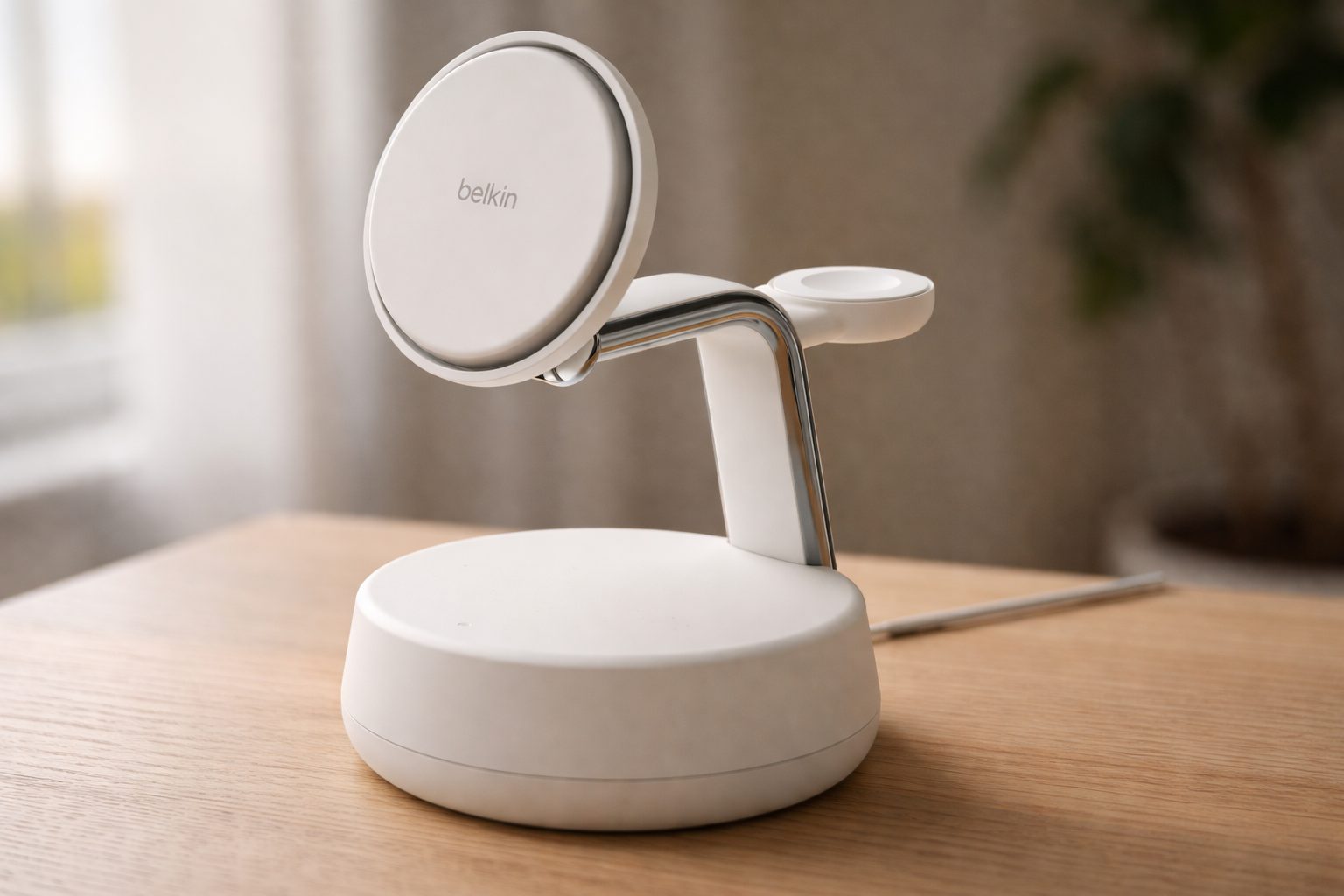
Belkin’s new modular Qi2 charging dock is drawing attention for a small detail: it can be set up for Samsung’s Galaxy Watch and Google’s Pixel Watch, not just Apple’s. A weekend column on tech site 9to5Google said that kind of design — and even a Pixel Watch band from Apple-first brand Nomad — hints accessory makers may be starting to widen their focus beyond the iPhone ecosystem. 1
That matters because accessories are not a side business anymore. Chargers, cases and watch gear shape what people buy and what they keep, and they can be a steady revenue stream long after a phone launch fades.
The timing is tied to standards, not sentiment. Qi2 is the Wireless Power Consortium’s newer wireless charging standard, built around a “Magnetic Power Profile” that helps devices and chargers line up, cutting wasted energy and enabling snap-on add-ons like battery packs, the group says. 2
The consortium said this month that Qi2 gained traction in 2025, with more than 1,200 new transmitters and receivers certified, and it forecast nearly four billion Qi2 products will ship over the next five years. Executive Director Paul Struhsaker said the growth shows “the wireless charging industry has aligned,” and the group said tests of Qi2 25W gear showed charging from “0% to 50% in 30 minutes.” 3
Belkin, which unveiled a slate of Qi2 chargers at CES earlier this month, described its UltraCharge Modular Charging Dock (model WIZ052) as a three-device setup: a phone on the main pad, earbuds on a second pad, and a smartwatch charged via a “bring-your-own-puck” holder. The company listed the dock at $64.99 and said it would be available in the first quarter of 2026 in select markets. 4
For Android users, the appeal is simple: the dock treats the watch spot as interchangeable instead of assuming an Apple Watch. That’s a small design choice, but it can decide whether a product fits a household with mixed devices.
Apple still has the easier pitch. Its iPhone and Apple Watch hardware stays relatively consistent, and accessory makers can build one “3-in-1” charger and sell it at scale. Android has more models, more shapes, and more proprietary watch chargers, so companies often stick to the safest bet.
If Qi2 spreads further across Android phones — and if watch charging hardware stops shifting so often — the math changes. A modular dock lets brands build one base, then swap the watch component without redesigning the whole product line.
But the shift is not guaranteed. Qi2 can standardize phone charging, yet smartwatches still rely on different pucks and connectors, and not every “Qi2-ready” setup is actually simple for consumers to buy and assemble. A stalled rollout, or another round of hardware changes, would keep Android accessories a niche for all but a handful of brands.
For now, the signs are incremental: a few higher-profile accessory names are trying to make the phone-earbuds-watch charging station less Apple-specific. Whether that becomes a real market, or just a brief experiment, will show up on store shelves soon enough.