
New York, May 31, 2026, 11:06 (EDT)
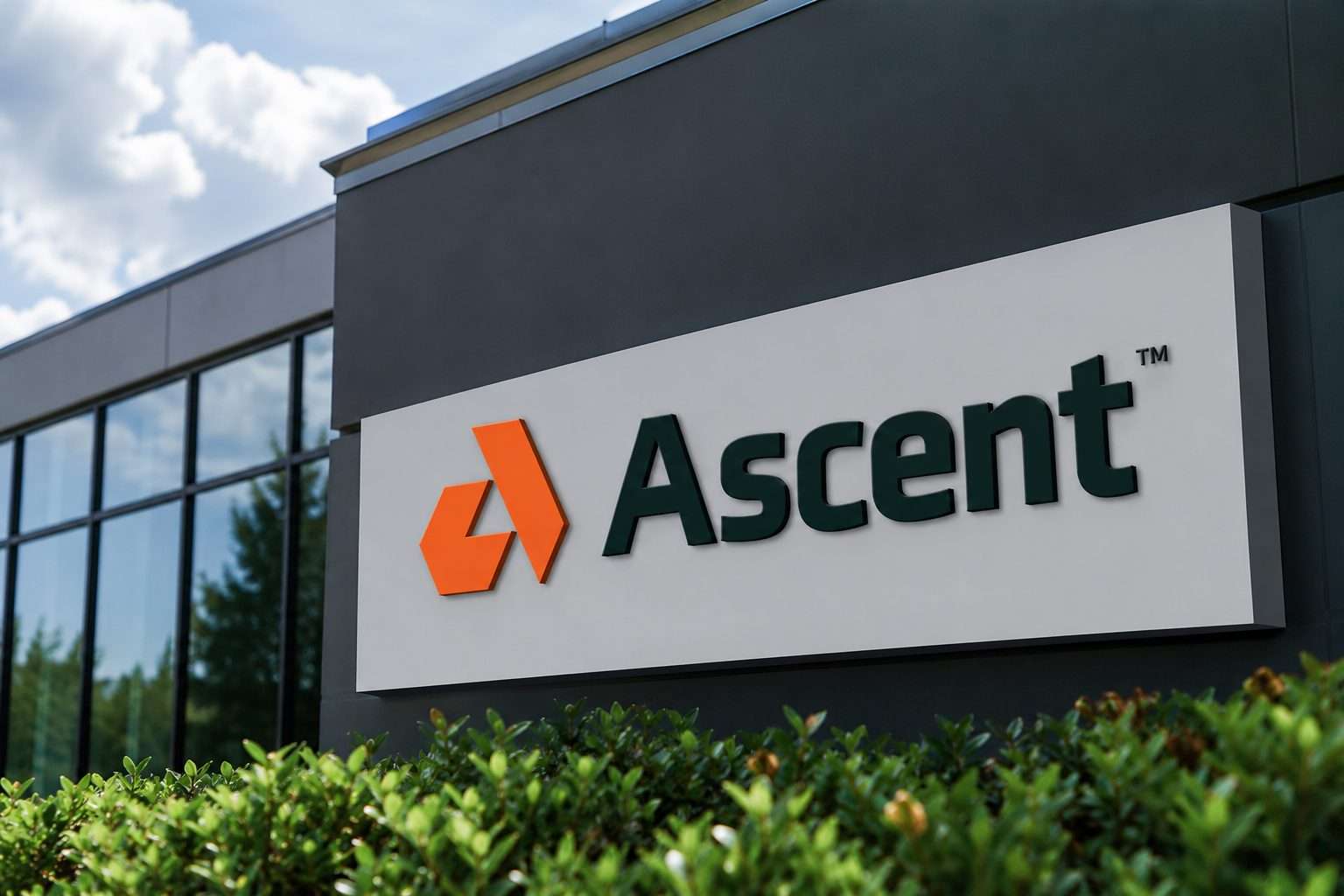
Ascent Industries Co. heads into the new week with a fresh index overhang after FTSE Russell’s May 29 preliminary deletion list named the specialty chemicals maker for removal from the Russell 3000 Index. The list classifies Ascent under basic materials and identifies the ticker ACNT among projected deletions.
U.S. cash equities are closed on Sunday, and Nasdaq’s regular session runs Monday through Friday from 9:30 a.m. to 4:00 p.m. Eastern Time. In the last session, Ascent closed at $13.55 on Friday, down 0.4% on the day and 6.2% from its May 22 close of $14.45 in a Memorial Day-shortened trading week.
That matters now because Russell reconstitution — the periodic reshuffle of companies inside the Russell stock indexes — can move money even when company fundamentals have not changed. FTSE Russell said the June 2026 changes take effect after the U.S. market close on June 26, with updated membership reflected from the June 29 open; it also said about $12.2 trillion in assets were benchmarked to Russell U.S. Indexes as of June 2025.
Index-tracking funds, or funds that try to mirror a benchmark, usually adjust positions around such events. CME Group said Russell deletions can reduce a company’s visibility and potentially lower demand for its shares, which is the market-structure issue investors will weigh against Ascent’s operating story.
If the deletion is finalized, it would reverse last year’s index win. Ascent said in June 2025 that its inclusion in the Russell 3000 meant automatic inclusion in the Russell 2000, and noted that Russell membership is based mainly on market-capitalization rankings and style attributes.
The company’s own story has been a reset. In first-quarter results released May 6, Ascent reported net sales of $19.4 million, up 9.0% from a year earlier, but gross margin narrowed to 14.5% from 17.2%, net loss was $2.0 million, and adjusted EBITDA was negative $1.0 million. Adjusted EBITDA is a non-standard profit measure that strips out interest, taxes, depreciation, amortization and certain other items.
Chief Executive J. Bryan Kitchen said in that release that the company delivered growth despite “ongoing market headwinds.” On the earnings call, he said projects won in 2025 were turning into “real measurable revenue.” SEC
Ascent has also been buying to build out its chemicals platform. A May 6 filing showed the company bought substantially all of the assets and certain liabilities of Midwest Graphic Sales and Sigma Coatings for $14 million, subject to customary adjustments, and received lender consent from BMO Bank N.A.
In the acquisition release, Kitchen called Midwest a “high-value, customer-embedded business.” Brad Eshoo, president of Midwest Graphic Sales, said the acquired business had been built around “formulation, service, and trust.” SEC
A May 18 investor presentation gave the market more numbers on that deal: $12.95 million in cash at close, $1.05 million in escrow for 18 months, Midwest 2025 unaudited revenue of $10.8 million and adjusted EBITDA of $2.07 million. The same presentation said Ascent had repurchased 11% of outstanding shares from the first quarter of 2025 through the first quarter of 2026.
Peer context was not enough to erase the stock-specific index issue. Broader specialty-chemical names Stepan and Ingevity also slipped Friday, down 1.9% and 1.2%, respectively, while Ascent’s roughly $128 million market value makes it far smaller and more exposed to trading-flow shocks than those larger peers.
The week ahead is narrow but important. FTSE Russell’s calendar calls for further updates on June 5, June 12 and June 18 before the June 26 final reconstitution, and Ascent’s annual meeting is scheduled for June 10 at 9:00 a.m. ET, with shareholders set to vote on directors, executive pay and the appointment of Baker Tilly as auditor.
But the deletion list is still preliminary, and the operating case could cut either way. The downside is that final index removal lands while margins remain under pressure and the Midwest integration is still young; Ascent’s own presentation lists risks including raw-material costs, tariffs, acquisition risk, customer demand and debt-covenant compliance.