London, Feb 2, 2026, 19:07 GMT
- Bank of England is set to launch a consultation exploring payment methods beyond debit and credit cards
- Officials are pushing for increased “account-to-account” payments to enhance competition and system resilience
- The work also connects to plans for new digital currencies, such as stablecoins and possibly a digital pound
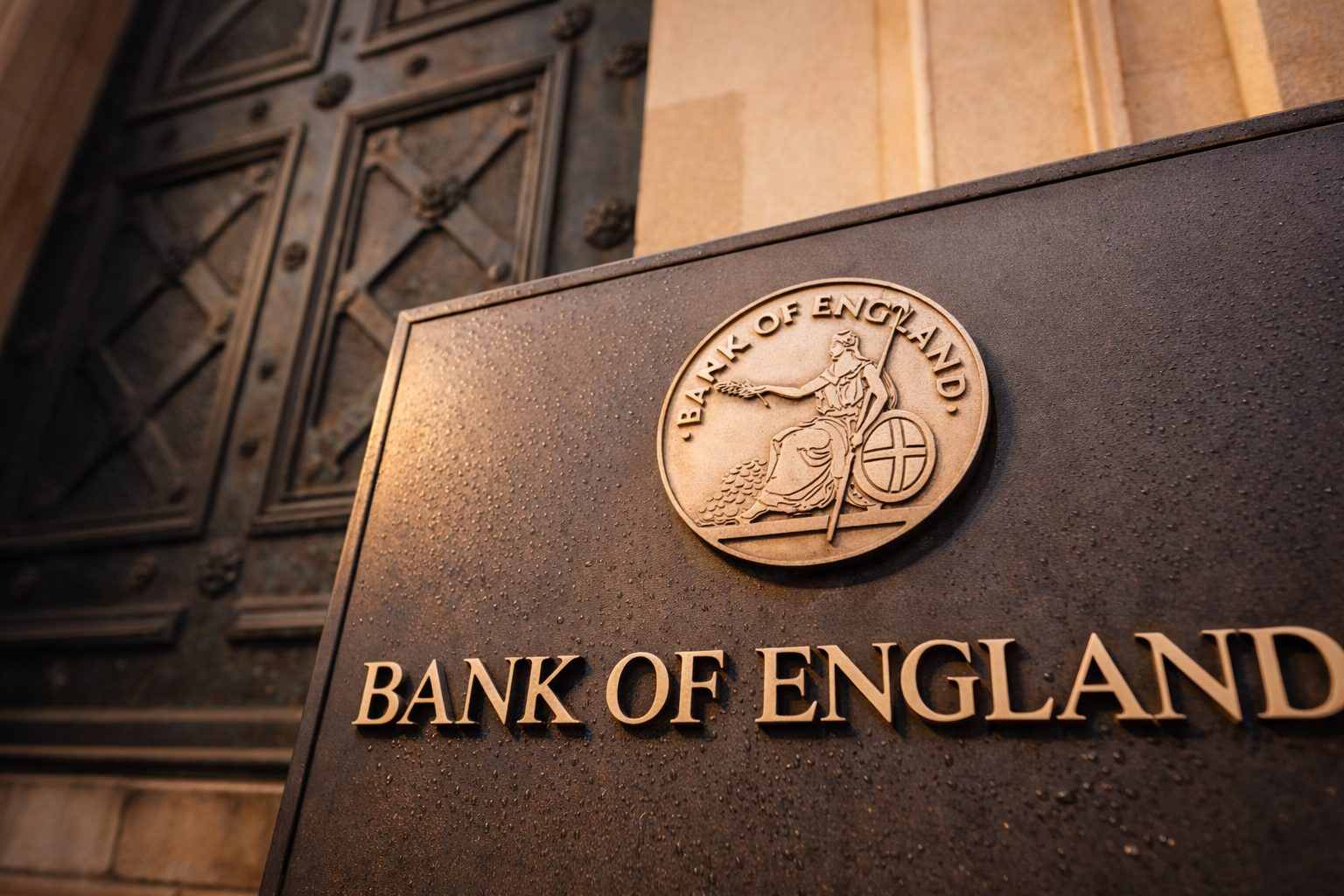
The Bank of England announced Monday it plans to start a public consultation in the next few months about the future of consumer payments. The focus includes exploring ways for people to pay electronically without relying on debit or credit cards. Deputy Governor Sarah Breeden said the goal is to enable shoppers to pay retailers directly from their bank accounts, offering an alternative to card networks like Mastercard and Visa. (Reuters)
The move gains urgency as cash slips out of regular use. In 2024, cash accounted for under 10% of payments, according to UK Finance data. Card payments dominated, making up 64% of all UK transactions. Debit cards led the pack, with 26.1 billion payments—roughly half of the total.
Breeden described the new option as “account-to-account” payments both at the till and online — moving money directly from the customer’s bank to the retailer’s, bypassing card networks. “Adding another payment choice could drive down costs,” she said, noting merchants currently face an average card acceptance fee of about 0.6% per transaction, with smaller retailers feeling the pinch even more. She pointed to systems like India’s UPI, Brazil’s Pix, and Sweden’s Swish as examples where instant bank payments operate alongside cards. (Bank of England)
The Bank is expanding its reach beyond banks and payments companies. It announced plans to launch three new forums targeting end users, industry innovators, and academics. Nominations will be invited soon as the Bank shapes the next-generation retail payments infrastructure under the National Payments Vision. (Bank of England)
The Retail Payments Infrastructure Board is a key part of this effort, chaired by the Bank’s Chief Cashier Victoria Cleland. It’s tasked with turning public strategy into a practical design for the industry to implement. The Bank said the board will oversee an industry-owned delivery company, including representation from Pay.UK, with the FCA and Payment Systems Regulator also involved. (Bank of England)
The government and regulators have laid out their expectations for the new infrastructure. In a strategy paper from November, they pushed for “account-to-account payments at point of sale,” along with backing Open Banking—where regulated third parties initiate payments with customer consent—and “alias-based” payments to cut down on sharing sensitive account info. The paper also highlighted plans to boost cross-border payments through standardised messaging and the inclusion of stablecoin support.
Retailers are still grappling with ongoing issues around card acceptance. A Payment Systems Regulator market review found that card-acquiring services fall short for small and medium-sized merchants—and even some bigger ones. Problems highlighted include unclear fees and difficulties when switching providers. (Psr)
Breeden linked the payments reform directly to emerging digital currencies. In a Bank of England consultation launched last November on regulating sterling-denominated “systemic stablecoins” — crypto-style tokens meant to maintain stable values and possibly serve as payment methods — Breeden stated: “Today’s proposals mark a pivotal step towards implementing the UK’s stablecoin regime next year.” (Bank of England)
Cross-border payments remain a backdrop to the UK’s efforts as well. The Financial Stability Board noted in its 2025 progress report on the G20 cross-border payments roadmap that although some actions are complete, they haven’t yet resulted in “tangible improvements” for users worldwide. (Financial Stability Board)
International momentum is building to connect fast payment systems across borders. According to a BIS survey, over half of the 45 fast payment systems monitored are either exploring or planning interlinking arrangements. (Bank for International Settlements)
World Bank data highlight the persistent issue of high costs. In the first quarter of 2025, sending $200 from the UK cost on average 5.20%, well above the UN and G20 goal of 3% by 2030. (Remittance Prices World Bank)
Moving payments off cards isn’t merely a tech swap. A new payment rail demands a solid commercial model, clear liability rules, consumer protections, and fraud and outage controls robust enough to stand up. The Bank’s supervisory framework for bringing new financial market infrastructure firms on board lays out phased expectations — from “mobilisation” to “scaling” — before a system can run at full capacity. (Bank of England)
Officials emphasize that the new option is an addition, not a replacement for cards. The wider payments initiative runs alongside the government’s ongoing “digital pound” design phase, which aims to consider broader shifts in money and payment methods. (Gov)