WASHINGTON, Jan 28, 2026, 14:15 EST
- Researchers reported fossils from Hunan that date back roughly 512 million years.
- The site houses over 50,000 specimens, featuring numerous species never documented before
- Evidence points to deep-water habitats serving as refuges for life following the Sinsk extinction event
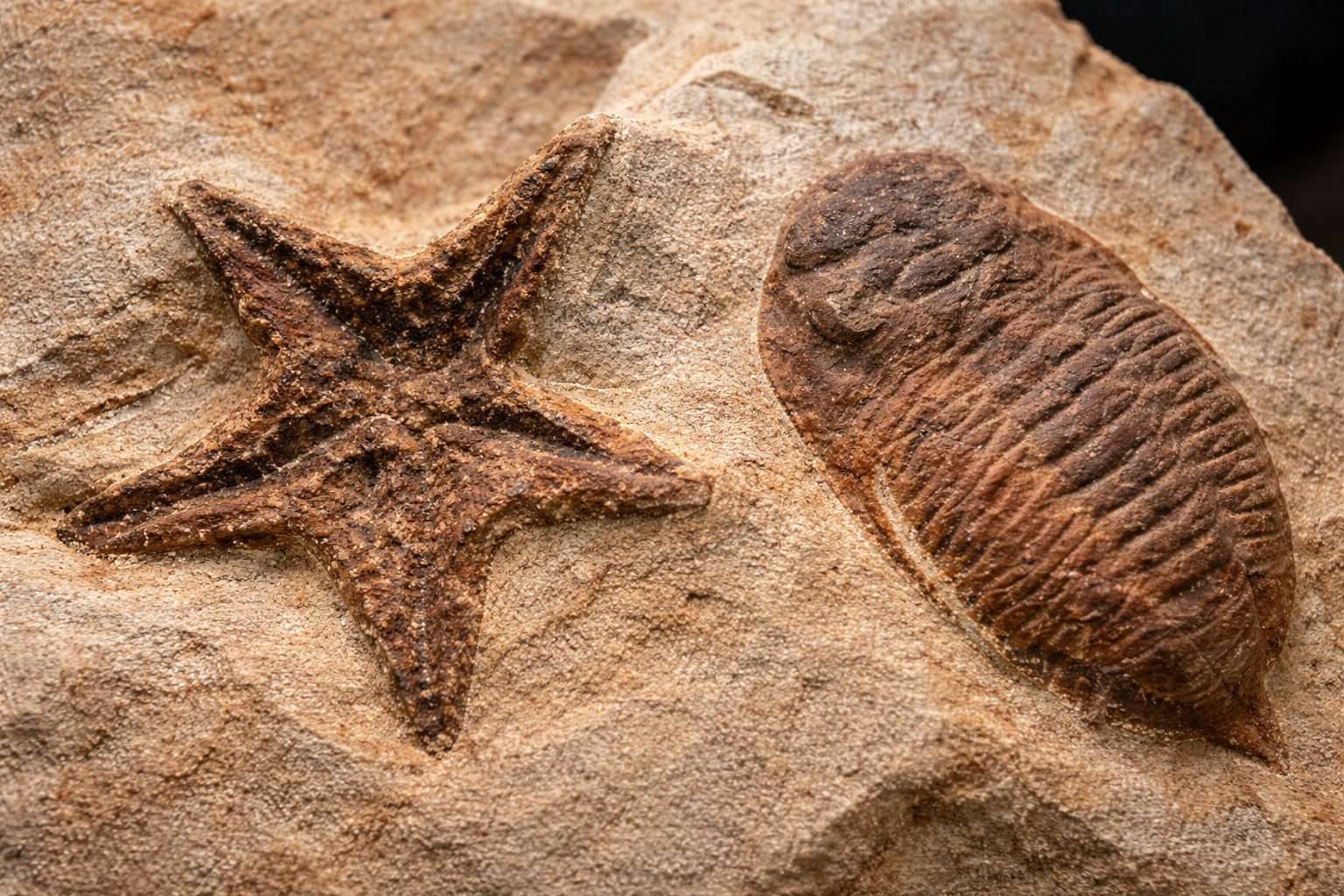
In southern China, scientists have unearthed a trove of marine fossils dating back 512 million years, revealing a thriving deep-water ecosystem shortly after the first major animal extinction. Paleontologist Han Zeng described the Huayuan biota as a vibrant community, with creatures inhabiting both the seafloor and the water column. Senior author Maoyan Zhu noted that these fossils offer “the first insights” into how that extinction event transformed deep-sea life. 1
This discovery is significant because scientists have struggled to understand how the earliest mass extinction impacted marine life during the Cambrian, a period when animal groups rapidly diversified. The newly found site dates just after that crisis, offering researchers a rare glimpse of life in its aftermath.
This also marks a significant addition to the rare group of deposits that preserve soft-bodied creatures with remarkable detail, beyond just shells and bones. Such sites reveal entire ecosystems in action—showing who ate whom, who swam, and who burrowed—rather than merely a collection of tough remnants.
From mudstone at a single quarry in Huayuan County, Hunan province, the team gathered over 50,000 specimens. They then analyzed 8,681 of these in detail, uncovering 153 species spanning 16 major animal groups—most of which were new to science, according to the authors in Nature. 2
According to a release from the Chinese Academy of Sciences, many fossils still hold soft tissues, like bits of digestive, respiratory, and nervous systems. The release also highlighted a variety of active predators and plentiful pelagic tunicates—free-swimming relatives of animals that include vertebrates—as evidence of a complex deep-water food web. 3
The assemblage is mainly made up of invertebrates such as arthropods, cnidarians, and sponges, the researchers reported. Among the top predators were radiodonts, early arthropods equipped with grasping limbs designed for hunting.
The Huayuan biota joins two famous benchmarks for reconstructing Cambrian seas: Canada’s Burgess Shale and China’s Chengjiang biota. Researchers claim the Huayuan site matches them in both diversity and preservation, yet it represents a deeper-water environment and a narrower time span following the extinction.
One unexpected find was the overlap with the Burgess Shale, even though the sites are far apart. Zeng suggested that larvae drifting on ocean currents might explain why certain animals appear in both locations, pointing to broad dispersal in early complex animal life.
The fossils come from just after the Sinsk event, a mass extinction about 513.5 million years ago that disrupted the Cambrian explosion, the researchers explained. This extinction has been tied to volcanism and swift climate changes, although the exact cause remains unclear due to a sparse and patchy geological record.
Zhu noted that the fossils indicate deeper-water animals were less affected than those in shallow waters, highlighting the outer shelf as a potential refuge during the biological crisis. The Nature paper also offers quantitative comparisons that situate the Huayuan biota within a wider shift in early Cambrian marine ecosystems.
The fossil record remains notoriously incomplete, and one remarkable find can easily distort our view of what was “typical” back then. The researchers’ ideas about deep-water resilience depend heavily on discoveries yet to come—and on what simply never fossilized—at different locations and depths.