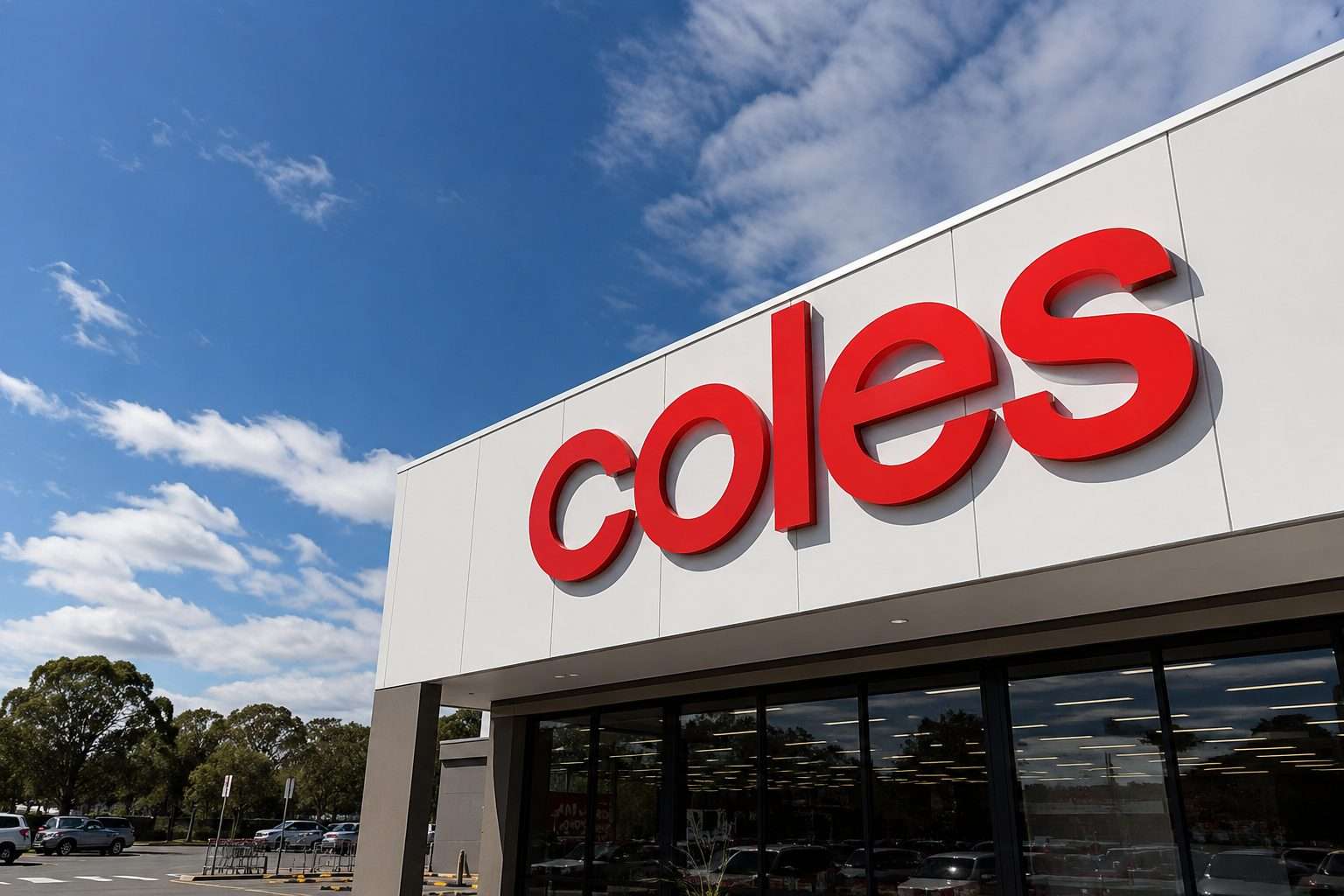

SYDNEY, June 18, 2026, 06:10 AEST
- Coles closed 1.3% lower at A$23.12 on Wednesday, underperforming a rising Australian benchmark.
- The RBA’s rate pause kept inflation and household spending risks near the front of the trade.
- Investors are weighing stronger supermarket sales against liquor weakness, supplier costs and tighter pricing rules.
Coles Group Ltd. shares ended lower on Wednesday, lagging a broader Australian rally, as investors marked down the major supermarket operator before the ASX’s Thursday session. The stock closed at A$23.12, down 31 cents, after trading between A$22.92 and A$23.29 on volume of 3.7 million shares.
The Australian Securities Exchange was still closed at the dateline. Its normal cash-market session runs from just before 10 a.m. to 4 p.m. Sydney time, making Thursday’s open the next test of whether Coles’ weakness was a one-day fade or a broader food-retail move.
The pressure stood out because the S&P/ASX 200, Australia’s benchmark share index, rose 48.60 points, or 0.54%, to 8,966.30 on Wednesday. The wider market was helped by lower oil prices and improved global risk appetite, but that did not pull Coles along.
Why it matters now: food retailers are usually treated as defensive stocks, but they are still exposed to fuel, freight, wages and household budget pressure. The Reserve Bank of Australia held its cash rate target — the benchmark overnight rate that guides borrowing costs — at 4.35% on Tuesday and said inflation was still too high, while leaving open the option of another increase if needed.
Coles’ latest company update gave investors a mixed base case. Supermarkets sales revenue rose 4.0% to A$9.78 billion in the third quarter, while comparable sales — a like-for-like measure of trading momentum — rose 3.6%; e-commerce sales increased 24.8%, but liquor revenue fell 3.9%.
Chief Executive Leah Weckert said “value and availability will be important” for customers in the months ahead. Coles also said supplier cost price increase requests had risen in recent weeks, with higher costs in fuel, freight and packaging.
Rival Woolworths Group also finished lower at A$37.78, keeping the focus on the grocery pair rather than a single-stock issue. The matching weakness suggests investors were not just reacting to Coles’ own numbers, but to the margin and pricing backdrop for Australian supermarkets.
Regulatory risk remains in the background. The ACCC said last month that the Federal Court found Coles misled customers in 13 of 14 “Down Down” tickets considered in the liability hearing, with penalties and other orders to be determined later; ACCC Chair Gina Cass-Gottlieb said the pricing practices made it harder for shoppers to “identify genuine value for money.” ACCC
Another rule change is close. The ACCC says supermarkets earning more than A$30 billion a year will face new restrictions on what they can charge from July 1, 2026, adding another layer of scrutiny to pricing language and margin management.
But the trade could turn either way. A sustained fall in oil and freight costs would ease some pressure on Coles’ cost line, while shoppers trading down from restaurants to home cooking could support supermarket volumes. The downside is that sticky inflation, more supplier price rises or tighter discount rules could squeeze margins and make it harder for Coles to defend both price perception and earnings.
The next scheduled Coles investor date is Aug. 25 for FY26, subject to change. Until then, traders will watch Thursday’s open, Woolworths’ lead, oil prices and any fresh court or regulator updates around supermarket pricing.