- Dell’Oro Group projects FWA infrastructure and customer-premises equipment (CPE) spending will remain above $10 billion annually through 2029.
- The firm’s early findings also point to total FWA revenues rising about 10% in 2025, with subscriptions projected to surpass 191 million by 2029.
- U.S. carriers’ fixed wireless bases kept climbing in 2025, but Ookla data cited by RCR flagged speed declines in Q2 and Q3.
Spending on Fixed Wireless Access (FWA) infrastructure and customer-premises equipment (CPE) is expected to stay above $10 billion a year through 2029, according to a new report from Dell’Oro Group. The firm’s preliminary read also points to total FWA revenues—including radio access network (RAN) gear, residential CPE, and enterprise routers and gateways—rising about 10% in 2025, with total subscriptions projected to top 191 million by 2029. Dell’Oro vice president Jeff Heynen said U.S. operators are expanding FWA availability “in both existing and new markets,” while operators in India, Southeast Asia, Europe, and the Middle East accelerate rollouts as satellite broadband players like Starlink, Amazon, and OneWeb loom larger. 1
This matters right now because FWA is one of the few broadband options that can scale fast without waiting on new wired buildouts. Operators can push home and business internet using 4G LTE and 5G coverage they already have, then improve it with better radios and better in-home gateways over time.
It also lands in a market where a lot of people still feel stuck with the same choices: cable or aging DSL, depending on where you live. A credible wireless alternative doesn’t have to “win everything” to force price pressure, promos, and faster upgrades across broadband.
For anyone who hasn’t followed it closely, fixed wireless access is basically home/office broadband delivered over a cellular network, but tied to a fixed address. The CPE is the customer device—the box or gateway in your home that connects to the nearest cell site and then shares that connection over Wi‑Fi or Ethernet indoors.
The 5G flavor matters, too. Sub‑6 GHz 5G is the coverage workhorse: it reaches farther and is usually easier to deploy widely, while mmWave (millimeter wave) can deliver very high speeds but tends to need denser infrastructure and cleaner paths to the signal.
The business pitch is simple: turn spare mobile network capacity into a monthly broadband bill, and use that to peel customers away from legacy providers.
In the U.S., the scale is already hard to ignore. RCR Wireless News reports that T-Mobile disclosed roughly 8 million FWA subscribers by late 2025, Verizon reported more than 5 million, and AT&T said it surpassed 1.2 million; Ookla data put the three at around 14.7 million FWA customers by Q3 2025 after adding about 1.04 million in that quarter alone. But Ookla also found a “noticeable” speed decline in Q2 and Q3 2025, and Ookla editorial director Sue Marek warned it “may be an early indication that strong uptake in FWA is starting to impact performance.” 2
That last part is where the story gets real. FWA only feels like a cable or DSL replacement if it stays consistent when neighborhoods are streaming and gaming at the same time, not just when you run a quick test in perfect conditions.
Still, it’s not hard to see why carriers keep leaning in. Every new FWA customer adds recurring revenue, and it’s attached to the same network investments operators were already making for smartphones and 5G expansion.
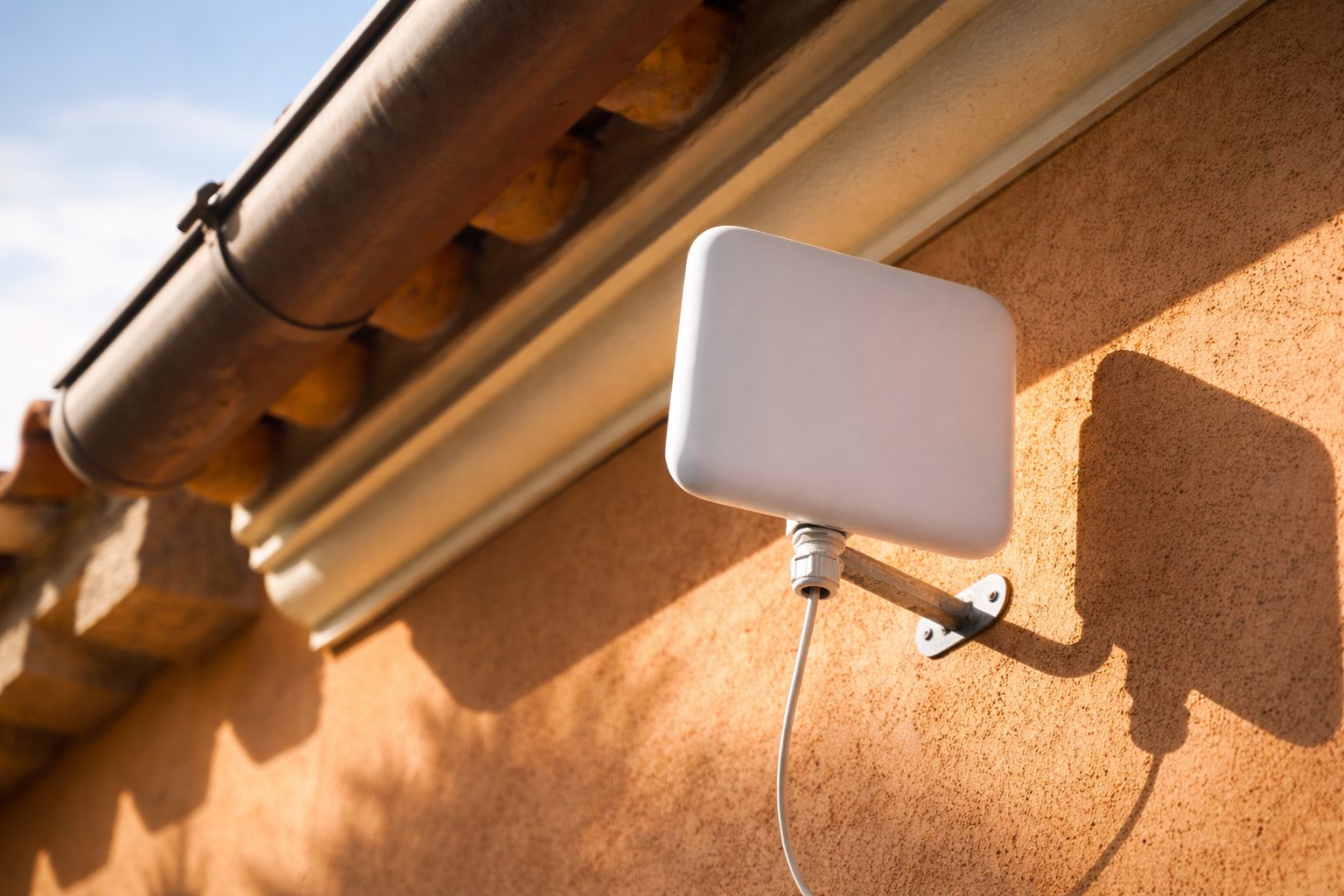
There’s also a hardware angle hiding inside this spending forecast. Residential gateways, outdoor receivers, and enterprise routers all sit in that CPE bucket, and the more operators compete on reliability, the more the gear (and installation experience) starts to matter.
The uncertainty is whether performance holds as adoption climbs, especially in markets where the network wasn’t originally engineered for home-broadband-style loads. And the competitive pressure doesn’t pause: LEO satellite broadband is chasing many of the same underserved or cable-frustrated customers, and it’s another “no trenching” option that can change the math quickly.
Dell’Oro’s own knowledge center is already listing the FWA spending outlook as one of its latest reports, which is a decent hint at how much attention this category is getting heading into 2026. If the forecast plays out, the next couple of years won’t just be about growth—they’ll be about whether fixed wireless can scale without the experience slipping as fast as the subscriber numbers rise. 3