WARSAW, January 26, 2026, 13:04 (CET)
- Fresh how-to pieces are steering readers toward “digital minimalism,” from stripped-down Android launchers to curated news feeds.
- Writers are reframing the debate from hours spent on screens to addiction-like patterns and what triggers them.
- In China, unplugging groups and analog routines are gaining followers as young people test life with fewer apps.
Two guides published over the past two days are pitching a simpler phone as a practical answer to digital fatigue, with app picks and habit changes aimed at cutting “doomscrolling” — compulsively swiping through feeds, often bad news.
The timing is not accidental. A Jan. 20 Guardian feature argued tech is increasingly used to “optimise” life, at the cost of real-world social contact, and warned that chatbots are becoming stand-ins for friends for some users. Psychologist Jim Taylor called the headphone-and-scroll routine “a netherworld,” while social psychologist Hugh Mackay said eye contact is a “super highway” to emotion. The Guardian
Research has also sharpened the argument that raw screen time can be the wrong target. A Columbia University summary of a June 2025 JAMA study said “addictive use” — when screen use interferes with daily life and feels hard to stop — tracked more closely with mental health outcomes than total time, with lead author Yunyu Xiao urging policymakers to move beyond generic time limits. Columbia
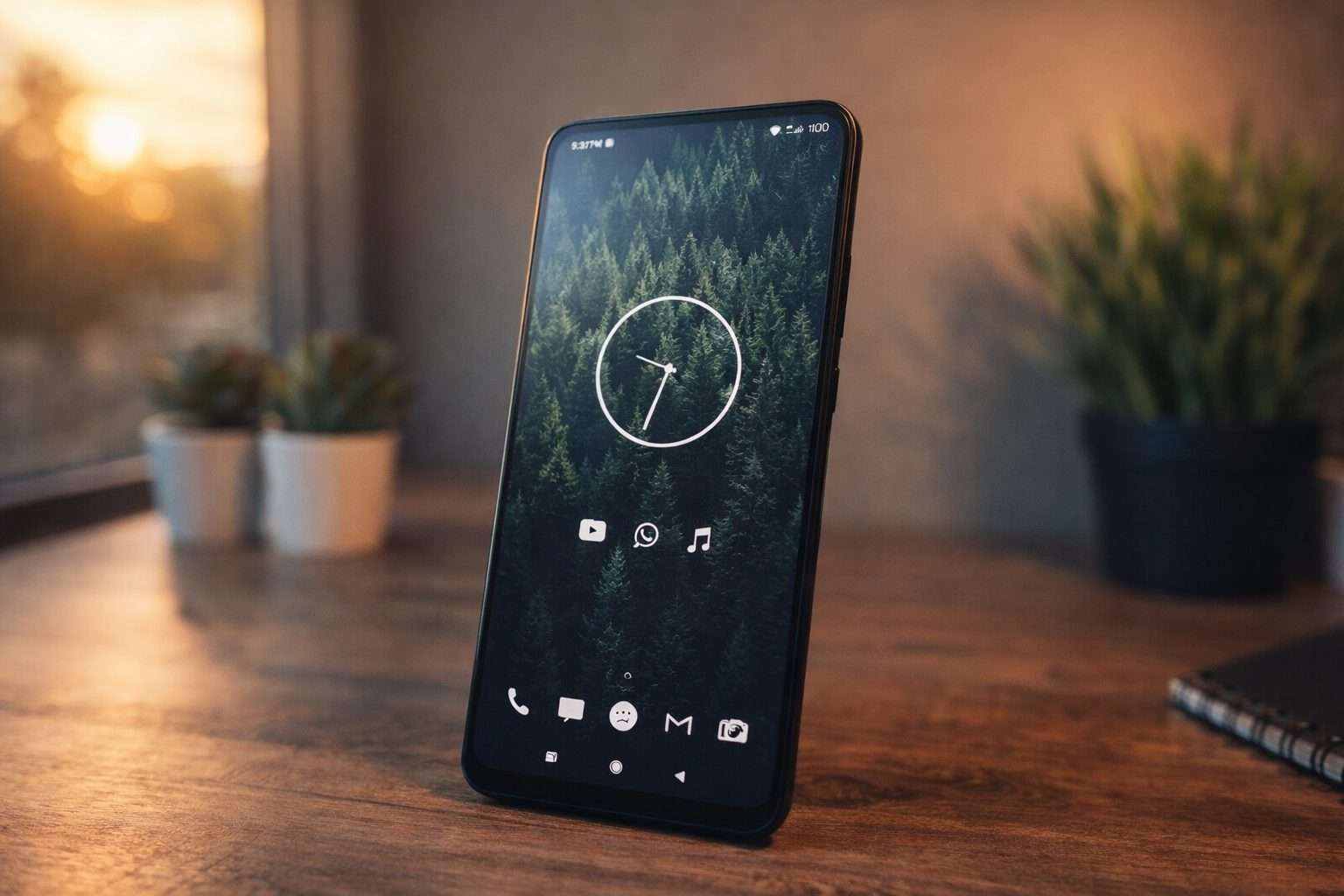
On the practical side, Android Authority writer Mitja Rutnik on Jan. 24 recommended five apps he said helped him cut clutter: Google Keep for notes, Niagara Launcher to simplify the home screen, Microsoft To Do for tasks, Simplenote for longer writing, and Feedly for reading news without an endless algorithmic feed. He wrote that Niagara reduced his “doomscrolling,” and said full access costs about $10 a year, with a lifetime option around $45. Android Authority
The theme is friction by design. Niagara replaces multiple pages of icons with a short list of most-used apps; Microsoft To Do is positioned as a basic, free alternative to feature-heavy task managers; and Feedly pushes users to build a curated list instead of accepting whatever a default feed serves.
Feedly and some of the China-based routines share a common tool: RSS, short for Really Simple Syndication — a way to subscribe to updates from selected sites in one place, without repeatedly checking social apps or news feeds.
China Daily, in a Jan. 23 report, described young Chinese experimenting with unplugging in small, practical ways — less scrolling, more running, handwriting and face-to-face chats — and said an anti-tech addiction group on Douban had grown to nearly 40,000 members. The group’s founder, identified as “Alyssa” and described as a pseudonym, called it “an experiment in loosening those ties,” the report said. Com
One member, Kai Yijing, 27, told the paper that short-form scrolling can “feel like freedom,” but “it’s really dependence,” and said she redirected time into a fixed running slot and more reading. Another, Deng Xiaole, a geodesy scholar working at the University of Stuttgart’s Institute of Geodesy, described moving basic functions off the phone — using a watch for time and a CD player for music — to reduce the impulse to pick up the device.
A separate Jan. 25 piece by Oak Hill Gazette framed the trend less as a strict “digital detox” and more as “smart play” — keeping tech, but bounding it with clear rules and routines, and watching for loss-of-control cues rather than counting hours. Oakhill Gazette
But the downside scenario is obvious: many people simply swap one attention trap for another. The evidence base is still evolving, and even the better studies rely heavily on self-reported questionnaires and shifting definitions of what “addictive use” means across social media, phones and games. A PubMed summary of the 2025 cohort work also noted that total screen time at baseline was not associated with the outcomes it tracked — a reminder that not every screen hour carries the same risk. PubMed
For now, the playbook in these recent guides is less about quitting technology than stripping it down — fewer apps, fewer triggers, and a sharper sense of what the phone is for. In practice, that can mean a monochrome launcher, a basic notes app, and a news diet that arrives on your schedule, not the other way around.